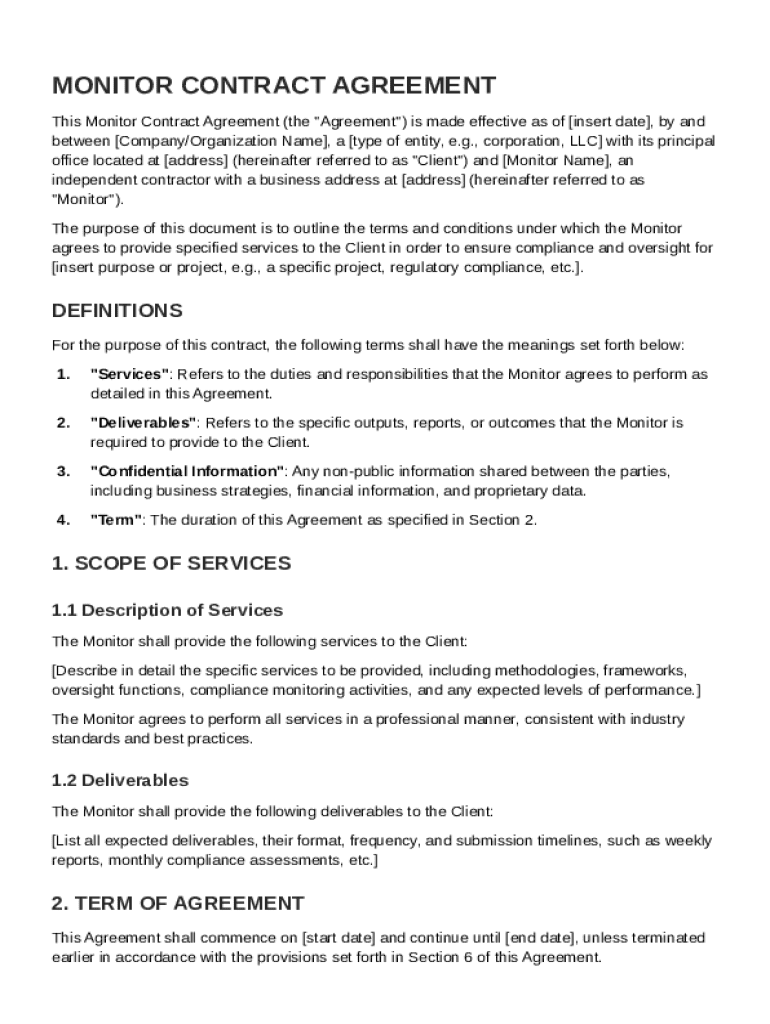







Definition & Meaning
A Monitor Contract Template is a standardized legal document that outlines the terms and conditions between a client and an independent contractor, often referred to as a Monitor. This agreement is primarily designed to facilitate the provision of specified services aimed at ensuring compliance and oversight for a particular project. The template includes various sections detailing the scope of services, compensation, confidentiality, liability, and other legal obligations to clearly define the professional relationship and expectations between the parties involved. It serves as a crucial tool for establishing a clear and enforceable understanding from the outset.
Key Elements of the Monitor Contract Template
The Monitor Contract Template encompasses several critical sections. The Scope of Services specifies the duties and responsibilities of the Monitor, ensuring clarity on what is expected. Compensation Details outline payment terms, including fees, payment schedules, and any bonuses or incentives. The section on Confidentiality Obligations addresses the need to protect sensitive information that parties may access during the contract term. Termination Clauses detail conditions under which the agreement can be ended prematurely by either party. Other important areas often include Ownership of Work Product, Liability and Indemnification Provisions, and Dispute Resolution Mechanisms.
How to Use the Monitor Contract Template
Utilizing a Monitor Contract Template involves several systematic steps. First, review the template to ensure it aligns with the specific requirements of your project. Customize it to reflect unique details, such as the services to be provided, the agreed compensation, and any additional clauses necessary for your context. After tailoring the contract, both parties should review and discuss the terms to ensure mutual understanding and agreement. Once there is consensus, both the client and the Monitor need to sign the document to make it legally binding. Keep a signed copy on record for future reference.
Steps to Complete the Monitor Contract Template
-
Review the Template: Begin by examining the entire document to understand its structure and contents.
-
Customize the Contract: Modify sections to suit your specific needs, including services, payment, and duration.
-
Clarify Terms: Engage in discussions with the other party to ensure every detail is clear and agreeable.
-
Sign the Agreement: Once all modifications are made, and parties agree, proceed to sign the document.
-
Store Safely: Maintain a signed copy in a secure location for reference and in case of disputes.
Legal Use of the Monitor Contract Template
The legal applicability of the Monitor Contract Template is governed by both federal and state laws. It must adhere to the ESIGN Act, which is crucial for the legality of electronic signatures if you opt for a digital contract. It's important to ensure that the contents and execution of the contract comply with applicable laws related to employment, confidentiality, and service provision. Legal advice may be necessary to confirm that the contract meets all legal requirements, especially when adapting it for specific state laws or unique business needs.
Important Terms Related to Monitor Contract Template
Several key terms are frequently encountered in a Monitor Contract Template. Indemnification refers to the responsibility of one party to cover the loss or damage incurred by another party. Governing Law specifies which jurisdiction’s laws will apply in interpreting the contract. Force Majeure clauses allow for contract suspension or termination in cases of unforeseen, uncontrollable events. Additionally, Amendments relate to any agreed modifications to the contract terms post-execution. Understanding these terms ensures all parties understand their rights and obligations fully.
Who Typically Uses the Monitor Contract Template
Typical users of a Monitor Contract Template are businesses and organizations engaged in projects requiring oversight, such as compliance audits or environmental assessments. Contractors who specialize in providing monitoring services are the primary parties to this contract. This template is valuable across various industries, including construction, information technology, and finance, where monitors ensure that projects adhere to legal standards, budget constraints, or strategic plans. Additionally, independent contractors seeking to formalize their engagements in a professional and legally compliant manner also frequently use it.


State-Specific Rules for the Monitor Contract Template
While the Monitor Contract Template serves as a mostly universal template, it's essential to consider state-specific variations that may affect the terms. Different states have unique stipulations regarding non-compete clauses, indemnity provisions, and termination rights. For instance, some states have stringent rules around the enforceability of non-disclosure agreements, while others may have specific requirements for dispute resolution processes. It is crucial to adapt the template to ensure compliance with local laws, especially when operating across multiple state jurisdictions.
State-by-State Differences
Significant disparities exist across states regarding contract law implications for a Monitor Contract Template, affecting areas like work product ownership and confidentiality clauses. For example, California restricts the enforceability of certain non-compete clauses, while non-disclosure agreements may have varying enforceability standards in states like Massachusetts compared to Texas. Getting familiar with these specificities helps ensure the contract remains valid and enforceable regardless of the state in which the services are rendered. Drafting with these considerations in mind effectively minimizes legal interruptions and maintains smooth operational processes.