
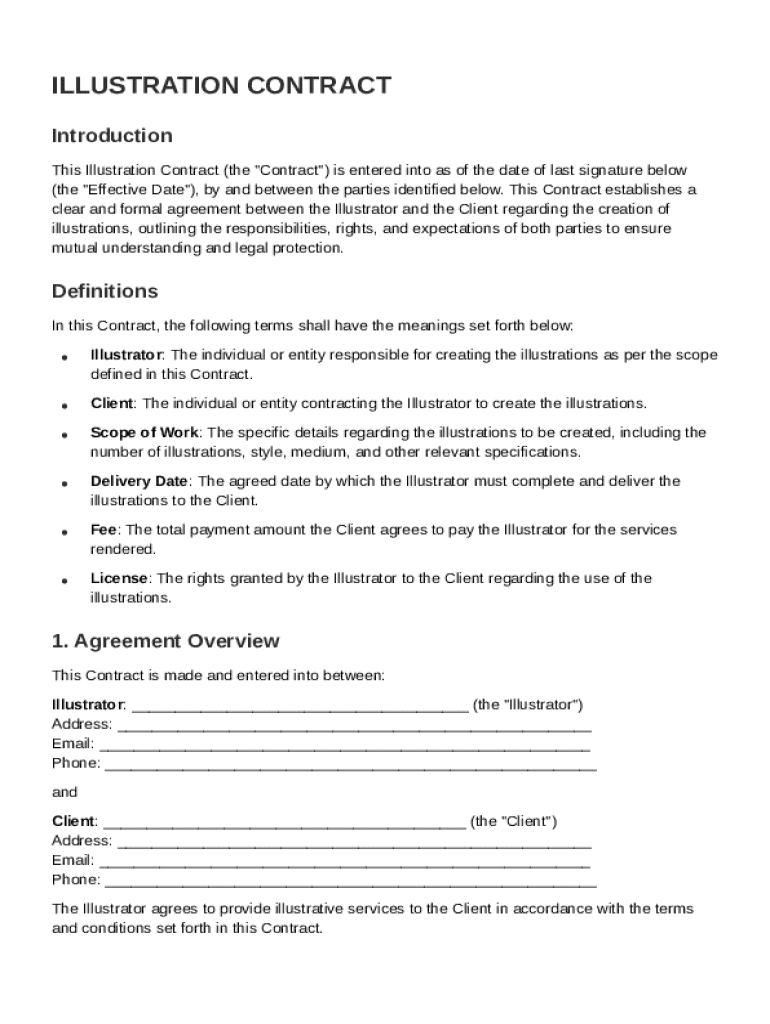







Definition and Purpose of the Illustration Contract Template
An Illustration Contract Template serves as a formal agreement between an Illustrator and a Client. It delineates the terms and conditions under which the Illustrator will create specified artworks for the Client. By clearly defining the roles, responsibilities, and expectations for both parties, the template fosters mutual understanding and safeguards against potential disputes. The contract typically covers aspects such as the scope of work, timeline, compensation, and intellectual property rights.
How to Use the Illustration Contract Template Effectively
Using the Illustration Contract Template involves several strategic steps to ensure that it accurately reflects the agreement's particulars. Initially, both parties should jointly review the template, tailoring sections to fit the unique facets of the project. This includes specifying the illustration style, delivery formats, and deadlines. Once the draft is prepared, it is advisable to consult with a legal professional to validate the terms and ensure compliance with relevant laws. Lastly, both the Illustrator and the Client should sign the document to signify their agreement to the terms outlined.
Steps to Complete the Illustration Contract Template
- Define the Project Scope: Detail the types and number of illustrations to be created.
- Set a Timeline: Establish key milestones and a final delivery date.
- Establish Compensation: Agree on the fee structure, payment schedule, and any additional expenses.
- Specify Rights: Clearly articulate the ownership and usage rights of the illustrations.
- Include Confidentiality Clauses: Protect sensitive information disclosed during the project.
- Identify Termination Conditions: Outline scenarios that may lead to contract termination or revision.
- Sign the Contract: Both parties review and provide their signatures to formalize the agreement.
Who Typically Uses the Illustration Contract Template
This template is predominantly used by freelance illustrators and art agencies when engaging with individual or corporate clients. It is also valuable for educational institutions or publishers commissioning artwork for books, learning materials, or advertisements. By standardizing agreement terms, parties can easily navigate collaborative ventures without the need for bespoke contracts for each project.


Key Elements of the Illustration Contract Template
The template includes several critical elements essential for a cohesive agreement:
- Project Description: A detailed account of the illustration work to be created.
- Schedule and Milestones: Important dates for drafts, revisions, and final delivery.
- Payment Terms: Conditions for billings, like deposits, interim payments, and final settlement.
- Intellectual Property: Guidelines on copyright ownership and license usage.
- Amendment Procedures: Provisions for modifying the contract if project scope changes.
- Conflict Resolution: Mechanisms for addressing disputes, such as mediation or arbitration.
Legal Considerations and Protections
The legal framework for the contract is designed to ensure that both parties' rights are protected and that the agreement is enforceable. The contract should adhere to the ESIGN Act to facilitate legal electronic signatures, making it accessible for digital transactions. Legal provisions should comply with both federal and state laws, addressing issues such as copyright, liability limits, and jurisdiction.
Examples of Using the Illustration Contract Template
In a real-world context, an illustrator might use this template when contracted to create a series of children’s book illustrations. The contract would specify each illustration's style, size, and subject matter, along with methodical delivery milestones. By defining these parameters, the illustrator and client can manage expectations and responsibilities throughout the project's lifecycle.
Alternatives and Variations to the Illustration Contract Template
While the Illustration Contract Template serves as a robust starting point, variations exist to suit different project requirements. For instance, contracts might differ in complexity based on the project's scale or legal requirements when working internationally. Alternate templates might focus more on digital illustrations or mixed media, addressing different usage rights and licensing terms.
Digital vs. Paper Version Considerations
The choice between a digital or paper version of the Illustration Contract Template often depends on the contracting parties' preferences and operational practices. Digital contracts offer streamlined processes for editing, signing, and distribution, enhanced by platforms like DocHub that provide secure online interactions. Paper versions might still be relevant for traditionalists or where digital access is restricted. Both versions should ensure readability, signature accessibility, and secure storage options to protect the data.




