



Definition and Meaning of a Pre Agreement Template
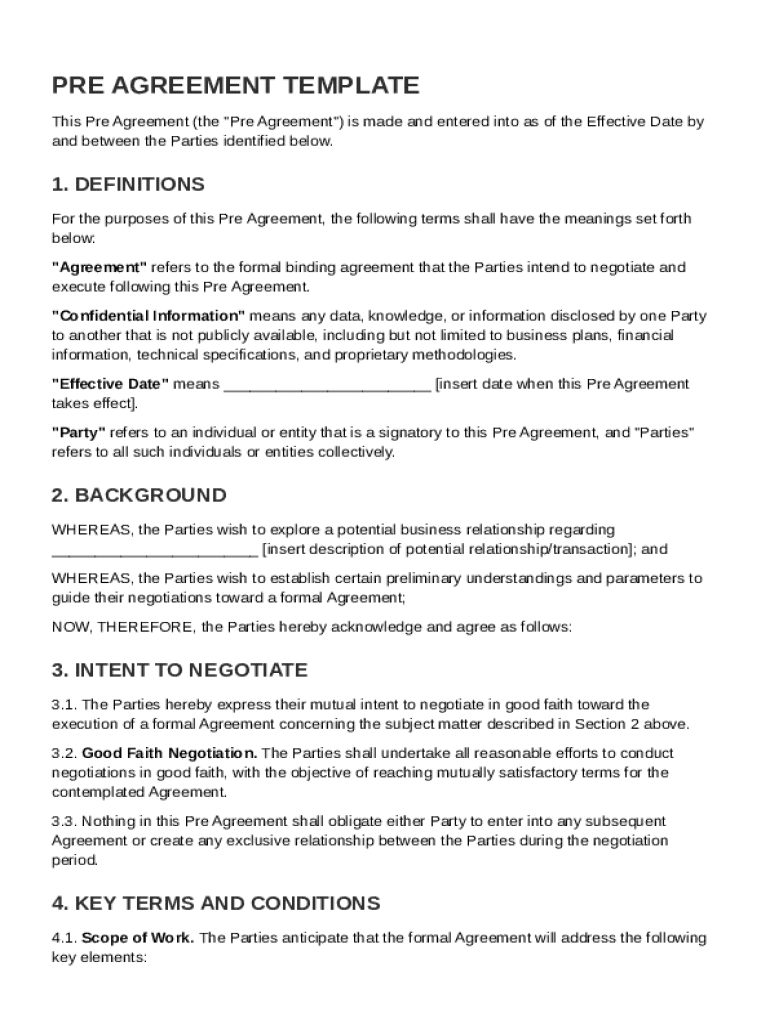
A Pre Agreement Template is a document that outlines preliminary terms and conditions between two parties intending to negotiate a formal binding agreement. This document serves as an initial step in forming an official contract, detailing the parties' intent to negotiate in good faith. It is crucial to note that a Pre Agreement Template is generally non-binding, except for specific outlined provisions. The template establishes a shared understanding of roles, responsibilities, and timelines.
Key elements typically addressed in a Pre Agreement Template include:
- Confidentiality obligations
- Established roles and responsibilities
- Timelines and expected milestones
- Expense responsibilities, including who pays which costs
- Amendment procedures
- Governing law and jurisdiction
How to Use the Pre Agreement Template
Using a Pre Agreement Template involves several steps to ensure that both parties understand and agree to the preliminary framework:
-
Review Definitions and Key Terms:
- Begin by reading through the pre agreement Template to familiarize yourself with its standard terms and definitions.
-
Customize Specific Clauses:
- Tailor the document to address the specific needs of the parties involved. Modify sections such as timelines, confidentiality agreements, and specific roles.
-
Document Intentions Clearly:
- Ensure that the template articulates the intent to negotiate in good faith.
-
Collect Necessary Information:
- Gather all required information from both parties, such as roles, responsibilities, and timelines, to accurately complete the template.
-
Consult Legal Guidance:
- Consider having a legal expert review the document to affirm the terms are fair and accurately represent both parties.
Steps to Complete the Pre Agreement Template
To complete the Pre Agreement Template effectively, utilize the following step-by-step guide:
-
Identify Participating Parties:
- Clearly define who the parties are, including full names, titles, and contact information.
-
Outline Roles and Responsibilities:
- List the duties and expectations of each party involved in the pending agreement.
-
Set Timelines:
- Establish a timeline for agreement negotiations, clearly indicating expected completion dates.
-
Specify Confidentiality Requirements:
- Detail any confidentiality clauses essential for your agreement.
-
Address Amendments:
- Provide a section within the template that discusses conditions for making amendments to the preliminary agreement.
-
Define Governing Law:
- Specify which state’s laws will govern the agreement to avoid legal disputes.
Why Use a Pre Agreement Template
Utilizing a Pre Agreement Template offers numerous advantages to initiating parties:
- Clarity and Structure: Provides a clearly defined starting point for formal negotiations.
- Risk Management: Reduces the risk of misunderstandings and miscommunications.
- Time Efficiency: Saves time by having predefined clauses in place.
- Customization: Templates can be adapted to suit the particular needs of the negotiating parties.
- Non-Binding Nature: Allows parties to discuss terms without being legally bound, offering flexible negotiation.
Legal Use of the Pre Agreement Template
Legally, the Pre Agreement Template holds significant value:
- Establishes Intent: Demonstrates good faith intentions to parties and third-party observers.
- Confidentiality Provisions: Upheld in court when properly drafted, protecting sensitive information.
- Non-Binding Clauses: Only specified provisions (such as confidentiality) may be binding; generally designed to avoid legal enforceability except under agreed terms.
- Use as Evidence: Might serve as evidence of parties' intentions should negotiations not move forward.
Key Elements of the Pre Agreement Template
The Pre Agreement Template is structured around several fundamental components:
- Introduction: Identifies the parties, purpose, and initiation date.
- Objective: Clearly describes the intended outcome of the negotiations.
- Responsibilities: Details the expectations for both parties, mitigating any potential for ambiguity.
- Execution: Specifies the conditions under which the pre agreement Template becomes effective.
- Amendments: Outlines the process for revising document terms if needed.
Examples of Using the Pre Agreement Template
Practical application scenarios for a Pre Agreement Template include:
- Partnerships: Businesses looking to form partnerships may utilize a pre agreement to outline initial collaboration terms.
- Vendors and Suppliers: Companies engaging suppliers for future contracts can articulate delivery schedules and pricing in advance.
- Service Agreements: Service providers and clients may use this template to outline expectations prior to entering a detailed contract.
Software Compatibility for Managing the Pre Agreement Template
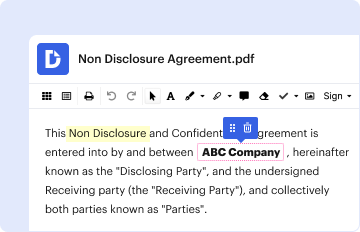
When managing the Pre Agreement Template, it is critical to select software that supports various file formats and provides comprehensive document handling capabilities. DocHub, for example, enhances efficiency by allowing:
- Seamless Editing: Supports multiple file formats (e.g., DOC, PDF, XLS), facilitating direct edits.
- Secure Sharing: Implements 256-bit SSL encryption, ensuring all documentation exchanges are protected.
- Mobile Accessibility: Offers document management on the go, supporting both desktop and mobile access.
- Real-time Collaboration: Enables multiple contributors to engage simultaneously on the same document.