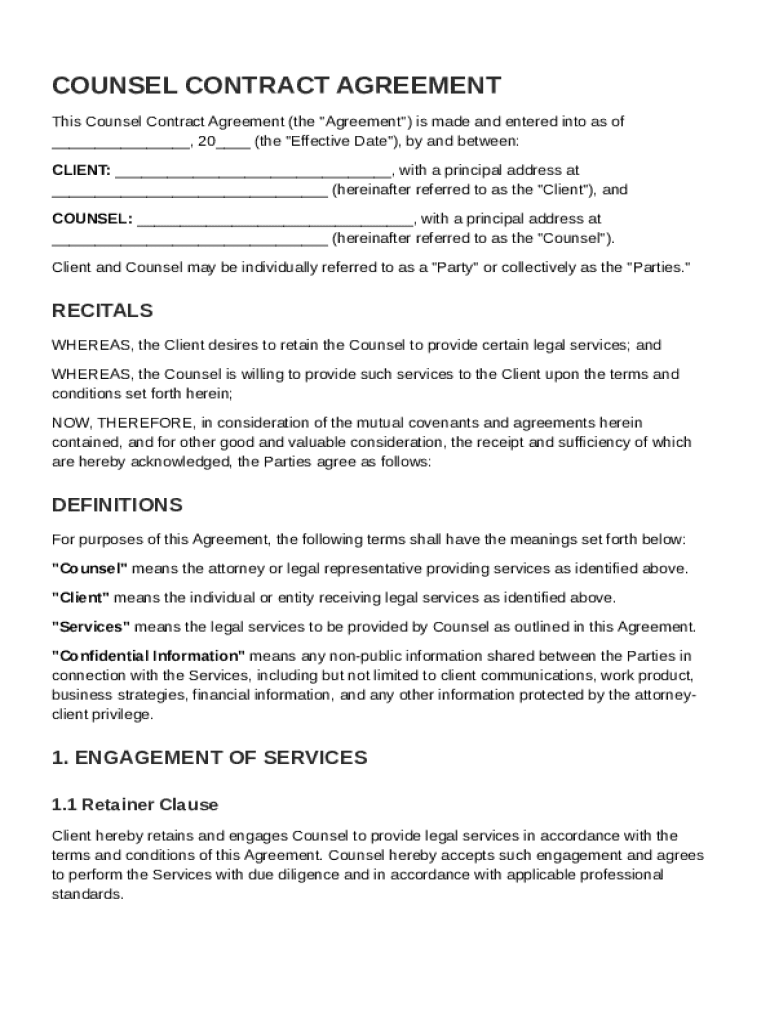







Definition and Purpose of the Counsel Contract Template
The Counsel Contract Template is a legal document used to formalize the arrangement between a client and a counsel or attorney for the provision of legal services. This template serves as a comprehensive agreement that outlines all pertinent terms related to the engagement. It defines the scope of services, compensation structures, confidentiality obligations, and the rights and responsibilities of both parties involved. It's crucial for ensuring clarity and mutual understanding in business or legal relationships, providing protection and establishing enforceable commitments.
Key Elements Included
- Engagement Terms: Details the specific legal services the counsel will provide to the client.
- Compensation Structure: Outlines how the counsel will be compensated, whether through an hourly rate, retainer, or another arrangement.
- Confidentiality Obligations: Sets expectations regarding the handling of any confidential information shared between parties.
- Conflict of Interest Disclosure: Addresses potential conflicts and the procedures for disclosure and resolution.
- Termination Conditions: Specifies how either party can terminate the agreement and what conditions apply.
Steps to Complete the Counsel Contract Template
- Customize Basic Information: Insert the names and contact details of both the client and the counsel.
- Define the Scope of Services: Clearly describe the legal services to be provided, ensuring both parties have a mutual understanding.
- Establish Payment Terms: Agree on the fee structure and payment method, documenting all details in the contract.
- Determine Confidentiality Terms: Include confidentiality clauses to protect sensitive information.
- Address Termination Clauses: Outline the procedure and conditions under which the contract may be terminated by either party.
- Review Governing Law: Ensure the contract adheres to state and federal legal standards relevant to your jurisdiction.
Practical Recommendations
- Utilize forms built with fillable fields to streamline the completion process.
- Incorporate digital signatures to expedite the signing process.
Who Typically Uses the Counsel Contract Template
This template is primarily utilized by individuals or businesses seeking legal representation or advice from an attorney. Some typical users include:
- Business Owners: Seeking counsel for corporate law issues or advice on mergers and acquisitions.
- Individuals: Needing legal services for personal matters, such as estate planning or defense.
- Non-Profits: Engaging legal services for compliance, advocacy, or contractual matters.


Benefits for Various User Types
- Corporations: Ensures legal representation is consistent with business goals and governance.
- Private Clients: Provides a structured agreement to safeguard personal legal interests.
- Government Entities: Engages outside attorneys for specialized legal expertise.
Important Terms Related to the Counsel Contract Template
- Retainer Fee: An upfront cost paid by the client before services are rendered, often used to secure the counsel's availability.
- Billable Hours: The hours the counsel spends working on the client's behalf, which are calculated as part of the compensation.
- Liability Limits: Provisions outlining the limitations of counsel liability for damages arising during the engagement.
Clarifying Legal Jargon
- ESIGN Act Compliance: Ensures that electronic signatures used in the document are legally binding.
- Governing Law: The jurisdiction whose laws will apply in interpreting the contract.
Legal Use of the Counsel Contract Template
This template is used to ensure that both parties have legal recourse in the event of disputes. It is designed to safeguard against misunderstandings and provide a clear record of agreed terms. The document may be used in various legal contexts, such as contractual negotiations or regulatory compliance.
Common Contexts
- Litigation Support: Defines the counsel's involvement in legal proceedings.
- Contract Review: Ensures that all contractual obligations are legally and ethically upheld.
Key Elements to Include
- Engagement Letter: Acts as a formal invitation for services defining the legal relationship.
- Problem Resolution Protocol: How disputes or misunderstandings between the client and counsel will be resolved.
- Compliance Clause: Stipulates adherence to both local and federal legal requirements.
Examples of Using the Counsel Contract Template
Consider the following scenarios in which the template might be used:
- Startups: Hiring a legal counsel to navigate corporate setup, funding rounds, and compliance.
- Estate Planning: An individual engaging an attorney to handle wills, trusts, and estate matters.
- Non-Profit Charities: Secure legal advice for compliance with federal tax requirements for tax-exempt organizations.
Real-world Applications
- Tech Companies: Addressing intellectual property issues with the assistance of legal counsel.
- Real Estate Developers: Navigating zoning laws and property contracts through professional legal advice.
State-Specific Rules for the Counsel Contract Template
The enforceability of specific elements within the Counsel Contract Template can vary by state due to differing legal standards and requirements. It's crucial to tailor the document accordingly to adhere to local regulations.
Examples of State-Specific Variations
- California: Requires specific disclosures related to consumer rights and arbitration clauses.
- New York: Might impose different standards for retaining attorney fees and conflict of interest disclosures.
By thoroughly understanding and customizing these elements, both clients and counsel can ensure effective and legally compliant engagements.