




Definition & Meaning
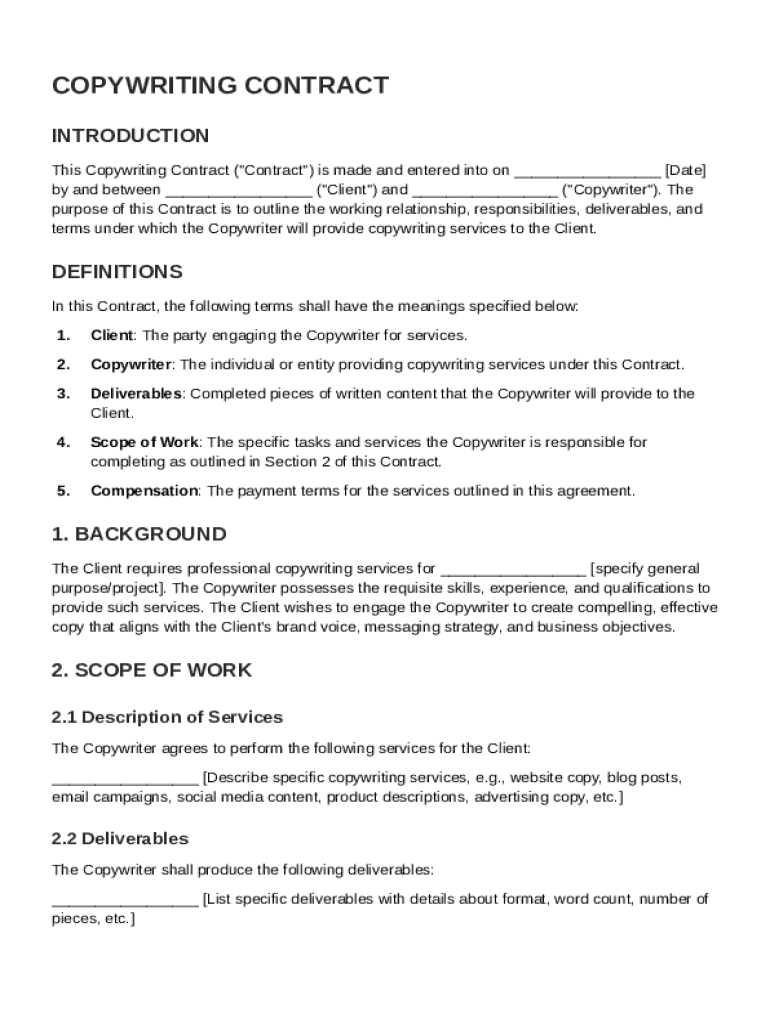
The Copywriting Contract Template is designed to formalize the professional relationship between a client and a copywriter. Its primary purpose is to clarify the terms of engagement, ensuring that all parties are aligned on expectations and responsibilities. This document outlines critical components such as the scope of work, deliverables, compensation, and timelines. It provides a legal framework to safeguard the rights and interests of both the client and the copywriter, thereby minimizing potential disputes.
Key Sections of the Contract
- Scope of Work: Clearly defines the specific tasks and responsibilities expected from the copywriter.
- Deliverables: Describes the type and quantity of content to be produced, as well as quality standards.
- Compensation: Details payment terms, including whether it's per hour, per project, or based on milestones.
- Timeline: Specifies deadlines for deliverables and revision cycles.
How to Use the Copywriting Contract Template
The template serves as a guide to structuring a comprehensive and mutually agreed-upon contract. To utilize it effectively, users should tailor each section to reflect the unique aspects of their arrangement. Start by filling out basic information such as the names and contact details of both parties. Then, customize sections to specify the scope of work and deliverables, ensuring clarity in the expectations from the outset. For instance, a marketing agency focusing on digital content might emphasize SEO-optimized copy and social media posts.
Customization Steps
- Identify the Parties: List the names and roles of each party involved.
- Detail the Project Scope: Define tasks, objectives, and desired outcomes.
- Set Payment Terms: Choose between hourly rates, flat fees, or milestone payments.
- Specify Deadlines: Ensure timelines are realistic and agreed upon.
Who Typically Uses the Copywriting Contract Template
This template is primarily used by freelancers and agencies offering copywriting services to businesses across various industries. It's also prevalent among marketing firms, public relations agencies, and corporate communication departments. Entrepreneurs and startups frequently employ this template when outsourcing content creation to ensure a professional standard and quality outcome.

Use Case Scenarios
- Marketing Agencies: Formalize content strategies and campaigns.
- Freelancers: Ensure clarity and protection when dealing with multiple clients.
- Corporate Communication Teams: Outsource projects to skilled copywriters while maintaining brand consistency.
Key Elements of the Copywriting Contract Template
Several essential components are crucial to the functionality of this contract. These include confidentiality agreements, revision policies, and terms regarding intellectual property rights. The inclusion of clauses around confidentiality ensures that any sensitive business information remains protected, while revision policies guarantee satisfaction with the final output.
Essential Clauses
- Revisions: Outlines limits on changes and client feedback mechanisms.
- Intellectual Property: Determines ownership of the completed work, often allowing the client rights to use the copy.
- Confidentiality: Protects sensitive data shared during the project.
Legal Use of the Copywriting Contract Template
The template is legally recognized if it adheres to the jurisdiction's requirements where the contract is executed. Users should ensure all parties agree to the terms before signing, making the contract enforceable in a court of law if disputes arise. It's advisable to have a legal professional review the contract to confirm compliance with state-specific regulations.
Legal Considerations
- Compliance with Local Laws: The template must adhere to state and federal regulations.
- Governing Law Clause: Specifies which state's laws will interpret the contract in case of a dispute.
Examples of Using the Copywriting Contract Template
Various scenarios demonstrate the practical application of this template. A freelance writer working with a national brand might employ the contract to detail deliverables like blog posts and social media content. Alternatively, an agency could use it to outline a comprehensive marketing campaign, including email marketing, web content, and search engine optimization strategies.
Practical Applications
- Freelance Projects: Protects independent writers working on multiple assignments.
- Agency Campaigns: Entrenches a structured approach to large-scale projects.
Business Types That Benefit Most from the Copywriting Contract Template
Different business entities find the template indispensable, especially those heavily reliant on content, such as e-commerce platforms, educational institutions, and consulting firms. The adaptability of the template allows for easy customization to suit varied needs, fostering professional relationships and successful project outcomes.
Beneficial Business Types
- E-Commerce Businesses: Need detailed product descriptions and marketing copy.
- Educational Institutions: Often require brochures and informative content.
- Consulting Firms: Rely on persuasive copy for strategic communications.
Versions or Alternatives to the Copywriting Contract Template
There are multiple versions and adaptations of this template to accommodate varying business needs and legal conditions. While some versions offer simple agreements for short-term projects, others provide detailed terms suitable for long-term collaborations. Alternatives may include digital contracts or software-based templates that integrate seamlessly with document management platforms.
Alternative Options
- Digital Templates: Offer ease of use and integration with electronic signing software.
- Custom Agreements: Tailored by legal experts for specific projects or industries.
By following this comprehensive approach, users can effectively implement the Copywriting Contract Template to ensure clear communication, mutual understanding, and successful project delivery.