Definition and Meaning
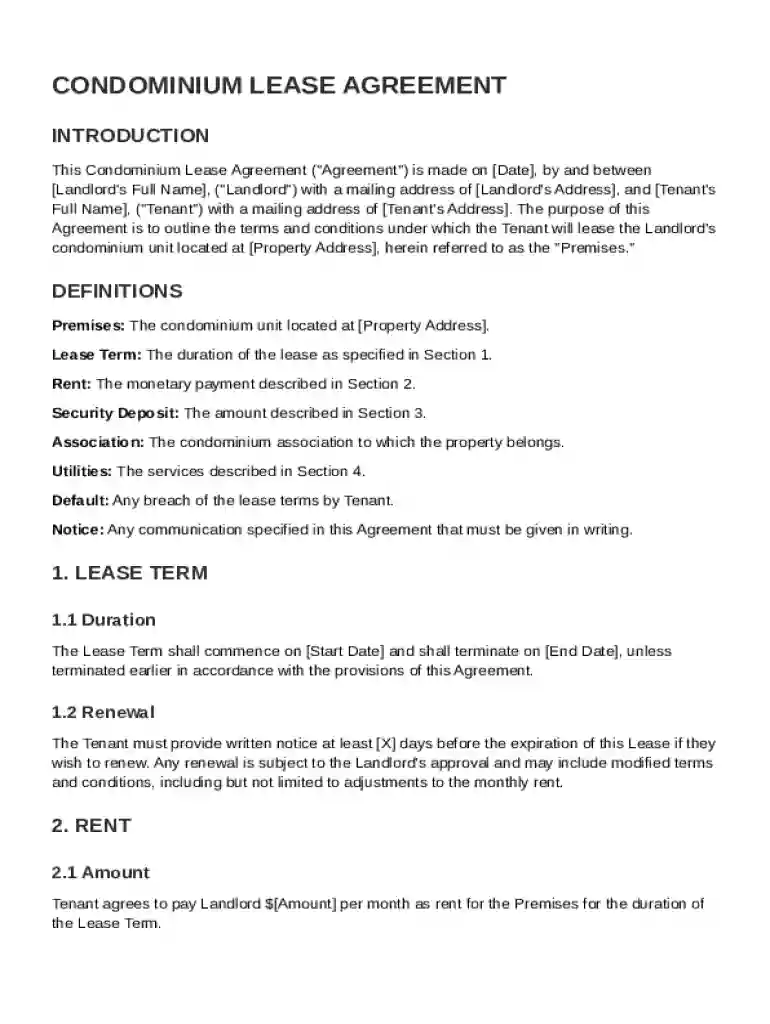
The "Condominium Lease Agreement Template" is a legal document that outlines the terms, conditions, and responsibilities for leasing a condominium unit. This agreement governs the relationship between the landlord and tenant, defining the duration of the lease, the amount of rent, and the obligations of each party. It serves as a comprehensive guide to managing expectations and ensuring compliance with relevant laws and regulations. The template is designed to provide a clear and structured framework, protecting both parties' rights and preventing potential disputes.
Key Components of the Template
- Lease Duration: Specifies the length of the lease term, whether it is a short-term or long-term agreement.
- Rent Details: Includes the rental amount, due dates, payment methods, and any charges for late payments.
- Security Deposit: Outlines the security deposit amount, conditions for its return, and allowable deductions.
- Utilities: Allocates responsibilities for paying utilities such as water, gas, and electricity.
- Premises Use: Dictates the permitted use of the property and restrictions on alterations without consent.
How to Use the Condominium Lease Agreement Template
Using the Condominium Lease Agreement Template involves customizing the document to fit specifics of the rental arrangement.
- Review Standard Terms: Begin by reading through the provided terms to understand what is being set forth.
- Modify Specific Sections: Adjust elements like the rental amount, lease term, tenant obligations, and other areas to reflect the particular agreement.
- Seek Legal Counsel: It is advisable to have the final draft reviewed by a legal professional to ensure compliance with local regulations and to address any unique circumstances.
Customization Tips
- Personal Information: Ensure all personal details of the landlord and tenant are accurately captured.
- Property Description: Clearly describe the property being leased, including address and any additional amenities or features incorporated in the lease.
- Clauses and Addendums: Include any additional clauses or addendums pertinent to your specific agreement, such as pet policies or parking arrangements.
Legal Use of the Condominium Lease Agreement Template
The legal use of the Condominium Lease Agreement Template mandates that it adheres to federal, state, and local laws. This template must reflect:
- Fair Housing Laws: Comply with legislation preventing discrimination against tenants.
- Security Deposit Regulations: Follow guidelines about the maximum deposit allowed and its handling.
- Notice Requirements: Include provisions specifying the notice length required before taking actions like entry, eviction, or rent increase.
Compliance Considerations
- Written Consent: Include clauses requiring written consent for any property alterations.
- Disclosure Requirements: Meet any legal requirements for disclosing issues about the property, such as lead paint or structural hazards.
Key Elements of the Condominium Lease Agreement Template
Integral components of the Condominium Lease Agreement Template ensure comprehensive tenant-landlord coverage.
- Termination Procedures: Specifies conditions under which the lease can be terminated by either party, including notice periods and procedures.
- Dispute Resolution: Provides mechanisms for resolving conflicts, be it via arbitration, mediation, or court actions.
- Tenant Responsibilities: Lists tenant duties such as maintenance obligations and prohibited activities.
- Property Maintenance: Assigns maintenance and repair responsibilities, delineating what falls under landlord versus tenant duties.
Additional Rules
- Subletting Policy: Typically outlines conditions under which subletting is permitted or prohibited.
- Insurance Specifications: May require tenants to obtain renters insurance to protect personal property.
State-Specific Rules for the Condominium Lease Agreement Template
Different states have unique regulations affecting how lease agreements are structured.
Examples of Variations
- Security Deposit Limits: Varying caps on what a landlord can demand as a security deposit.
- Mandatory Disclosures: Certain states require explicit disclosures pertaining to environmental hazards or future construction.
- Notice Requirements for Termination: The mandatory notice a landlord must give before eviction can differ significantly across jurisdictions.
Steps to Complete the Condominium Lease Agreement Template
Completing the Condominium Lease Agreement Template requires careful attention to detail.
- Gather All Information: Obtain full details about the property, tenant, and rental terms.
- Fill In Editable Sections: Insert specific data such as names, addresses, rent amounts, and lease duration.
- Review For Accuracy: Ensure all entries are correct and cross-check with the parties involved.
- Finalize and Sign: Once reviewed, have both landlord and tenant sign the document, ensuring each retains a copy.
Considerations for Finalizing
- Digital Signing: Using platforms like DocHub allows for legally binding electronic signatures, providing a secure and efficient means to execute agreements.
- Record Keeping: Store copies of the executed lease, both digital and paper, in a safe place for future reference.
Important Terms Related to the Condominium Lease Agreement Template
Understanding terminology is crucial to comprehending lease agreements fully.
- Landlord: The owner of the condominium unit who leases the property to a tenant.
- Tenant: The individual renting and residing in the condominium unit.
- Default: Failure by a party to meet their obligations under the lease agreement.
- Assignment: Transferring interests in the lease to another party.
Additional Terms
- Fiduciary Duty: The responsibility of the landlord to act in the tenant's best interest regarding property management.
- Lessee and Lessor: Alternative legal terms for tenant and landlord, respectively.
Examples of Using the Condominium Lease Agreement Template
The Condominium Lease Agreement Template can streamline processes for many landlord-tenant scenarios.
Practical Scenarios
- Long-term Lease: Provides structure for individuals seeking extended habitation periods with predefined terms.
- Corporate Housing Arrangements: Useful for businesses securing lodgings for employees on assignment.
- Seasonal Rentals: Can facilitate agreements for holiday or vacation purposes, setting terms for short-term occupancy.
Case Studies
- Family Leasing for Relocation: A family moving for work utilizes the template to secure a condominium with flexibility while they settle in a new city.
- Student Housing: Addresses the specific needs of temporary student accommodations, ensuring clarity around terms tailored for academic year leases.