




Definition & Meaning
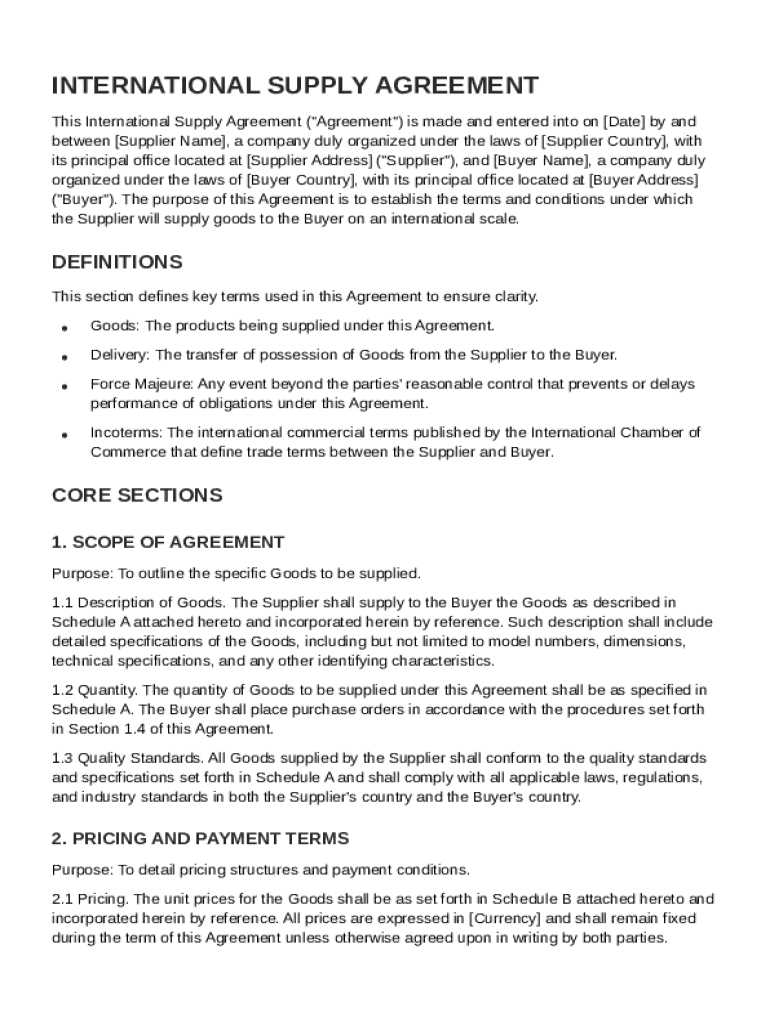
The International Supply Agreement Template is a legal document that establishes the framework for the supply of goods between a supplier and a buyer across international borders. This contract is designed to clearly delineate the responsibilities, rights, and obligations of each party involved in the transaction. The template typically covers crucial components such as pricing, payment terms, delivery schedules, risk allocation, warranties, and dispute resolution methods. By using a standardized template, businesses can ensure consistency, clarity, and compliance with international trade regulations, facilitating smoother transactions and minimizing potential conflicts.
Key Elements of the International Supply Agreement Template
The template includes several critical sections that outline the fundamentals of the agreement:
- Definitions and Interpretations: Clarifies important terms used throughout the document to avoid ambiguities.
- Scope of Supply: Details the specific goods or services to be provided, including specifications, quantity, and quality standards.
- Pricing and Payment Terms: Specifies the agreed-upon prices, currency, payment schedule, and methods. It may also include conditions for price adjustments.
- Delivery Terms: Defines logistics, including delivery dates, locations, and procedures. It covers the transfer of risk and ownership.
- Warranties and Liability: Outlines the guarantees provided by the supplier and the extent of liability in case of non-compliance or defects.
- Force Majeure: Addresses unforeseen events beyond control that may impact the agreement, such as natural disasters or political unrest.
- Dispute Resolution: Provides mechanisms for resolving conflicts, such as arbitration or litigation jurisdictions.
How to Use the International Supply Agreement Template
Utilizing the International Supply Agreement Template involves several steps designed to customize it for specific transactions:
- Identify Parties: Clearly define the supplier and buyer, including their legal names and contact information.
- Customize Clauses: Modify sections to fit the particular needs of the transaction, paying close attention to local laws and industry standards.
- Include Specific Details: Add any additional terms or conditions, such as confidentiality agreements or specific performance indicators.
- Review for Compliance: Ensure the agreement aligns with international trade laws and standards in both parties' jurisdictions.
- Seek Legal Advice: Consult with legal professionals to confirm that the document protects the interests of both parties.
- Execute the Agreement: Secure signatures from both parties to make the document legally binding.
Who Typically Uses the International Supply Agreement Template
This template serves a wide range of businesses engaged in international trade:
- Manufacturers and Suppliers: Companies producing goods for export use this template to clarify terms with international buyers.
- Importers and Exporters: Traders handling the logistical aspects of cross-border sales rely on these agreements for smooth operations.
- Distributors: Entities distributing foreign-made products domestically utilize the template to manage supplier relationships.
- Retailers and Wholesalers: Businesses purchasing goods from overseas suppliers to sell in domestic markets benefit from clear agreements.

Important Terms Related to International Supply Agreement Template
Understanding key terms is essential when using the template:
- Incoterms: Standard trade terms published by the ICC that delineate responsibilities between the buyer and seller.
- Arbitration: A form of dispute resolution where a neutral third party delivers a binding decision.
- Confidentiality Clause: Protects sensitive information exchanged in the course of business.
- Penalties and Remedies: Specified consequences for breach of agreement, such as delays or non-compliance.
Legal Use of the International Supply Agreement Template
This document functions within the boundaries of international trade laws. Legal validity hinges upon:
- Adhering to regulations like the United Nations Convention on Contracts for the International Sale of Goods (CISG) unless parties opt out.
- Ensuring compliance with applicable local and regional trade laws where both parties operate.
- Clearly stating governing law and jurisdiction to preempt jurisdictional disputes in case of legal action.
Examples of Using the International Supply Agreement Template
Practical scenarios illustrate the template's application:
- A U.S. electronics manufacturer contracts with a Japanese supplier for component parts, specifying terms that accommodate both U.S. and Japanese trade regulations.
- A European apparel retailer sourcing clothing from a Vietnamese manufacturer includes delivery terms that account for time-sensitive fashion cycles.
- An Australian distributor making bulk purchases from a Chinese supplier defines penalties for late deliveries exceeding agreed timeframes.
State-by-State Differences
While international agreements are largely standardized, nuances exist:
- Specific state laws may influence the enforceability of certain clauses, such as warranty stipulations or limitation of liability.
- Businesses should adapt templates to align with local trade practices and legal requirements in their respective states.
By understanding and utilizing the International Supply Agreement Template effectively, businesses can ensure smooth and legally sound international transactions.