




Definition and Purpose of a Cloud Contract Template
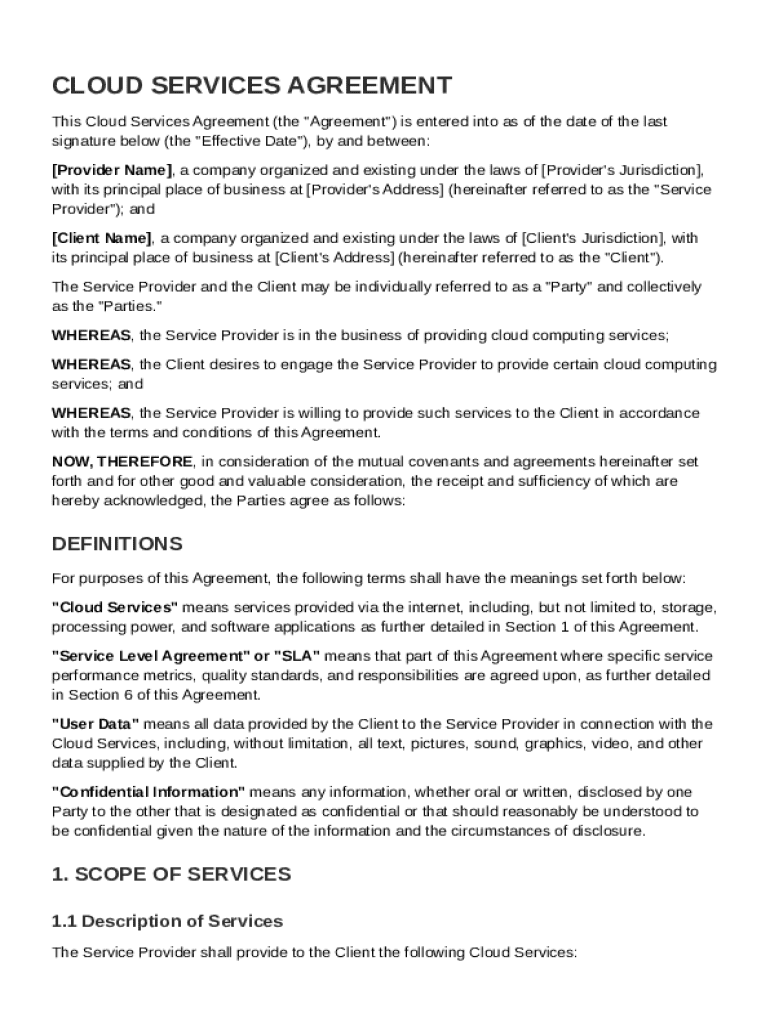
The Cloud Contract Template serves as a pre-structured agreement that outlines the terms and conditions between a service provider and a client for the provision of cloud computing services. This template is designed to streamline the contract creation process by providing a standardized framework that includes crucial sections such as data protection, payment terms, service level agreements, and confidentiality obligations. By utilizing a template, businesses can ensure consistency in their contracts while reducing the time and resources required to draft each agreement from scratch. This is especially beneficial for companies that frequently engage in cloud services, as it allows them to maintain a professional and compliant approach to their contractual obligations.
How to Use the Cloud Contract Template
To effectively use a Cloud Contract Template, follow these steps:
-
Selection and Customization: Start by selecting a template that best fits your business requirements. Customize the template by entering specific information such as the names of the parties involved, the scope of services, and any unique provisions relevant to the agreement.
-
Review and Adjust Content: Carefully review all sections of the template to ensure they align with your specific needs and legal obligations. Adjust any pre-filled content to match the specifics of the contractual relationship you are establishing.
-
Consult Legal Advice: It is advisable to have a legal professional review the customized contract to ensure compliance with relevant laws and regulations and to address any potential ambiguities.
-
Finalize and Share: Once the template is customized and legally vetted, finalize the document and share it with the involved parties for their review and signature.
Important Terms Related to the Cloud Contract Template
The template includes several key terms that are essential to understand:
-
Service Level Agreement (SLA): This section details the expected level of service from the provider, including uptime guarantees and response time for issues.
-
Data Protection: Outlines the measures that both parties will undertake to ensure the security and confidentiality of the data being handled.
-
Confidentiality Obligations: Specifies the constraints on access, usage, and disclosure of confidential information shared under the agreement.
-
Liability Limitations: Defines the extent to which each party is liable in case of breaches or failures within the contract.
-
Termination Clauses: Details the conditions under which the agreement can be terminated by either party and any obligations that survive termination.
Understanding these terms is critical for both parties to ensure that their rights and responsibilities are clearly defined and agreed upon.
Key Elements of the Cloud Contract Template
A comprehensive Cloud Contract Template includes several critical elements:
-
Definitions: Explanation of key terms used throughout the contract to ensure clarity and mutual understanding.
-
Scope of Services: Detailed description of the cloud services to be provided, including any specific deliverables and timelines.
-
Payment Terms: Information on pricing, billing schedules, and accepted payment methods.
-
Warranty and Support: Provisions regarding any warranties offered on the services and the level of support available to the client.
-
Indemnification: Clause detailing the responsibility of each party to defend against and compensate for certain types of losses or claims.
Each of these sections contributes to forming a comprehensive agreement that protects the interests of all involved parties.
Legal Use of the Cloud Contract Template
The legal use of a Cloud Contract Template is paramount for ensuring that the document adheres to applicable laws and regulations. The template is typically designed to align with legal standards and practices widely accepted within the United States. Users should, however, verify that the contract complies with state-specific laws and industry regulations that may influence contract terms. Engaging legal counsel for review can mitigate risks associated with misunderstandings or non-compliance, ensuring that the contract meets all legal requirements and functions as intended to protect both service provider and client.
Who Typically Uses the Cloud Contract Template
Various businesses and organizations utilize Cloud Contract Templates, including:
-
Technology Companies: Companies that provide cloud-based services, such as software, platform, or infrastructure as a service, often require detailed contracts with their clients.
-
Large Enterprises: These entities engage with multiple cloud providers to support their operations and require structured agreements for consistency and clarity.
-
Legal Professionals: Lawyers and legal advisors working on behalf of clients in need of cloud services may use templates to draft initial agreements.
These templates offer a standardized approach to contracting, which is beneficial for both small businesses looking to expand their service offerings and large enterprises managing multiple vendor relationships.

State-Specific Rules for the Cloud Contract Template
While the Cloud Contract Template offers a general framework, it is essential to consider state-specific rules that may impact the contract's provisions. For example, states have differing laws around data privacy and protection, which can influence the requirements for data management outlined in the contract. Additionally, states may have varying rules regarding electronic signatures and records, affecting how contracts are executed and enforced. Businesses should research and comply with state laws relevant to the jurisdiction where the service will be provided or where the parties are located, ensuring that the contract remains enforceable and legally valid.
Examples of Using the Cloud Contract Template
Real-world scenarios where the Cloud Contract Template proves useful include:
-
SaaS Providers: Software companies providing products through a cloud-based model often use this template to establish the rules for licensing and maintaining their software with clients.
-
Educational Organizations: Schools and universities integrating cloud services for virtual learning and administrative operations may rely on templates to manage contractual relationships with multiple vendors.
-
Healthcare Institutions: Hospitals and clinics adopting cloud solutions for patient data management and telehealth services use templates to address data security and compliance concerns.
By employing a Cloud Contract Template, these sectors can ensure structured, consistent, and legally sound agreements with their cloud service providers.