





Definition & Meaning
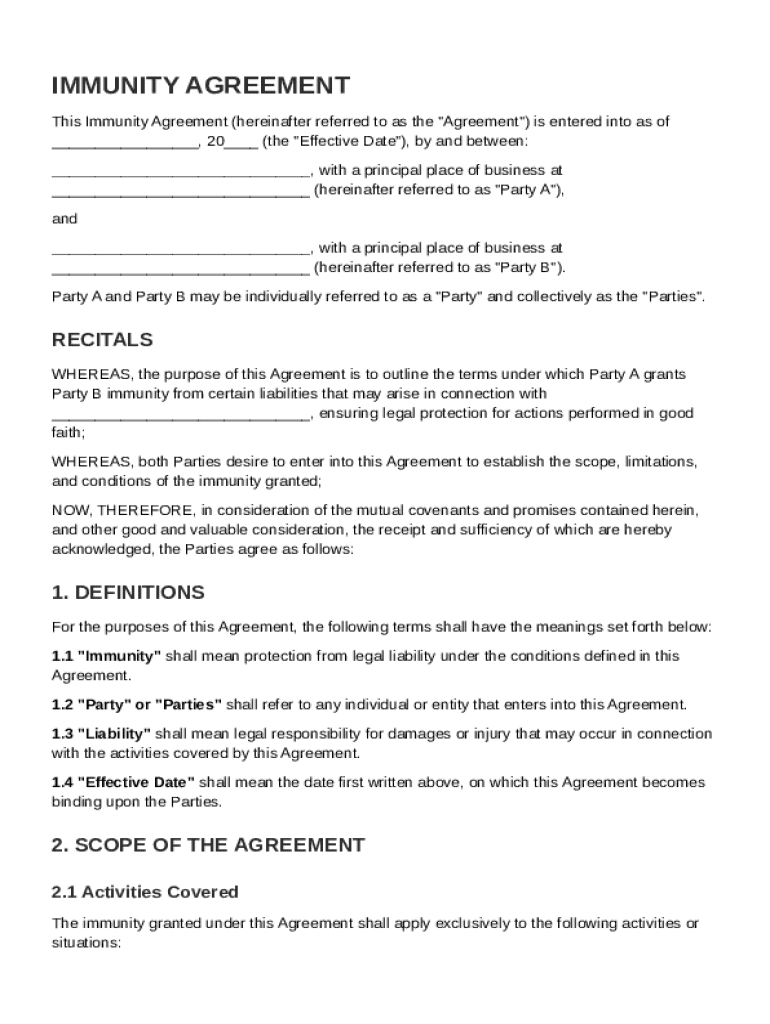
The Immunity Agreement Template is a legal document that establishes the terms under which one party grants another immunity from specific liabilities associated with designated activities. This agreement is integral for ensuring legal protection and clarity in responsibilities and limitations for both parties involved. Typically, it encompasses crucial sections like the scope of immunity, representations, warranties from parties, and dispute resolution procedures. This document serves as a safeguard, providing parties with predefined conditions and legal cover for actions undertaken in good faith.
Key Elements of the Immunity Agreement Template
Understanding the key elements of an Immunity Agreement Template is vital for its effective use. Common components include:
- Definitions: Key terms are precisely defined to avoid ambiguity.
- Scope of Immunity: Outlines the extent and limitations of the immunity granted.
- Representations and Warranties: Statements of fact made by each party.
- Governing Law: Specifies the legal jurisdiction governing the agreement.
- Dispute Resolution: Describes how conflicts will be managed, such as through mediation or arbitration.
- Miscellaneous Provisions: Includes clauses like amendment procedures and notices.
Each of these components is designed to provide comprehensive protection and clarity for both parties. For instance, the scope of immunity ensures that the party receiving immunity fully understands what actions are covered.
Steps to Complete the Immunity Agreement Template
Filling out an Immunity Agreement Template involves several steps:
- Identify the Parties: Clearly state the names and roles of all parties involved.
- Define Terms: Ensure that all key terms are defined in the context of the specific agreement.
- Detail the Scope of Immunity: Precisely articulate what liabilities are covered.
- Include Representations and Warranties: Document the assertions that each party makes.
- Specify Governing Law: Choose the jurisdiction that will govern the agreement.
- Outline Dispute Resolution Methods: Set forth the methods for resolving potential disputes.
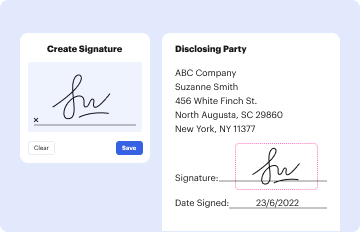
- Finalize with Signatures: Ensure all parties sign to validate the agreement legally.
Each step requires careful attention to detail to prevent misunderstandings and ensure the agreement's enforceability.
Important Terms Related to Immunity Agreement Template
Several terms are crucial for a full understanding of an Immunity Agreement Template:
- Indemnification: Compensating another party for any incurred harm or loss.
- Liabilities: Legal responsibilities or obligations that a party is exempt from under the agreement.
- Breach: Violation of any terms outlined in the agreement.
- Jurisdiction: The legal authority under which the agreement falls.
- Good Faith: Actions taken with honest intent, without intent to defraud.
Grasping these terms enhances comprehension of the agreement's implications and its use.
Legal Use of the Immunity Agreement Template
The legal application of an Immunity Agreement Template is often seen in situations where one party needs protection from potential liabilities that might arise during joint ventures, business transactions, or collaborative projects. The agreement is used to:
- Reduce legal risks for activities performed per agreement terms.
- Define each party's rights and obligations clearly.
- Provide an agreed-upon mechanism for settling disputes.
For instance, in a collaboration between companies, an agreement might be used to protect one party from certain regulatory liabilities.
Examples of Using the Immunity Agreement Template
Immunity agreements are utilized in diverse scenarios, such as:
- Business Collaborations: Two companies sharing technology might use the template to shield from certain legal ramifications.
- Research Partnerships: Institutions conducting joint research may protect partners from liabilities resulting from research activities.
- Contractual Work: A contractor might seek immunity from client liability for specific project components, outlined in the agreement.
These examples show how various industries apply the template to manage risk and foster cooperation.
State-Specific Rules for the Immunity Agreement Template
State-specific laws can influence the composition and enforceability of an Immunity Agreement Template. Variations occur in:
- Recognition of Immunity Clauses: Some states may have differing views on the enforceability of such clauses.
- Governing Law Preferences: Local laws may favor particular dispute resolution methods.
- Document Formalities: Requirements for validation such as notarization may vary.
Understanding these differences is crucial to ensure the agreement complies with local legal standards for enforceability.
Who Typically Uses the Immunity Agreement Template
The template is broadly used by:
- Businesses: To protect against potential liabilities in partnerships or collaborative projects.
- Legal Professionals: To draft tailored agreements for clients.
- Government Agencies: Occasionally for protecting parties involved in public projects.
Each user group harnesses the template to address specific protection needs within their operational contexts.


Software Compatibility
DocHub offers tools compatible with various document formats for creating and managing immunity agreements. Users can edit, sign, and share documents across platforms including PDFs, DOCs, and others, ensuring flexibility in document handling. Access is provided directly through cloud services like Google Drive, optimizing integration with existing workflows and enhancing efficiency in document management.