
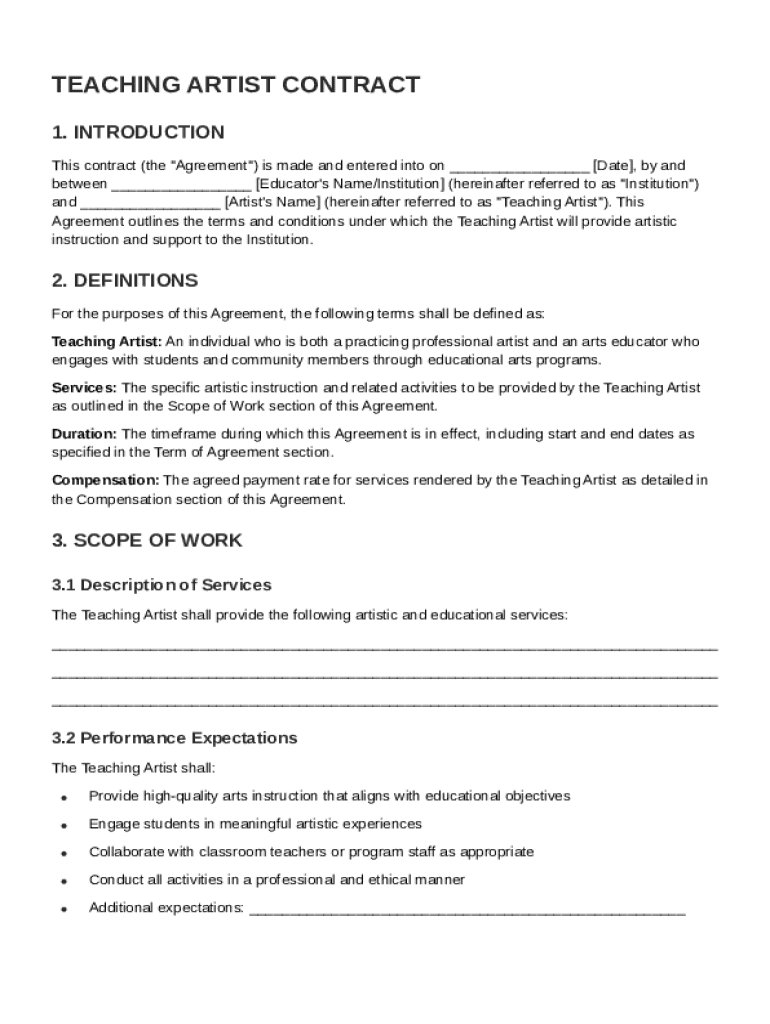







Definition and Meaning
A Teach Artist Contract Template is a formal document that records the agreement between a teaching artist and an educational institution. This contract stipulates the terms under which the teaching artist will provide educational services, often in the realm of arts education. It delineates the expected scope of work, compensation, and the professional boundaries within the working relationship. The document plays a critical role in ensuring that both parties adhere to agreed-upon terms and comply with legal and ethical standards. Such contracts typically include clauses on intellectual property, confidentiality, and dispute resolution to safeguard the interests of both the teaching artist and the institution.
How to Use the Teach Artist Contract Template
Using a Teach Artist Contract Template involves a series of methodical steps. First, review the template thoroughly to ensure it covers all necessary elements relevant to your engagement. Next, customize the template by filling in specific details such as the names of the parties involved, the dates of engagement, and the specific services to be rendered. It's crucial to incorporate any additional clauses or modify existing ones to align with unique requirements or legal advice obtained. After customization, both parties should review the completed document, seek clarification where necessary, and then proceed to sign the contract digitally or in person, ensuring both parties retain a copy for their records.
Key Elements of the Teach Artist Contract Template
The Teach Artist Contract Template is comprised of several key elements designed to clearly establish the terms and expectations of the engagement.
- Definitions: Establishes key terms used throughout the contract for clarity.
- Scope of Work: Outlines the specific duties, responsibilities, and deliverables expected from the teaching artist.
- Compensation and Payment Terms: Details the remuneration structure, payment frequency, and conditions under which payments are made.
- Intellectual Property: Addresses ownership rights over any content or projects created during the engagement.
- Confidentiality: Sets expectations for the handling of sensitive information.
- Termination Conditions: Specifies situations that may warrant the early end of the contract and the processes involved therein.
- Dispute Resolution: Describes methods for resolving misunderstandings or disputes legally and amicably.
Each section is integral to avoiding misunderstandings and ensuring a smooth professional relationship.
Steps to Complete the Teach Artist Contract Template
Completing the Teach Artist Contract Template involves a structured approach:
- Review the entire template to understand its structure and content.
- Customize the general terms to reflect the specific engagement details, including names, dates, and financial arrangements.
- Modify sections to address any specific concerns or requirements of the parties involved.
- Ensure all legal terms align with state-specific regulations and professional guidelines applicable to the arts and education sectors.
- Have both parties review the customized contract to clarify any points of contention or ambiguity.
- Facilitate the signing process, either digitally or manually, ensuring both parties sign in the presence of a witness if needed.
- Retain signed copies for future reference and compliance purposes.
These steps help solidify the agreement and provide a clear framework for the working relationship.
Who Typically Uses the Teach Artist Contract Template
The Teach Artist Contract Template is commonly used by educational institutions, including schools, colleges, and workshops that engage artists to impart education through the arts. Teaching artists, who specialize in bringing artistic skills and perspectives into educational settings, are the other primary users. This template serves as a legal framework for artists in various disciplines, including visual arts, music, dance, and theater. Both parties benefit from the clear expectations and protections outlined in the document, making it an essential tool for establishing professional autonomy and mutual respect.


Legal Use of the Teach Artist Contract Template
Legal use of this template hinges on its compliance with applicable state and federal regulations. It must adhere to labor laws, privacy standards, and intellectual property rights relevant to arts education. Teaching artists, specifically, should ensure that the document accurately reflects their rights to any creative work produced during the contract period. Moreover, compliance with educational standards or institutional policies may necessitate additional clauses or modifications. Consulting a legal professional for validation and to address any jurisdiction-specific requirements can ensure the document is legally enforceable.
Important Terms Related to Teach Artist Contract Template
Several pivotal terms are typically included in a Teach Artist Contract Template to ensure mutual understanding and prevent disputes:
- Engagement Term: The duration for which the teaching artist is contracted.
- Amendments: Provisions for how changes to the contract terms are to be handled.
- Non-Compete and Non-Disparagement: Clauses that govern competitive activities and public commentary during or following the contract term.
- Force Majeure: Conditions under which contractual obligations may be suspended due to unforeseen circumstances.
Understanding these terms is fundamental to managing expectations and maintaining professional standards throughout the engagement.
Examples of Using the Teach Artist Contract Template
Real-world applications of the Teach Artist Contract Template can be seen in various educational settings. For instance, a school district may employ a teaching artist to develop and deliver an arts-based curriculum for students, requiring detailed specifications on lesson delivery and expected outcomes. Alternatively, a museum could use the template when engaging an artist to conduct workshops as part of its community outreach initiatives, stipulating performance metrics and feedback mechanisms. These examples illustrate the template's versatility and importance in formalizing educational collaborations within the arts.




