







Definition & Meaning
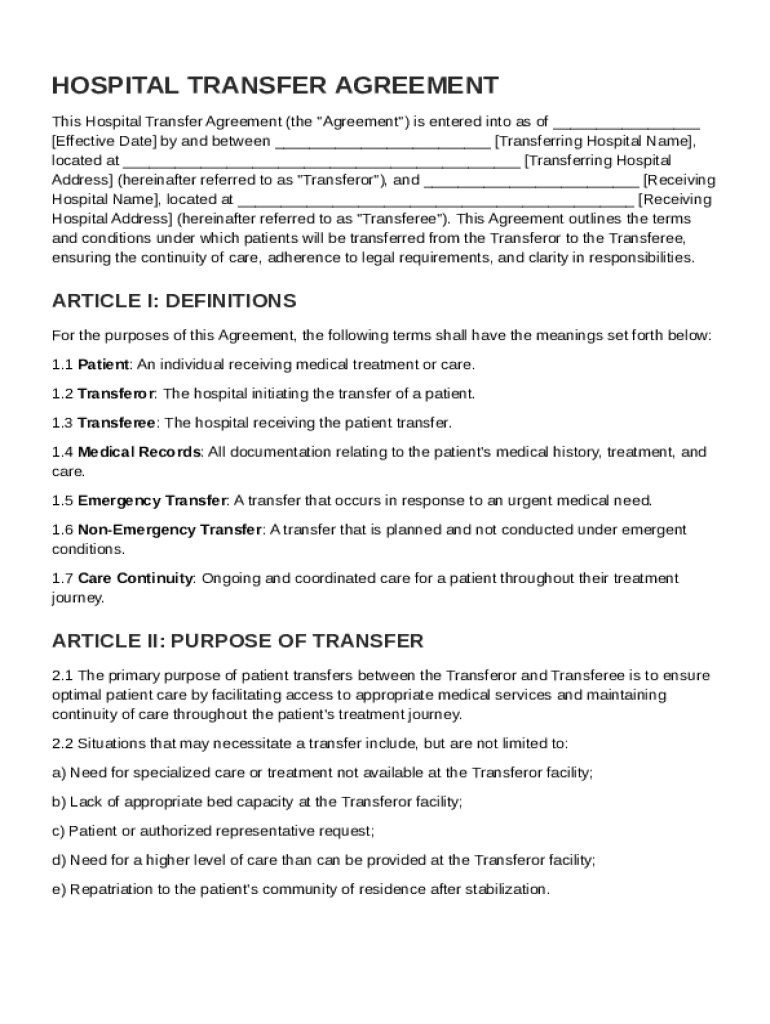
The Hospital Transfer Agreement Template is a structured document that outlines the terms and conditions for transferring patients from one healthcare facility to another. This agreement ensures continuity of care, establishes roles and responsibilities, and mandates adherence to legal and financial stipulations involved in the patient transfer process. It includes detailed guidelines for both emergency and non-emergency transfers to facilitate seamless and efficient relocation of patients.
Hospital transfer agreements are crucial for maintaining the standard of care during transitions. They clarify the responsibilities of the Transferor, the hospital initiating the transfer, and the Transferee, the receiving hospital. The template sets a framework for clear communication and documentation, ensuring that patient information is accurately conveyed to minimize risks and facilitate effective treatment continuity.
Key Elements of the Hospital Transfer Agreement Template
The Hospital Transfer Agreement Template contains several critical components necessary for the successful implementation of a patient transfer. These include:
- Patient Assessment and Documentation: Specifies the process for assessing the patient's condition and compiling necessary medical documentation before transfer.
- Communication Protocols: Establishes guidelines for communication between transferring parties to ensure all relevant patient information is conveyed efficiently.
- Transferor and Transferee Roles: Outlines the responsibilities of each party involved, including who manages patient transportation and care during the transfer process.
- Financial Arrangements: Details the financial obligations of each party, covering costs associated with the transfer and subsequent care.
- Legal Compliance: Ensures that all procedures are compliant with relevant healthcare laws and regulations to protect patient rights.
- Dispute Resolution Mechanisms: Provides structured methods for resolving any disagreements or issues that arise during the transfer process.
How to Use the Hospital Transfer Agreement Template
Utilizing the Hospital Transfer Agreement Template involves a series of strategic steps to ensure the document serves its purpose effectively. These steps include:
- Customization: Tailor the template to the specific requirements of the hospitals involved, ensuring alignment with institutional policies and state laws.
- Documentation: Gather comprehensive patient information, including medical history and current treatment plans, for detailed documentation within the agreement.
- Coordination with Stakeholders: Engage all relevant parties, including administrative staff, medical professionals, and legal advisors, in discussions to fill out the template accurately.
- Review & Verification: Conduct a thorough review for accuracy and completeness. Verification should be performed by healthcare professionals and legal advisors to ensure compliance and efficacy.
- Execution: Finalize, sign, and exchange the agreement between involved parties. Secure necessary approvals from stakeholders to legitimize the agreement.
The process necessitates close collaboration with multiple departments within each facility to guarantee harmonious planning and execution.
Steps to Complete the Hospital Transfer Agreement Template
Completing the Hospital Transfer Agreement Template involves several detailed steps that ensure all necessary information is included and correct:
- Identify Participants: Clearly specify the Transferor and Transferee hospitals, along with key contact individuals responsible.
- Define Terms: Establish terms related to the purpose of transfer, types of transfers covered, and the duration of the agreement.
- Gather Patient Information: Compile necessary medical and personal patient information required to facilitate the transfer.
- Outline Communication Channels: Define the primary modes and frequency of communication between involved parties during the transfer.
- Document Financial Terms: Include detailed financial responsibilities and agreements to manage costs associated with the transfer.
- Legal Review: Conduct a legal review to ensure compliance with federal and state healthcare regulations, mitigating potential legal issues.
- Finalize Agreement: Obtain consent and signatures from authorized representatives of both facilities, ensuring all parties are informed and agree to the terms.
Throughout these steps, it is critical to adhere to precision in documentation to minimize errors and ensure smooth transitions.
Who Typically Uses the Hospital Transfer Agreement Template
The template is typically used by healthcare administrators and legal teams within hospitals and medical centers. These professionals are responsible for ensuring that patient transfers adhere to institutional policies and legal requirements.
- Healthcare Administrators: Oversee the operational aspects of patient care transitions, including coordination and resource allocation.
- Legal Advisors: Ensure all agreements comply with relevant healthcare laws and provide protection against liabilities.
- Medical Staff: Engage in planning and executing the transfer in medical terms, ensuring effective patient care continuity.
- Financial Planners: Manage and outline financial responsibilities associated with patient transfers, ensuring clear and feasible arrangements.
The template is an essential tool for these professionals to structure and formalize patient transfers efficiently and legally.


Legal Use of the Hospital Transfer Agreement Template
The legal use of a Hospital Transfer Agreement Template encompasses adherence to all applicable laws and regulations governing patient transfers. Key considerations include:
- Compliance with HIPAA: Ensuring the protection of patient privacy by complying with the Health Insurance Portability and Accountability Act (HIPAA) during data exchange.
- Adherence to State Laws: Being mindful of specific state regulations that may impact how transfers are conducted and documented.
- Ethical Considerations: Standardizing practices that align with ethical standards in care transitions.
- Risk Management: Identifying and mitigating potential risks associated with the transfer, such as information breaches or medical errors.
The agreement ensures that legal obligations are met, protecting both patient and institutional interests.
Variations and Alternatives to the Hospital Transfer Agreement Template
There are variations and alternatives to the Hospital Transfer Agreement Template that might be used depending on specific institutional needs or circumstances:
- Digital Templating Systems: Use of digital platforms to generate hospital transfer agreements automatically, ensuring efficiency and reduced errors.
- Custom Agreements: Tailored agreements designed for complicated cases or facilities outside the usual scope of the template.
- Inter-agency Transfer Agreements: Specific templates used for transferring patients between different types of healthcare facilities, such as residential care or specialized unit transfers.
These alternatives provide flexibility and customization to meet diverse healthcare facility requirements.
Examples of Using the Hospital Transfer Agreement Template
Providing examples of real-world applications helps illustrate the utility and versatility of the Hospital Transfer Agreement Template:
- Emergency Situations: When a patient requires immediate care not available at the current facility, the template defines roles and procedures for swift emergency transfers.
- Specialist Care Transfers: For cases where a patient needs specialized treatment, such as oncology, the template facilitates organized transfers to specialist hospitals.
- Care Continuity: In scenarios where a patient is moved to a long-term care facility, the template provides a comprehensive framework to ensure all patient information is accurately transferred.
Understanding these scenarios helps illustrate the template's role in supporting effective patient care transitions across a wide range of situations.




