Definition and Meaning of a Warehouse Agreement
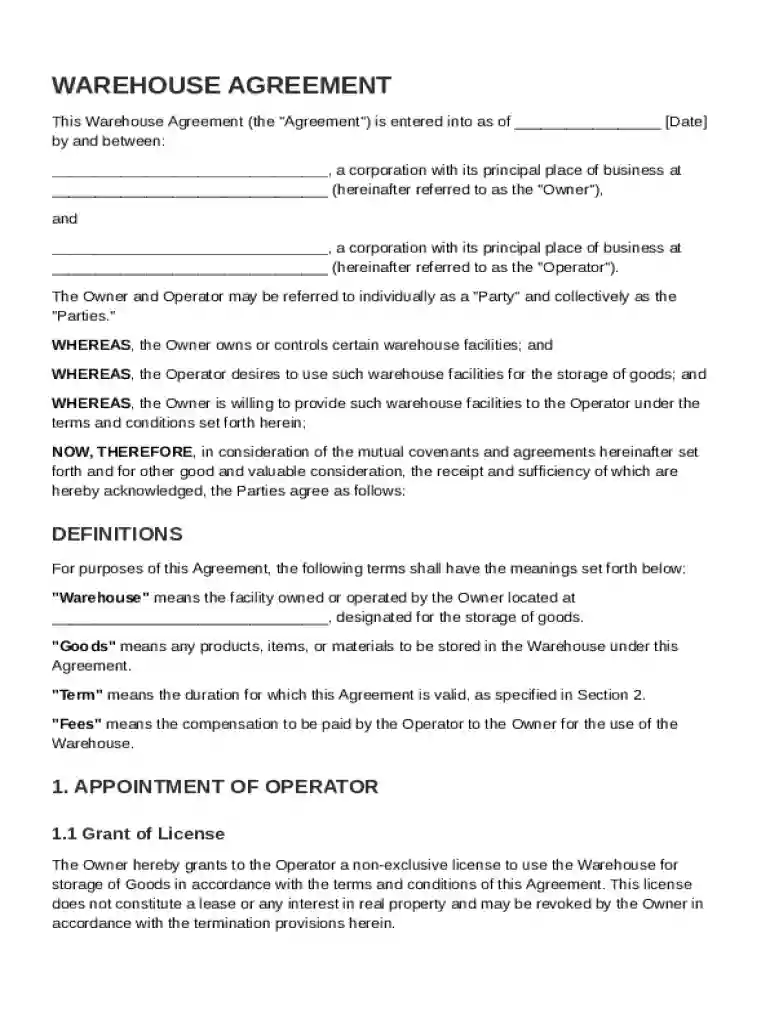
A Warehouse Agreement is a legally binding document that outlines the terms and conditions under which a warehouse operator is granted permission to use a storage facility for housing goods. This agreement is crucial for establishing the legal framework in which an operator stores and manages inventory. Key elements of this document include the rights and responsibilities of both the owner of the warehouse and the operator. It delineates the duration of the lease, compensation arrangements, and procedures for inventory management. The agreement ensures that the operator maintains the goods according to specified standards while also complying with relevant laws. Additionally, it limits the liability of the owner, making it a critical protective measure for both parties involved.
How to Use the Warehouse Agreement Template
The Warehouse Agreement Template is a structured guide designed to streamline the creation of a comprehensive warehouse agreement. To use this template effectively:
- Review the Template: Familiarize yourself with the sections included, such as definitions, compensation details, and termination conditions.
- Customize Details: Modify specific sections to reflect the unique arrangements between the warehouse owner and the operator, including rent amounts, lease duration, and any special storage requirements.
- Legal Review: Have a legal professional review the completed document to ensure compliance with state laws and industry standards.
- Finalize and Sign: Ensure both parties sign the agreement to make it legally binding. Utilize electronic signature tools for efficiency and security.
- Distribute Copies: Share the finalized document with all relevant parties and store it securely, whether digitally or physically.
Steps to Complete the Warehouse Agreement Template
Completing the Warehouse Agreement Template involves several systematic steps:
- Enter Parties' Information: Fill in the names, addresses, and contact information for both the warehouse owner and the operator.
- Outline Responsibilities: Clearly define the roles and obligations of each party concerning inventory management and compliance with safety protocols.
- Specify Terms and Duration: Input the specific terms of the agreement, including start and end dates, and any renewal options.
- Compensation Details: Provide detailed information on rental payments, payment schedules, and any additional charges or fees.
- Inventory Management: Describe the procedures and responsibilities for inventory tracking, reporting, and auditing.
- Define Termination Conditions: Include conditions under which the agreement can be terminated, along with any notice requirements.
- Liability and Insurance: Specify the insurance requirements and limitations of liability for both parties involved.
Important Terms Related to the Warehouse Agreement
Understanding key terms within the Warehouse Agreement Template is essential for clarity:
- Non-exclusive License: Grants the operator permission to use the space without exclusivity, allowing the owner to make other arrangements independently.
- Compensation: The agreed financial arrangement for using the warehouse, covering rent and potential additional costs.
- Inventory Management: The process through which goods are tracked, stored, and reported, critical for maintaining order and accountability.
- Termination Conditions: Circumstances stipulated in the agreement that allow either party to exit the contract legally.
- Liability Limitations: Provisions that protect the warehouse owner from certain legal responsibilities related to stored goods.
Legal Use of the Warehouse Agreement Template
The Warehouse Agreement Template serves as a vital legal document recognized under U.S. law. It outlines the commitments each party makes and is enforceable in a court of law. Utilizing this template helps ensure adherence to applicable regulations governing the storage of goods, liability issues, and leased property use. It is advised to:
- Consult Legal Counsel: Engage with legal professionals to review the agreement, ensuring all pertinent legal requirements are met.
- Follow State-Specific Regulations: Adjust the agreement to align with state-specific laws that govern warehousing operations.
Key Elements of the Warehouse Agreement Template
The Warehouse Agreement Template encompasses several critical sections:
- Definitions: Establishes precise meanings for terms used throughout the document.
- Duration: Details the time period the agreement will remain in effect.
- Compensation: Outlines the rent and payment structures.
- Rights and Responsibilities: Describes the duties of both the owner and the operator regarding warehouse management.
- Termination Conditions: Lists stipulations under which the agreement can be terminated, including required notice periods.
- Miscellaneous Provisions: Covers any additional clauses that are relevant to the specific circumstances of the agreement.
State-Specific Rules for the Warehouse Agreement
While the Warehouse Agreement Template provides a general framework, modifications may be necessary to ensure compliance with state-specific regulations:
- Local Licensing Requirements: Some states may require warehouse operators to hold specific licenses or permits.
- Insurance Mandates: States could have unique requirements regarding insurance coverage for stored goods.
Examples of Using the Warehouse Agreement Template
The Warehouse Agreement Template is versatile and can be applied in various scenarios:
- Small Business Logistics: A small business using a third-party warehouse to distribute products can customize the agreement to specify storage and handling instructions.
- Seasonal Inventory Storage: Companies needing additional storage for seasonal inventory can set specific lease terms focusing on their short-term needs.
- Retail Chains: Retailers requiring a network of warehouses can utilize the template to maintain standardized contracts across multiple locations.