







Definition and Meaning
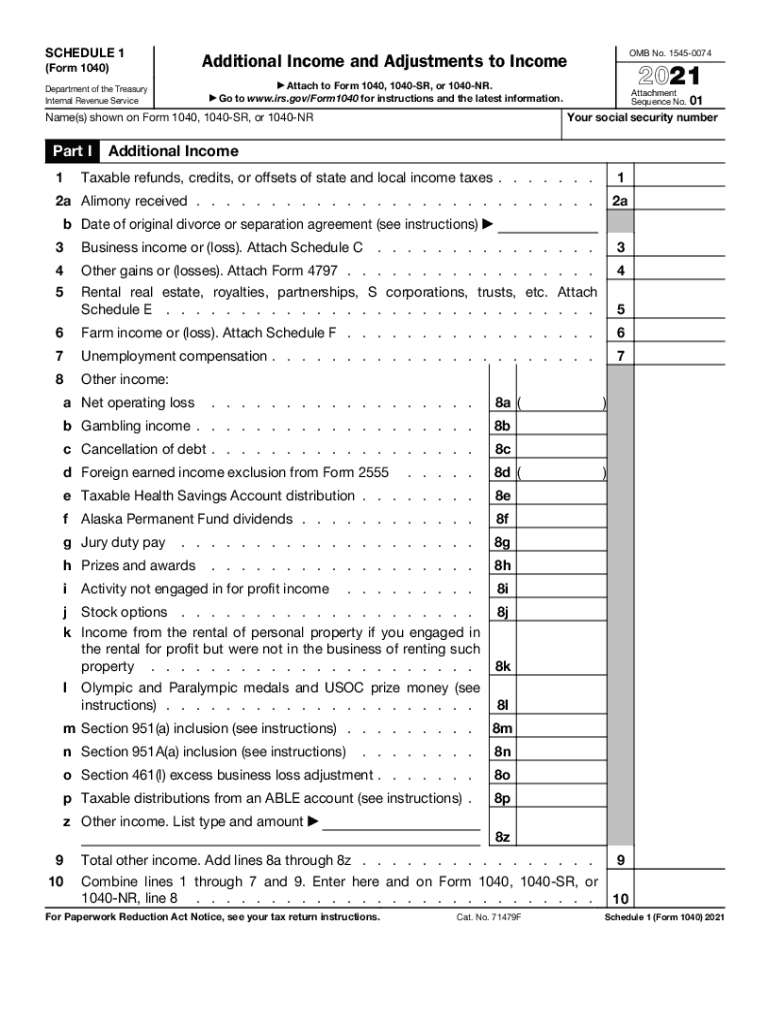
Schedule 1 of the IRS Form 1040 is an additional document required for certain taxpayers to report income types and adjustments not covered in the standard 1040 form. It encompasses various categories of income such as alimony received, business profits, and rental income. It also includes deductions like student loan interest and health savings account contributions. The form plays a crucial role in ensuring a comprehensive declaration of financial activity, aiding in the accurate calculation of tax liabilities.
Steps to Complete the 1040 Schedule 1
- Gather Necessary Documents: Collect all relevant documents, including evidence of alimony, business income, and other sources of additional income.
- Fill Out Income Section: Record any supplemental income not declared on your standard 1040 form, utilizing relevant documentation.
- List Adjustments to Income: Provide details of allowable deductions such as educator expenses or IRA contributions.
- Review and Attach: Carefully verify all entered information for accuracy. Attach Schedule 1 to your main 1040 form before submission.
Ensuring that each section is thoroughly completed prevents any errors that could affect the final tax calculations.
How to Obtain the 1040 Schedule 1
Schedule 1 can be obtained through several methods:
- IRS Website: Download the form directly from the IRS website.
- Tax Software: Access it via tax preparation software such as TurboTax, which integrates it within the tax filing process.
- Accounting Professionals: Consult a tax professional who can provide you with the form and guidance on completing it.
Having multiple channels to obtain the form allows taxpayers flexibility in choosing the most convenient method.
Key Elements of the 1040 Schedule 1
Schedule 1 comprises critical sections capturing:
- Additional Income: Alimony received, rental earnings, and gains from hobby-based activities.
- Adjustments to Income: Contributions to retirement accounts, health savings account deductions, and student loan interest.
Each section requires supporting documentation to substantiate the claims, emphasizing meticulous record-keeping.
IRS Guidelines
The IRS provides specific guidelines for completing Schedule 1:
- Accuracy: Ensure all entries align with supporting data.
- Eligibility for Deductions: Verify if you meet the criteria for any deductions claimed.
- Timeliness: Submit Schedule 1 with the main tax return by the filing deadline to avoid penalties.
Referring to the IRS instructions helps maintain compliance and avoid potential issues during filing.
Important Terms Related to the 1040 Schedule 1
- Alimony Received: Income from previous marital agreements, taxable under certain conditions.
- Business Income: Profits derived from business operations, subject to taxation.
- IRA Deduction: Contributions to an individual retirement account, potentially deductible from gross income.
Understanding these terms ensures accurate representation of one’s financial status on the form.
Who Typically Uses the 1040 Schedule 1
Taxpayers with:
- Additional Income Sources: Those receiving more than just ordinary wages or salaries.
- Specific Deductions: Individuals eligible for deductions not included in the main 1040 form.
- Complex Financial Situations: Taxpayers requiring precise tax computations due to diverse income streams.
These user categories highlight the necessity for Schedule 1 in comprehensive tax reporting.


Filing Deadlines and Important Dates
- Annual Deadline: Typically April 15th, unless an extension is granted.
- Extension Requests: Must be filed before the deadline to avoid penalties.
- Quarterly Payments: Individuals with expected quarterly tax payments should align their schedules accordingly.
Sticking to these deadlines is crucial to avoid late fees and additional financial liabilities.




