






Definition and Meaning
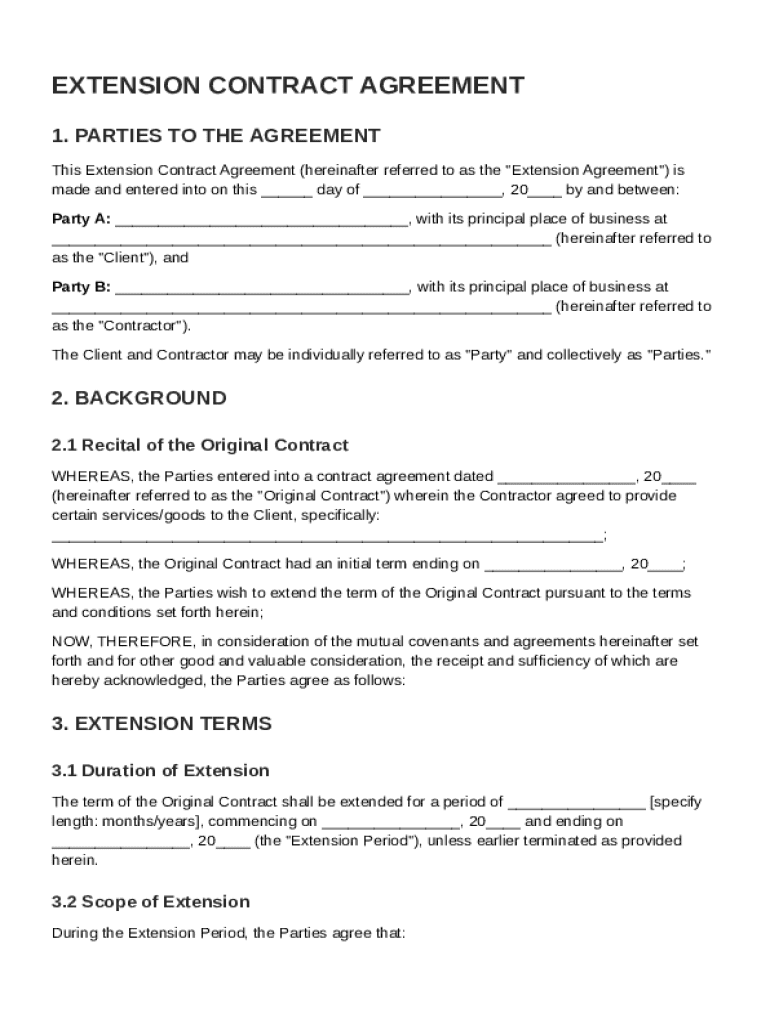
An extension contract template is a formal document used to extend the duration of an existing agreement between two parties, usually referred to as the client and the contractor. The primary goal of this template is to provide clear terms and conditions for prolonging the original contract's timeframe. Often utilized in settings where ongoing services or goods are needed beyond the initial contract period, this document ensures that both parties remain on the same page regarding expectations and responsibilities for the extended period.
Purpose of the Template
- Clarifies terms: Clearly outlines the duration of the extension and any modifications to the original contract terms.
- Details obligations: Includes responsibilities and obligations of each party during the new term.
- Ensures continuity: Emphasizes that all unmodified terms from the original contract remain in force unless explicitly changed.
Key Elements of the Extension Contract Template
The extension contract template incorporates several crucial elements to ensure comprehensive coverage and clarity. These elements are essential for defining the extended relationship between the client and contractor.
Essential Components
- Extension Term: Specifies the new period during which the agreement remains active.
- Payment Terms: Details any changes in payment schedules or amounts during the extension period.
- Obligations and Duties: Clearly defines the responsibilities of each party during the extended contract duration.
- Termination Clauses: Outlines the conditions under which either party can terminate the agreement.
- Miscellaneous Provisions: May include governing laws, amendment procedures, and the effect of the extension on the original contract.
Steps to Complete the Extension Contract Template
Completing an extension contract template involves several critical steps to ensure accuracy and compliance with both parties' expectations.
Step-by-Step Process
- Review Original Contract: Begin by revisiting the terms of the original contract to ensure understanding of the existing obligations and provisions.
- Define Extension Period: Clearly specify the new dates and duration for the contract's extension.
- Update Payment Terms: Note any changes to the original payment structure, including amounts and due dates.
- Detail Modified Obligations: Update or confirm the obligations of each party during the extended period.
- Include Termination Rights: Clearly outline the rights each party has to end the contract before the new term concludes.
- Finalize and Sign: Both parties should review the completed template, make any necessary amendments, and sign to formalize the extension.
Legal Use of the Extension Contract Template
When using an extension contract template, it is crucial to ensure that it complies with legal standards to protect both parties' interests and ensure enforceability.
Compliance Considerations
- Governing Law: The template should specify the jurisdiction under which the contract will be governed.
- Amendment Procedures: Include procedures for how modifications to the contract can be made post-signature.
- Legal Binding: Make sure all parties understand that the extension is legally binding and enforceable in court.
Important Terms Related to the Extension Contract Template
Understanding the terminology within an extension contract template can significantly enhance comprehension and execution efficiency.
Common Terms
- Parties: Identifies the individuals or entities entering into the contract.
- Original Agreement: Refers to the initial contract document being extended.
- Effective Date: The date on which the extension takes effect.
- Renewal Option: Any options available for further renewal after the current extension period.
Who Typically Uses the Extension Contract Template?
The extension contract template is widely used across various industries and sectors, but certain entities find it particularly useful.


Common Users
- Businesses: Companies seeking to extend services or supplier contracts.
- Freelancers: Independent contractors who provide ongoing services to clients.
- Service Providers: Organizations that offer continual services like maintenance or consultation.

Examples of Using the Extension Contract Template
Examining practical uses of the extension contract template provides insight into its versatility and utility in real-world situations.
Real-World Scenarios
- Construction Projects: Extending contracts when projects exceed original timelines.
- Consulting Services: A consultant may require more time to complete a project as initially envisaged.
- Vendor Agreements: Extending a contract with a supplier to ensure the continued delivery of essential goods.
Digital vs. Paper Version
Understanding the advantages and disadvantages of using digital versus paper versions of the extension contract template is essential for selecting the right format.
Comparison
- Digital Version: Offers ease of editing, sharing, and storing; often includes e-signature options for quick, legally binding authorization.
- Paper Version: Preferred for physical filing and when digital access is restricted; often requires manual signatures.
- Consideration Factors: When choosing, consider access to digital tools, storage preferences, and team collaboration needs.
Software Compatibility
With the increasing reliance on digital tools, ensuring software compatibility with the extension contract template is crucial for seamless document management.
Supported Platforms
- DocHub Features: Compatibility with various file formats (PDF, DOC, etc.) ensures flexibility in creating and editing templates.
- Integration Capabilities: Works with cloud services like Google Drive, Dropbox, enabling easy import/export functionality.
- Access Platforms: View, edit, and manage the extension contract template via both desktop and mobile devices without dedicated software installation.