







Key Elements of the Event Security Contract Template
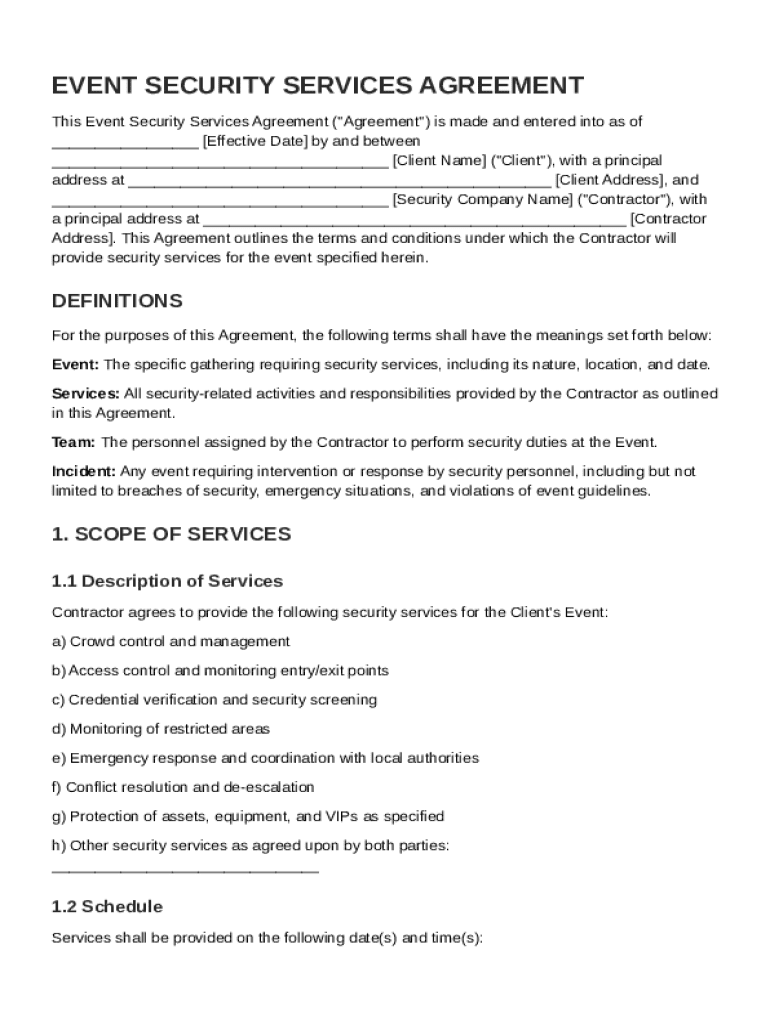
An Event Security Contract Template is a crucial document that outlines the terms and conditions for security services at an event. This template typically includes several fundamental components designed to ensure clarity between all parties involved.
-
Scope of Services: This outlines what specific security services will be provided during the event. It is essential to define the duration, type of services (e.g., crowd control, access monitoring), and the number of security personnel required.
-
Responsibilities of Parties: Clearly defines the roles and obligations of both the client and the security provider. This section might include responsibilities like arranging for necessary permits or providing a secure location for security personnel to store their equipment.
-
Compensation Details: This section discusses the payment terms, including the total fee, payment schedule, and any additional costs that might arise. It's important to state whether payment is fixed or based on hourly rates.
-
Confidentiality Requirements: Here, confidentiality clauses ensure that sensitive information related to both the client and the event is protected.
-
Insurance Obligations: This section specifies the types of insurance the security provider must carry, such as general liability insurance, to cover any potential incidents during the event.
-
Indemnification Clauses: Indemnification provisions describe the responsibilities involved in the event of a claim. The client and security provider agree to protect each other from legal proceedings arising from incidents related to the event.
-
Compliance with Laws: Security services must adhere to local, state, and federal laws. This section confirms the contractor's commitment to operate within legal boundaries.
-
Provisions for Amendments and Governing Law: Details the process for making changes to the agreement after it has been signed and identifies which state's laws will govern the contract.
How to Use the Event Security Contract Template
Utilizing an Event Security Contract Template requires understanding its structure and purpose. Here’s a guide to using the template most effectively:
-
Review and Customize: Begin by thoroughly reviewing the entire template. Customize the sections to match the specific requirements and context of the event. Modify the scope of services, fees, and responsibilities according to the agreement made between the client and security provider.
-
Consult Legal Advisors: Before finalizing the contract, it’s advisable to consult with a legal professional to ensure all legal aspects are covered and the document complies with applicable laws.
-
Secure Necessary Approvals: Once customized, obtain necessary approvals from all parties involved, including signatures from authorized representatives.
-
Communicate Terms Clearly: Make sure that all the terms and conditions are clearly communicated to involved parties to prevent misunderstandings.
Steps to Complete the Event Security Contract Template
Completing the Event Security Contract Template involves a series of specific actions:
-
Gather Required Information: Compile all necessary details, including event specifics, roles, and services to make a comprehensive template.
-
Fill Out Each Section: Enter the collected information into the appropriate sections of the template, ensuring accuracy and thoroughness.
-
Review and Revise: After completing the form, review it for any errors or omissions. Update any section that could lead to ambiguities.
-
Secure Signatures: Ensure that the final contract is signed by all necessary parties to make it legally binding.
-
Distribute Copies: Provide a copy of the finalized, signed contract to all parties involved to maintain transparency and for reference.
Who Typically Uses the Event Security Contract Template
The primary users of an Event Security Contract Template include:
-
Event Planners: They use this template to clearly outline security needs and expectations with security service providers.
-
Security Companies: Utilize the template to provide structured and consistent terms across different clients and events.
-
Corporate Clients: Large corporations organizing events may use these contracts to ensure a standard approach to security services.
-
Venue Managers: Often involved in facilitating the agreement between clients and security providers to ensure a well-organized event.


Legal Use of the Event Security Contract Template
Ensuring the legal use of the template involves:
-
Adherence to Local Laws: Contracts must comply with state-specific security and privacy laws, ensuring both parties operate legally.
-
Consistent Updates: Keeping the template updated according to any new regulations or sector-specific requirements ensures continued legal compliance.
-
Drafting by Legal Professionals: Involving attorneys in the initial drafting process to ensure all legal angles are covered and no oversight occurs.
State-Specific Rules for the Event Security Contract Template
State-specific variations may impact the application of the Event Security Contract Template:
-
Differing Security Regulations: Each state might have distinct laws regarding the hiring and operations of security personnel, affecting contract terms.
-
Insurance and Liability Requirements: Insurance requirements for events can vary by state, influencing the necessary clauses in the agreement.
-
Additional Permits or Licenses: Some states might require unique permits for security practices that must be specified in the contract.
Software Compatibility and Integration
For modern document management, compatibility with various software is vital:
-
DocHub Integration: Utilize platforms like DocHub for smooth editing, signing, and sharing of the Event Security Contract Template, accommodating various formats such as PDF and DOC seamlessly.
-
Cloud Storage and Accessibility: Users can store, access, and manage the template on cloud services, enhancing collaboration across multiple stakeholders without compatibility issues.
-
Google Workspace Utilization: Integration with Google Workspace allows easy sharing and collaboration, crucial for event managers and security teams working remotely.
Examples of Using the Event Security Contract Template
Real-world application of the Event Security Contract Template provides context:
-
Concert Security Planning: For a large concert, the template helps outline specific security duties like managing entrances, checking tickets, and handling crowd control.
-
Corporate Event Coordination: In a corporate setting, the template ensures all security measures are discussed and agreed upon, such as executive protection for VIPs.
-
Private Gatherings: Smaller events such as private parties also benefit from defined security expectations, ensuring appropriate personnel is arranged according to the event scale.




