Definition & Meaning
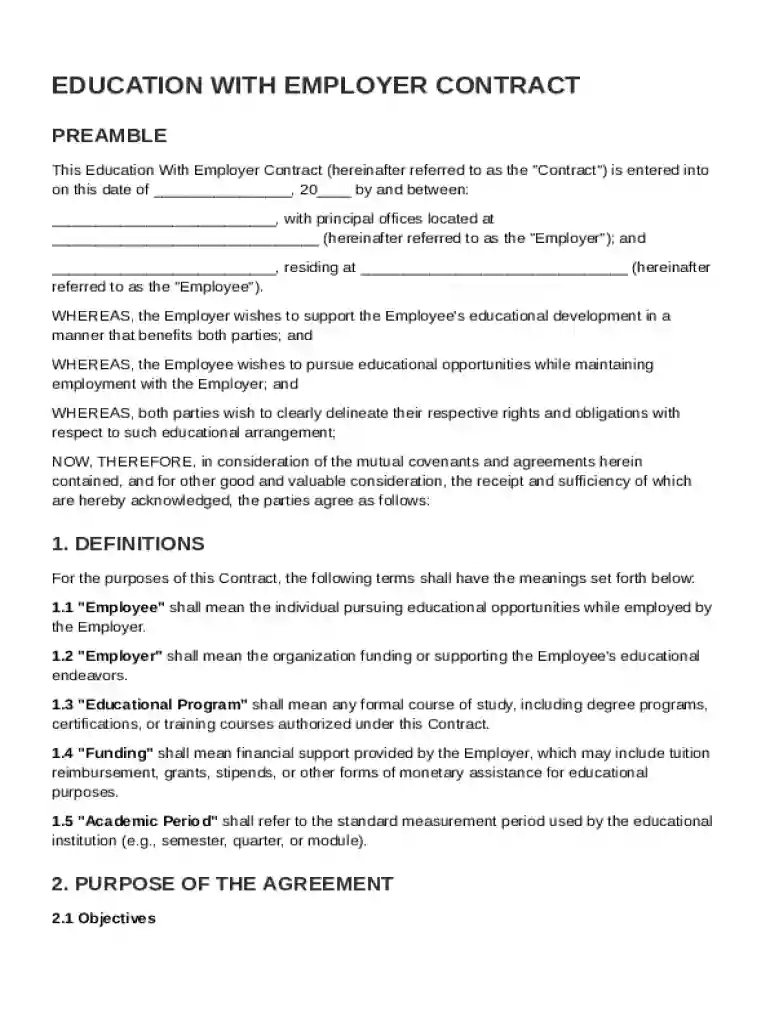
The "Education With Employer Contract Template" serves as a formal agreement between an employer and an employee. This document outlines the conditions under which the employer provides financial support for the employee's educational pursuits. The primary purpose of the contract is to clarify roles, responsibilities, and expectations for both parties. It establishes mutual benefits by enhancing the employee's skills relevant to their job, thereby increasing productivity and job satisfaction.
Key Components of the Contract
- Financial Support Provisions: Specifies the types of educational programs covered, such as degree courses, certifications, or workshops, as well as any monetary limits.
- Roles and Responsibilities: Outlines the obligations of the employee in terms of attendance, academic performance, and completion of the educational program.
- Repayment Conditions: Details the circumstances under which the employee must reimburse the employer for educational expenses, such as failing to meet grade requirements or leaving the company prematurely.
How to Use the Education With Employer Contract Template
To effectively utilize the Education With Employer Contract Template, both parties should engage in open discussions about their goals and expectations from the educational program. The contract should be tailored to reflect specific requirements and agreements.
Steps for Customization
- Discuss Educational Goals: Determine the courses or programs that align with the company’s interest and the employee’s career growth.
- Negotiate Terms: Agree on financial limits, repayment conditions, and performance benchmarks.
- Legal Review: Consider having the contract reviewed by legal professionals to ensure compliance with company policies and relevant laws.
- Formalize Agreement: Once both parties agree on the terms, the contract should be signed and dated to become legally binding.
Steps to Complete the Education With Employer Contract Template
Completing the contract requires careful attention to detail to ensure clarity and legal soundness. The following steps can guide both parties through the process:
- Identify Parties Involved: Clearly state both the employer’s and the employee’s names and contact information.
- Outline Educational Assistance: Specify what type of educational support is provided, including any academic performance requirements.
- Detail Repayment Obligations: Define the conditions that would trigger repayment, such as voluntary termination of employment.
- Set Performance Criteria: Establish the academic standards that the employee is expected to maintain.
- Specify Duration: Indicate the time frame during which the employee must complete the education.
- Finalize Signatures: Both parties need to sign the document to confirm agreement.
Common Mistakes to Avoid
- Vague Terms: Always provide specific details to avoid misunderstandings.
- Ignoring Legal Advice: Failure to consult legal professionals may leave one open to potential disputes.
- Neglecting Performance Metrics: Clearly identify academic or work performance metrics.
Key Elements of the Education With Employer Contract Template
Several critical elements should be present in the contract to ensure it addresses all possible considerations and contingencies:
Financial Arrangements
- Limitations on Expenses: State the maximum amount covered and how payments will be handled.
- Reimbursement Clauses: Include circumstances that may require repayment by the employee.
Educational Requirements
- Eligible Programs: Clearly list the types or specific courses eligible for support.
- Grade Standards: Specify the minimum academic performance needed for continued support.
Importance of the Education With Employer Contract Template
The template is essential for structuring a formal agreement that protects both parties’ interests while fostering professional development.
Benefits for Employees
- Career Growth: Access to further education can enhance skills and open up new career opportunities.
- Financial Aid: Eliminates or reduces personal financial burdens associated with higher education costs.
Benefits for Employers
- Skilled Workforce: Employees return with enhanced skills that benefit the organization.
- Employee Retention: Demonstrates investment in employees’ futures, which can improve retention rates.
Legal Use of the Education With Employer Contract Template
The legal aspects of using such a contract must take into account state and federal laws to ensure enforceability.
Compliance Considerations
- State Laws: Be aware of any state-specific requirements that might affect contract terms.
- Federal Regulations: Ensure that the contract aligns with pertinent federal laws, such as the Fair Labor Standards Act.
State-Specific Rules for the Education With Employer Contract Template
Regulations may vary significantly depending on the state in which the employer and employee are based.
Key Considerations
- State-Specific Employment Laws: Know the differences in employment law that may impact the terms of educational assistance.
- Repayment Provisions: States might have different rules regarding the enforceability of repayment terms.
Example: California vs. Texas
- California: Has specific rules regarding employee agreements and educational repayments that might require additional legal review.
- Texas: May have different stipulations about contract terms and enforcement, potentially influencing how agreements are crafted.
Examples of Using the Education With Employer Contract Template
Leveraging real-world scenarios can illustrate how the template functions effectively for both employers and employees.
Case Study
- Tech Company: A tech firm supports an employee’s MBA, requiring maintaining a GPA of 3.5, with a clause for three years of continued employment post-completion.
- Healthcare Provider: A hospital funds nursing certifications, imposing conditions based on course completions and a two-year employment commitment.
This comprehensive coverage highlights how critical the Education With Employer Contract Template is for structuring agreements that are beneficial and legally sound. Proper customization and legal review can ensure clear communication of expectations and commitments, leading to successful outcomes.