






Definition & Meaning
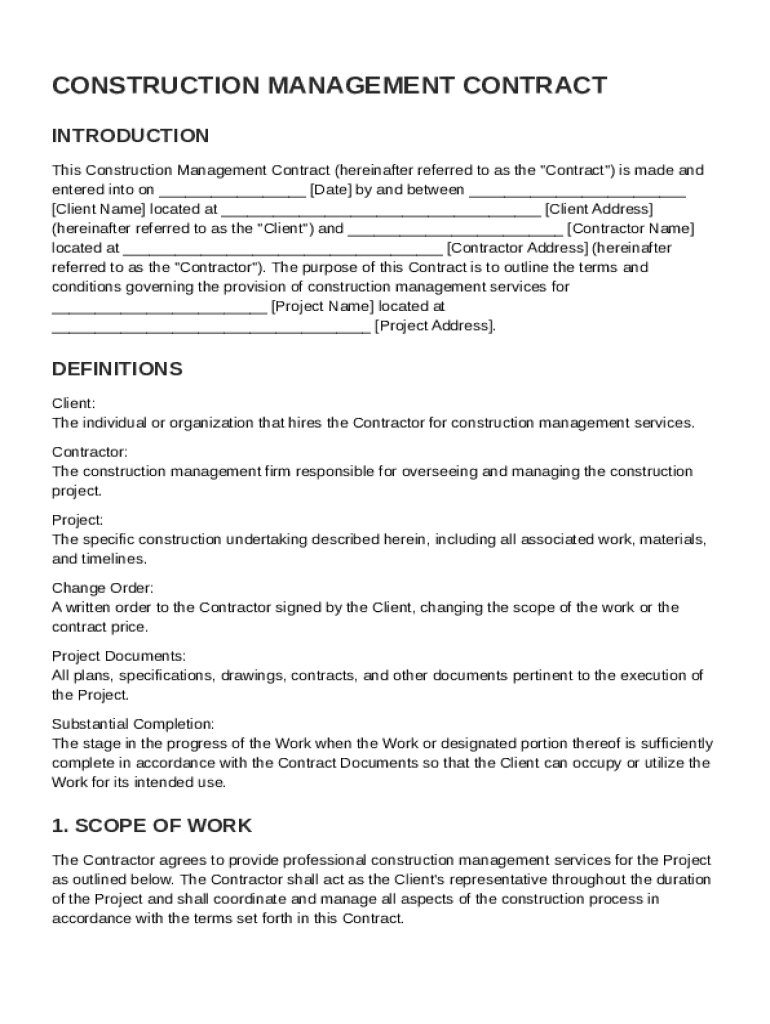
A Construction Management Contract Template is a pre-drafted agreement that outlines the roles, responsibilities, and expectations of the parties involved in a construction project. This template serves as a starting point for customizing specific terms suitable to individual project needs, simplifying the contract creation process. Standard sections include project scope, budget management, and quality control measures. The document's structure aids clients and contractors in clearly understanding their obligations throughout the project lifecycle, helping to mitigate potential disputes.
Key Elements of the Construction Management Contract Template
A detailed Construction Management Contract Template incorporates several critical components designed to ensure comprehensive coverage and clarity. These elements include:
- Scope of Work: Clearly defines the tasks and responsibilities of the construction manager and contractor, specifying project milestones and deliverables.
- Budget and Payment Terms: Outlines the financial arrangements, including compensation structures, payment schedules, and any provisions for adjustments.
- Timeline and Schedule: Sets forth the project's expected timeline, incorporating start and completion dates, along with any interim deadlines.
- Change Order Procedures: Explains the process for altering the contract terms, should project conditions change, ensuring all parties agree to modifications.
- Liabilities and Responsibilities: Identifies each party's responsibilities and liabilities, providing a legal framework for accountability.
- Termination Clauses: Specifies the conditions under which the contract can be terminated by either party, offering options for resolving disputes.
Steps to Complete the Construction Management Contract Template
Completing the Construction Management Contract Template involves several steps to ensure accuracy and completeness:
- Review and Customize the Template: Begin by carefully reviewing the pre-drafted sections of the template. Customize specific sections to align with the project's unique requirements and conditions.
- Identify Parties and Project Details: Clearly state the names and contact information of all involved parties, including the client and contractor. Outline the project's details, including location and objectives.
- Define Scope and Deliverables: Clearly describe the scope of work and deliverables. Include task lists, responsibilities, and expected outcomes to avoid ambiguity.
- Negotiate and Finalize Terms: Discuss and agree on key terms related to budget, timelines, and quality expectations with all involved parties. Ensure mutual understanding.
- Add Legal Provisions: Incorporate standard legal clauses such as confidentiality, dispute resolution mechanisms, and liability limits to offer security and protection.
- Signatures and Approval: Upon final agreement on all terms, acquire signatures from all parties to execute the contract. Ensure each party receives a finalized copy for record-keeping.
Legal Use of the Construction Management Contract Template
Legal considerations are paramount when using the Construction Management Contract Template. The template must comply with applicable federal and state laws to be enforceable:
- Compliance with Local Laws: Ensure that the contract's terms align with state-specific construction regulations, which may vary by jurisdiction in the United States.
- Binding Agreement: For the contract to be legally binding, it must include all essential elements, including offer, acceptance, mutual consent, and consideration.
- Confidentiality Clauses: Implement confidentiality provisions to safeguard proprietary information and sensitive project details shared during the contract period.
- Dispute Resolution: Define methods for resolving disputes, favoring mediation or arbitration to avoid lengthy litigation processes.
- Signature Requirements: Ensure all contractual signatures are completed willingly and in good faith to validate the contract legally.
Important Terms Related to Construction Management Contract Template
Understanding the key terms associated with construction management contracts can aid in effective negotiation and execution:
- Subcontractor: A business or individual hired by the contractor to perform specific tasks or provide services within the larger project scope.
- Retainage: A portion of the contract payment withheld until project completion to ensure contractor performance.
- Force Majeure: An unforeseeable circumstance, such as natural disaster, that prevents fulfillment of the contract terms.
- Liquidated Damages: Predetermined damages agreed upon for non-compliance with contract timelines or specifications.
- Lien Waivers: Documents ensuring payment to contractors, preventing them from claiming a lien on the property for unpaid amounts.
State-Specific Rules for the Construction Management Contract Template
Construction management contracts must adhere to rules that can vary significantly by state:
- License Requirements: Verify whether specific licensing is required for contractors within the state where the project takes place.
- Statutory Provisions: Consider any state-specific laws mandating particular contract provisions, such as payment terms and timelines.
- Mechanic's Liens: Understand the state's policy on contractor liens against the property for unpaid work, which could impact the project's financing.
- Insurance Obligations: Confirm state-mandated insurance responsibilities for both client and contractor to ensure compliance.
- Environmental Regulations: Ensure the contract accounts for state environmental statutes that must be adhered to during project execution.
Who Typically Uses the Construction Management Contract Template
The Construction Management Contract Template is widely applicable across multiple parties in the construction sector:
- General Contractors: Utilize the template to formalize engagements with clients and coordinate subcontractor activities.
- Property Developers: Employ the template for structured project management, ensuring transparency and accountability.
- Architectural Firms: Use the contract to delineate responsibilities for project oversight and quality assurance.
- Project Owners: Benefit from using the template to outline expectations and obtain a binding agreement with construction professionals.
- Subcontractors: Reference the template to understand their role within larger projects and to sign contracts defining scope and compensation.


Examples of Using the Construction Management Contract Template
Practical applications of the Construction Management Contract Template showcase its versatility:
- Residential Projects: Homebuilders can use the template for managing custom home construction projects, ensuring clarity between the homeowner and contractor.
- Commercial Developments: For office buildings and retail centers, the template defines timelines and budgets critical to investor planning.
- Public Works Contracts: Government entities leverage the template for infrastructure projects, such as roads and schools, providing transparency and accountability.
- Renovation Projects: Contractors use the template to control budgeting and timelines in home or commercial renovations, ensuring agreement on design and implementation.
- Industrial Construction: Large-scale manufacturing or warehousing projects benefit from the structured approach, mitigating risks and avoiding costly overruns.