



01. Edit your parade judging score sheet online
Type text, add images, blackout confidential details, add comments, highlights and more.

Type text, add images, blackout confidential details, add comments, highlights and more.

Draw your signature, type it, upload its image, or use your mobile device as a signature pad.

Send parade float judging score sheet via email, link, or fax. You can also download it, export it or print it out.
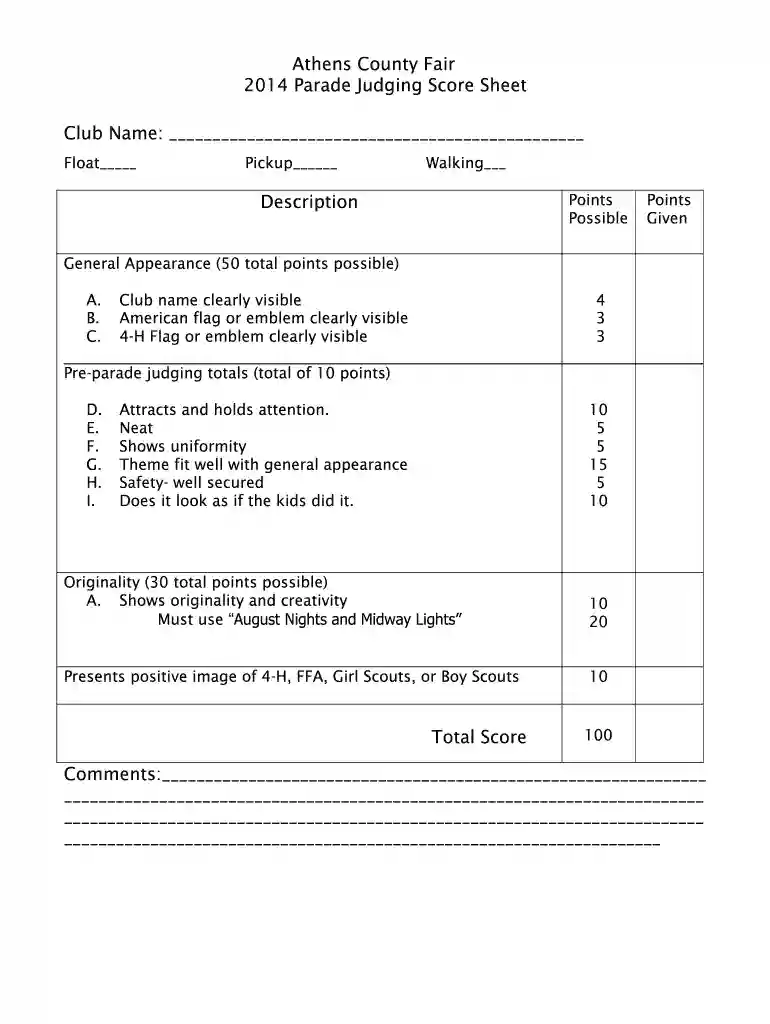
A parade judging score sheet is a tool used by judges to evaluate and score participating entries within a parade. This score sheet typically outlines specific criteria for assessment, helping to streamline the judging process for floats, bands, and participants. It provides a structured method for judges to allocate points based on performance and presentation, thereby enhancing clarity and consistency in scoring. The score sheet may include various categories, such as creativity, theme adherence, overall appearance, and audience engagement, to allow for a comprehensive evaluation of each entry.
The parade judging score sheet encompasses several critical components that facilitate accurate assessment:
Categories for Evaluation: Key criteria may include general appearance, originality, creativity, and adherence to the parade theme. Each category usually has defined point values, allowing judges to score various aspects of the entries methodically.
Scoring Range: The sheet typically features a scoring rubric, which helps judges determine how many points to assign based on performance. Each category may be rated on a scale, for example, one to five, with corresponding definitions for each score point.
Comments Section: Many score sheets include a space for judges to write comments or feedback. This section allows for personalized insights, which can provide value for future improvements for participants.
Entry Identification: A section to note the name or number of the entry being judged is essential for record-keeping and clarity, ensuring judges accurately associate scores and comments with the correct participants.
Judge Identification: It's often beneficial to include a place for judges to sign or print their names, lending credibility to the scoring and providing a record of who judged each entry.
Using a parade judging score sheet effectively involves several steps:
Familiarize with the Criteria: Judges should thoroughly review the scoring categories and understand the expectations for each before the event begins. This ensures consistency in scoring across all entries.
Attend the Parade: During the parade, judges should observe each entry carefully, taking notes on performance aspects relevant to the score sheet criteria.
Score Each Entry: As participants pass by, judges can use the score sheet to assign points based on their observations. Each category should be scored individually, referencing the previously reviewed criteria.
Provide Feedback: After scoring, judges should take advantage of the comments section to provide constructive criticism or praise, which participants may find valuable for future attempts.
Submit the Score Sheet: Once all entries have been judged, the judges must ensure that the score sheets are submitted to the event organizers for tallying scores and determining winners.
To illustrate the utility of a parade judging score sheet, consider these practical examples:
Community Christmas Parade: In a local Christmas parade, judges assess various floats and marching bands using the score sheet. Categories could include creativity in decorations, musical arrangement quality, and audience interaction. Judges score each entry based on predefined criteria, resulting in awards for the most festive entries.
Book Character Parade: During a school event showcasing book characters, the judging score sheet helps assess how well participants represent their chosen characters. Judges look for adherence to the character’s traits, creativity in costumes, and uniqueness in presentation, ensuring a fair judging process across numerous participants.
Understanding terminology associated with the parade judging score sheet enhances clarity for users:
Judging Criteria: The specific categories used to evaluate entries, including innovation, thematic relevance, and overall presentation.
Score Allocation: The method of assigning points according to performance. Judges base their scores on established values in each category.
Judging Panel: A group or team of judges responsible for evaluating the parade entries, often composed of community members or experts in specific fields related to the parade.
Entrants: Individuals or groups participating in the parade who will receive evaluations through the scoring system.
Scoring Rubric: A defined scale that indicates how scores correlate with the performance quality within each category on the score sheet.
These definitions provide judges and participants a clear understanding of their roles and expectations throughout the judging process.
We've got more versions of the parade judging score sheet form. Select the right parade judging score sheet version from the list and start editing it straight away!
| Versions | Form popularity | Fillable & printable |
|---|---|---|
| 2014 | 4.8 Satisfied (147 Votes) |
eSignatures are a perfect alternative to traditional signing, as they save time, effort, and costs people spend on printing, scanning, and paper delivery. You can eSign your christmas parade judging score sheet using a trustworthy and robust online document management tool like DocHub. It complies with main eSignature policies (ESIGN and UETA), so all documents approved there are legally binding and have the same validity as physically signed ones.
You can complete and eSign your criteria for judging parade on the internet, even on a tight deadline. All you need to access high quality editing tools on any device is a DocHub account, that you can register in just a few moments. When you sign up, add your document or find what you are searching for in our catalog, complete it utilizing the editing tools you need, and place your electronic signature on it at the end.
At DocHub, your data security is our priority. We follow HIPAA, SOC2, GDPR, and other standards, so you can work on your documents with confidence.


