
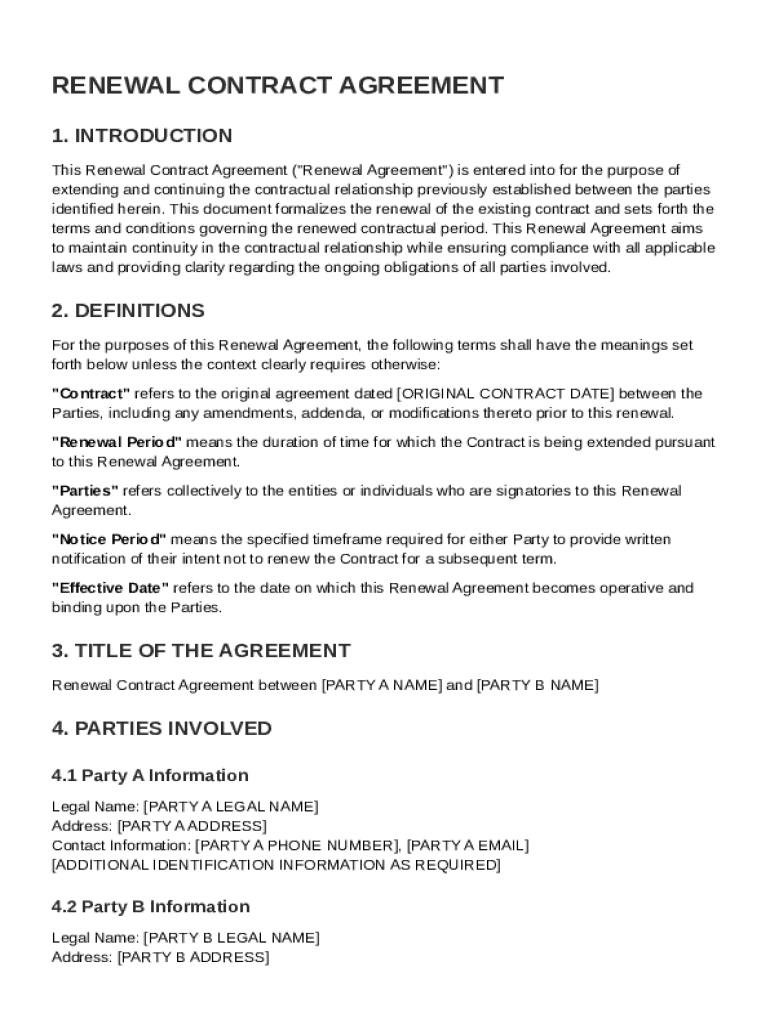







Definition and Purpose of a Renewal Contract Template
A Renewal Contract Template is an essential document used to extend the terms of an existing contractual agreement between two parties. It serves as a continuation of the original contract, ensuring that the relationship remains legally binding while adapting to any new circumstances or requirements. This template includes details such as renewal period terms, obligations of each party, payment terms, and termination conditions. It is designed to provide clarity and prevent disputes by clearly outlining the ongoing responsibilities and any changes from the original contract.
Practical Applications
- Continuance of Services: Extends service agreements like IT support or maintenance services.
- Lease Extensions: Used when tenants wish to extend their rental agreement based on the original lease conditions.
- Employment Contracts: Allows employers to renew employment agreements with modified terms if necessary.
Key Elements of the Renewal Contract Template
A comprehensive Renewal Contract Template includes several critical components to ensure that all parties are well-informed of the ongoing relationship conditions.
Essential Components
- Renewal Terms: Specifies the duration of the renewal period and any changes to the original contract conditions.
- Financial Obligations: Includes revised payment structures if applicable, such as updated fees or payment schedules.
- Termination Clauses: Outlines the conditions under which either party may terminate the agreement.
- Governing Law: Indicates the jurisdiction under which the contract terms will be enforced.
Examples of Usage
- Businesses frequently use this template to renew supplier agreements without undergoing complete renegotiation processes.
- Attorneys may customize templates to fit unique client requirements while ensuring standard contractual obligations are met.
How to Use the Renewal Contract Template
Utilizing a Renewal Contract Template involves several critical steps to ensure effective renewal of the contract.
- Review Existing Contracts: Begin by thoroughly reviewing the terms of the existing contract to identify any necessary adjustments.
- Customization of the Template: Modify the template to include updated terms, such as duration, payment terms, and any additional clauses.
- Add Legal Provisions: Ensure that all legal provisions are consistent with current laws and that new regulations are included when necessary.
- Agreement by Both Parties: Both parties must agree and sign the renewed contract, acknowledging any changes or new terms.
Step-by-Step Process
- Ensure both parties have a clear understanding of the template.
- Adjust the template to reflect all agreed-upon changes.
- Secure signatures from authorized representatives of each party to formalize the renewal.
Why Use a Renewal Contract Template
Utilizing a Renewal Contract Template streamlines the process of renewing contracts and reduces potential disputes by clearly documenting any changes.
Benefits
- Efficiency: Enables quick extension of an existing contract without starting from scratch.
- Legal Protection: Offers both parties a clear legal framework for the continuation of their contractual relationship.
- Consistency: Ensures continuity in terms of service, delivery, and other obligations, thus maintaining business stability.
Real-World Scenarios
- A company looking to renew its terms with a long-term supplier can use the Renewal Contract Template to formally acknowledge continued collaboration.
- A landlord may use the template to extend a tenant’s lease with adjusted rent conditions reflecting market changes.
Who Typically Uses the Renewal Contract Template
Various entities employ Renewal Contract Templates to maintain and update their contractual relationships efficiently.


Common Users
- Businesses: Often used by companies for renewing service contracts, vendor agreements, and more.
- Legal Professionals: Used by attorneys to draft comprehensive and legally sound renewal agreements for their clients.
- Human Resources: HR departments use these templates to renew employment agreements with staff members.

Examples
- Service Providers: May require renewal to continue providing their services under new terms.
- Suppliers: Extend supply agreements with existing clients, saving time and resources.
State-Specific Rules for the Renewal Contract Template
The use of Renewal Contract Templates can be subject to state-specific legal requirements that must be considered during their preparation and execution.
State Variations
- Local Jurisdictions: Each state may have unique laws governing contract renewals, such as notice periods or specific clauses that must be included.
- Industry-Specific Regulations: Depending on the industry, there might be additional state requirements that need to be addressed in the template.
Practical Guidance
- It is crucial to consult with legal professionals experienced in state laws to ensure all requirements are adequately addressed in the template.
- Consideration of state laws ensures compliance and prevents potential legal issues arising from non-conformity.
Examples of Using the Renewal Contract Template
To demonstrate the utility of a Renewal Contract Template, one can refer to several practical examples illustrating its application.
Scenario-Based Examples
- Real Estate: A tenant wishes to extend their lease but wants to negotiate new rental terms that mirror current market prices.
- Corporate Relations: A corporation seeks to continue its contractual relationship with a contractor, ensuring that the scope of work and payment terms are updated without affecting project timelines.
Use Case Variations
- A professional service firm renews consultancy agreements while incorporating changes in service deliverables and pricing structures.
- Non-profit organizations use the template to extend grant agreements with donors, integrating new funding terms.
Legal Use of the Renewal Contract Template
Understanding the legal context of using a Renewal Contract Template is crucial for ensuring its enforceability and compliance with regulations.
Legal Considerations
- Compliance with Laws: Must adhere to applicable laws and regulations to be legally enforceable.
- Legally Binding Terms: Clearly written terms and conditions ensure that both parties understand their obligations.
Legal Support
- Consulting a legal professional can provide insights into specific clauses needed to comply with statutory requirements.
- Periodic review by a legal expert ensures continued compliance with changing laws and regulations, preventing future disputes.




