






Definition and Meaning
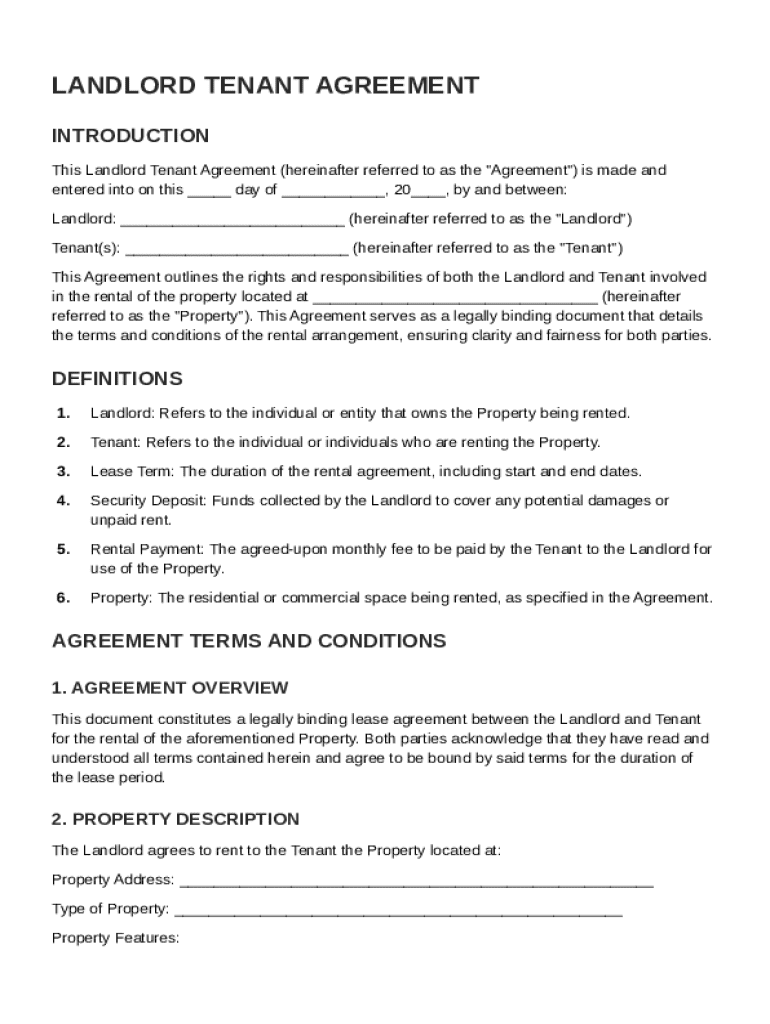
A Landlord Tenant Agreement Template is a standardized document that sets out the terms of the lease agreement between a property owner (landlord) and the occupant (tenant). This template defines the foundational legal framework which includes the rights and obligations of both parties. It typically covers elements such as lease duration, rent payment schedule, security deposit conditions, and maintenance responsibilities. A well-structured agreement minimizes potential disputes by clearly outlining each party's responsibilities, ensuring transparency and mutual understanding.
Key Elements of the Template
- Lease Terms: Duration of the lease, renewal options, and notice periods for termination.
- Rental Payments: Amount of rent, due dates, late fees, and methods of payment.
- Security Deposits: Conditions under which the deposit can be withheld, refund terms, and amount required.
- Maintenance and Repairs: Responsibilities for property upkeep and how repairs will be handled.
- Restrictions and Policies: Rules around pets, smoking, renovations, and other tenant activities.
How to Use the Landlord Tenant Agreement Template
To effectively use a Landlord Tenant Agreement Template, both the landlord and tenant should customize it to fit their specific needs while ensuring compliance with local laws. The process involves:
- Download the Template: Obtain it from a reliable source or platform that offers customizable options.
- Review the Clauses: Carefully read through each section, ensuring clarity and relevance for both parties.
- Customize as Needed: Modify specific clauses to reflect the accurate terms agreed upon, such as rent amount or lease length.
- Seek Legal Advice: Consider consulting with a legal professional to ensure the agreement adheres to local laws.
- Sign the Agreement: Both parties should sign; electronic signatures are usually accepted.
Common Customizations
- Additional amenities provided by the landlord (e.g., parking, laundry).
- Specific rules for shared spaces or facilities.
- Pre-existing conditions documented at the start of the lease.
How to Obtain the Landlord Tenant Agreement Template
Acquiring a Landlord Tenant Agreement Template can be done through several means, whether online or through professional channels:
- Online Platforms: Many document management systems provide editable templates that can be downloaded directly.
- Real Estate Agencies: Agencies may offer access to industry-standard templates as part of their service.
- Legal Firms: Some law offices provide clients with templates as a standard part of legal consultations.
- Libraries and Government Websites: These sources sometimes offer generic templates for public use.
Selecting the Right Source
- Ensure that the template is up-to-date with current housing laws.
- Verify that it allows for comprehensive customization.
- Choose platforms with strong user reviews focusing on document accuracy and customer support.
Steps to Complete the Landlord Tenant Agreement Template
Completing the Landlord Tenant Agreement Template involves a series of deliberate actions to ensure that the document reflects the agreed terms effectively:
- Fill Out Personal Information: Include names and contact information of both landlord and tenant.
- Detail Property Information: Describe the property, including address and any distinguishing features.
- Outline Financial Terms: Clearly specify the rental terms, including rent due dates, security deposits, and any additional fees.
- Agree on Rules and Regulations: Detail any house rules and tenant responsibilities.
- Set Conditions for Termination: Include guidelines for both parties to terminate the agreement legally.
Potential Challenges and Solutions
- Ensuring that both parties understand legal jargon; consider using plain language or including a glossary.
- Balancing property owner rights with tenant privacy; include clear entry notification terms.
Important Terms Related to Landlord Tenant Agreement Template
Understanding the terminology used in a Landlord Tenant Agreement Template is crucial for full comprehension:
- Lessee/Lessor: The tenant (lessee) and landlord (lessor).
- Premises: The property being rented out, usually detailed in the agreement.
- Subletting: Allows the tenant to rent the property to another party, which must be approved by the landlord.
- Breach of Contract: Legal footing for when party failures occur, such as unpaid rent.
Terminology in Practice
- Ensure all parties are informed about what constitutes a "breach of contract" to prevent unintended violations.
- Refer to specific local housing rules to understand regional terminology or phrases impacting the lease.
Legal Use of the Landlord Tenant Agreement Template
Ensuring that the Landlord Tenant Agreement Template is legally binding involves alignment with local rental laws and applicable legal frameworks. It must meet the standards set by states and municipalities to be enforceable:
- Compliance with State Laws: Each U.S. state might have unique rental laws impacting agreements, like rent control statutes.
- Documentation Checklist: Both parties should keep a signed copy of the agreement.
- Local Court Recognition: Agreements that specify lawful terms are recognized in disputes handled by courts.
Ensuring Legal Validity
- Confirm the template addresses all necessary legal protections, including discrimination policies.
- Identify jurisdiction-specific clauses required for enforceability.
State-Specific Rules for the Landlord Tenant Agreement Template
State regulations can necessitate specific inclusions in the Landlord Tenant Agreement Template, affecting clauses and responsibilities:
- California: Requires a specific disclosure for properties built before 1978 due to lead paint risks.
- New York: Has particular requirements concerning security deposit handling and tenant rights.
- Texas: Provides guidelines on late fees and grace periods in rental payments.
Research Tips
- Reference state or local government resources for rental laws to ensure the template's compliance.
- Utilize state bar association publications or similar legal advisories for detailed state-specific requirements.
Examples of Using the Landlord Tenant Agreement Template
Real-world applications of these templates vary widely, illustrating their flexibility:
- Single-Family Rentals: Voluminously documented terms that work for detached homes.
- Apartment Leases: Rules tailored for multi-unit buildings addressing shared amenities.
- Commercial Property Rentals: These often include clauses specific to business activities and liability concerns.
Case Study Insights
- A landlord who added a no-smoking clause found reduced property damage, showing preemptive policy effectiveness.
- Tenants utilizing electronic signatures reduced lease turnover time, enhancing efficiency.
Each block provides actionable insights and detailed explanations relevant to a comprehensive understanding of the Landlord Tenant Agreement Template. The content is structured to maximize the utility for users seeking to understand and execute a lease agreement effectively.