






Definition & Meaning
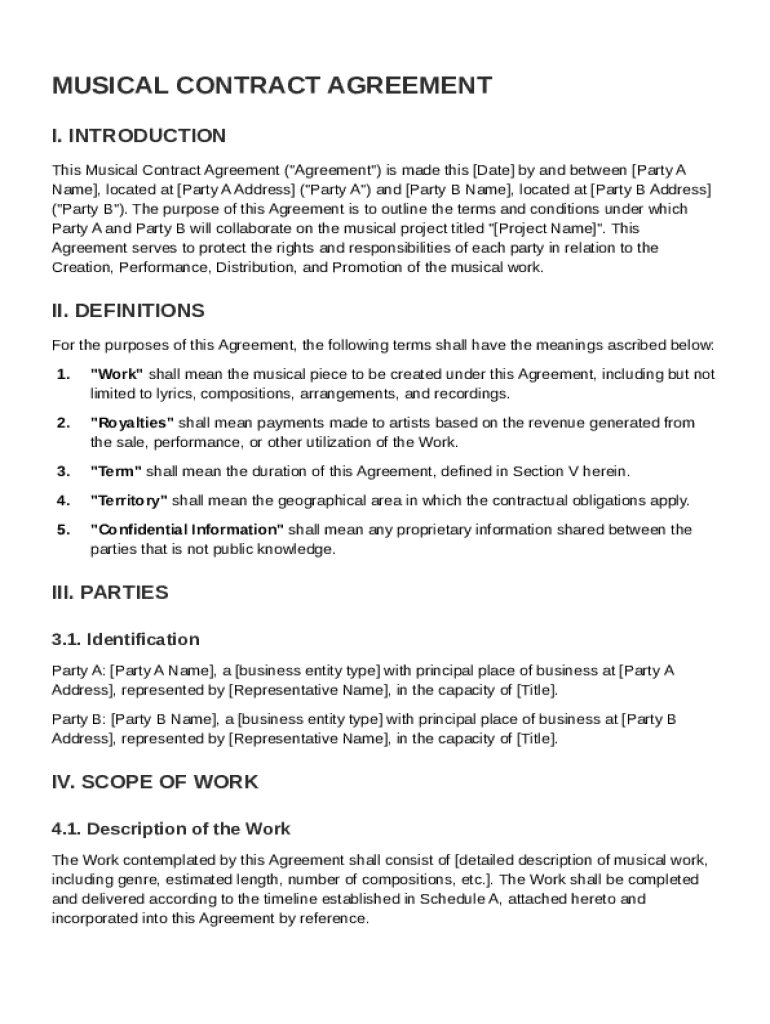
The Musical Contract Template serves as a legally binding agreement between two parties engaged in a musical project. This document outlines the rights and responsibilities regarding the creation, performance, distribution, and promotion of musical works. By clearly defining these obligations, it protects both parties and ensures a harmonious collaboration.
Key Components:
- Responsibilities: Details specific roles each party will play in the project, such as composition, production, or performance roles.
- Compensation Structure: Clarifies payment terms, including royalties, flat fees, or any other financial arrangements.
- Ownership Rights: Specifies who holds the rights to the music, covering aspects like copyrights and publishing rights.
Key Elements of the Musical Contract Template
The Musical Contract Template must cover several essential elements to serve its purpose effectively.
Responsibilities and Roles
- Detailed Descriptions: Enumerates tasks and responsibilities, ensuring both parties understand their commitments.
- Collaboration Dynamics: Explains how the parties will work together, including communication methods and timelines.
Compensation and Financials
- Royalties and Payments: Provides a clear formula for calculating earnings from sales, streaming, or performances.
- Advance Payments: Discusses any upfront fees or retainer arrangements.
Steps to Complete the Musical Contract Template
Completing the Musical Contract Template involves a structured approach to ensure all relevant areas are covered adequately.
- Identify the Parties: Clearly state the names and roles of all individuals or organizations involved.
- Define the Scope: Detail the project, including its nature, duration, and primary objectives.
- Specify Terms and Conditions: Draft the specific terms governing the partnership, focusing on work deliverables, timelines, and quality expectations.
- Outline Financial Terms: Clearly state compensation details, including payments, royalties, and financial responsibilities.
- Review Legal Obligations: Ensure compliance with applicable laws, setting forth the terms for resolving disputes or breaches.
Examples of Using the Musical Contract Template
This template is versatile and can be applied in various scenarios within the music industry.
Recording Agreements
- Provides clear guidelines for collaborations between artists and record labels.
Live Performance Contracts
- Ensures that all performance details, such as dates, venues, and fees, are clearly communicated and agreed upon.
Licensing Agreements
- Facilitates clear terms when licensing music for commercial use, like advertising or film.
Legal Use of the Musical Contract Template
Understanding the legal implications of the Musical Contract Template is crucial to safeguarding your rights.
Binding Agreement
- Complies with U.S. laws to ensure all parties are legally obligated to adhere to the terms.
Intellectual Property Protection
- Protects rights regarding ownership and usage of music, ensuring compliance with copyright laws.
Dispute Resolution
- Includes a clause detailing how disputes will be managed, possibly through mediation or arbitration.
Important Terms Related to Musical Contract Template
Familiarity with key terms is essential for effective contract usage.
Copyright
- Legal protection for original music compositions, ensuring creators retain exclusive rights to their work.
Royalties
- Payments made to music creators based on revenue generated from the music's sale or use.
Indemnification
- A provision to protect one party against legal claims resulting from the other's work or actions.
Who Typically Uses the Musical Contract Template
Various stakeholders in the music industry frequently use this type of agreement.


Musicians and Bands
- Artists leverage the template to clearly establish terms for collaborations or label signings.
Music Producers
- Utilize it to define production roles and rights concerning the music they help create.
Record Labels and Distributors
- Apply the contract to manage relationships with artists and songwriters efficiently.
State-Specific Rules for the Musical Contract Template
The structure and enforceability of contracts may vary across different states.
Variations in Contract Law
- While the core components of a musical contract remain consistent, details like enforceability and dispute resolution may differ depending on the state's legal requirements.
Consultation with Local Legal Experts
- To avoid misunderstandings, it's advisable to consult with a legal expert familiar with state-specific laws, ensuring the contract aligns with local requirements.
Versions or Alternatives to the Musical Contract Template
While the Musical Contract Template is robust, several variations may cater to unique needs.
Simple Contracts
- For smaller projects or one-time collaborations, a simplified contract may be more appropriate.
Digital Agreements
- Electronic versions can offer additional features such as digital signing, expedited revision processes, or integration with project management software.
Custom Agreements
- Tailored contracts accommodate complex partnerships with specific terms or creative control needs, often requiring legal consultation for crafting bespoke terms.