
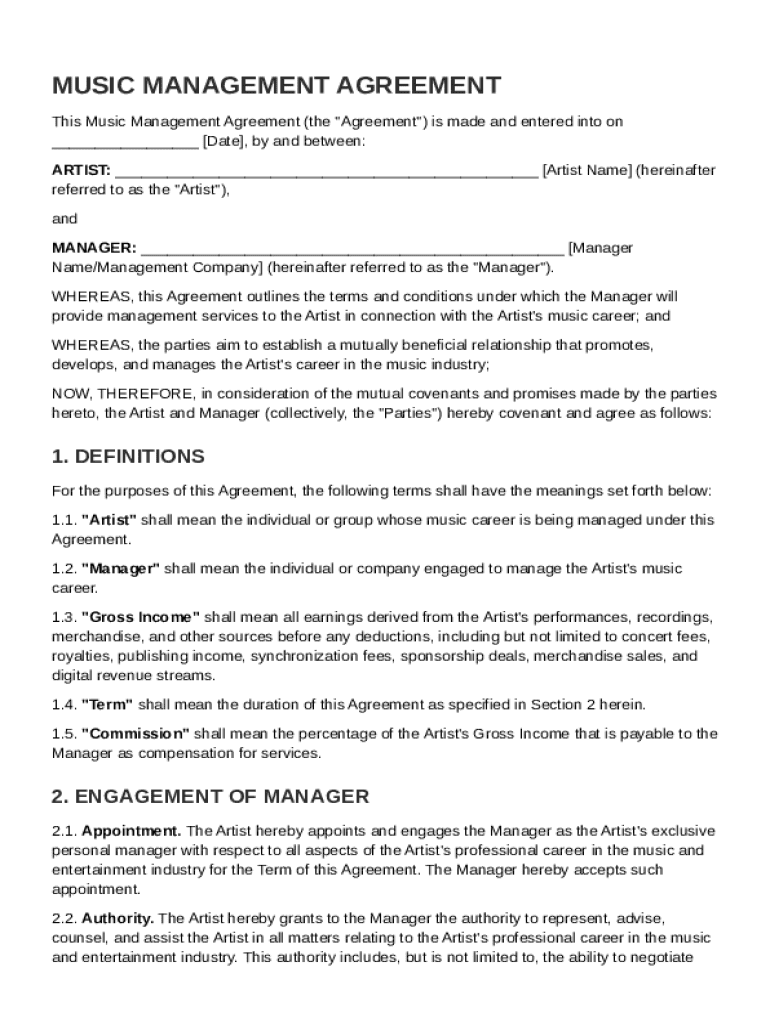







Definition & Meaning
A Music Management Contract Template is a legally binding agreement that formalizes the professional relationship between a music artist and their manager. This contract outlines the scope of the manager's duties, rights, and responsibilities, as well as the artist's obligations within the partnership. It's designed to ensure that both parties understand their roles and expectations, which can help prevent misunderstandings and disputes. The contract typically includes details about compensation, the duration of the agreement, and the manager's authority to make decisions on behalf of the artist.
Key Elements of the Music Management Contract Template
At the heart of the Music Management Contract Template are clauses that address the essential aspects of the professional relationship. These typically include:
- Term and Termination: Specifies the duration of the contract and conditions under which either party can terminate the agreement.
- Manager's Duties: Outlines specific responsibilities, such as booking gigs, negotiating contracts, and marketing the artist.
- Artist's Obligations: Details commitments like maintaining professionalism and performance readiness.
- Compensation: Lists financial arrangements, including commission rates and payment schedules.
- Dispute Resolution: Provides procedures for handling disagreements, often involving mediation or arbitration.
- Confidentiality: Ensures sensitive information isn't disclosed to outside parties without consent.
How to Use the Music Management Contract Template
Utilizing the Music Management Contract Template involves several strategic steps to ensure it fits both parties' needs. Here’s how you can make the most of this document:
- Customization: Tailor the template to reflect specific needs such as unique artist circumstances or manager capabilities.
- Review: Have both parties review the document thoroughly to ensure all terms are understood and agreed upon.
- Consultation: Engage with legal professionals to ensure compliance with local laws and protect both parties' interests.
- Execution: Once finalized, both parties should sign and date the document. It's advisable to retain copies for future reference.
- Reassessment: Periodically review the contract to ensure it remains relevant as the professional relationship evolves.
Legal Use of the Music Management Contract Template
In the U.S., using a Music Management Contract Template is legally recognized as a formal agreement. However, its enforceability hinges on certain conditions:
- Competency: Both parties must have the legal capacity to enter into a contract, meaning they are of sound mind and legally of age.
- Consent: Agreement to the contract must be voluntary, without any form of duress or improper influence.
- Lawful Purpose: The contract must be for a legal purpose and not involve any activities that violate U.S. laws.
- Consideration: Each party must promise something of value, whether it be services, money, or another form of consideration.
Important Terms Related to Music Management Contract Template
When dealing with a Music Management Contract Template, understanding key terms can significantly enhance comprehension:
- Gross Income: The total revenue generated by the artist before any deductions.
- Commission Rate: The percentage of gross income paid to the manager for their services.
- Territory: Geographical scope within which the manager can perform their duties.
- Exclusivity: Determines whether the manager has sole representation rights over the artist.
- Force Majeure: Clause that addresses unforeseeable events preventing contractual obligations from being fulfilled.
Steps to Complete the Music Management Contract Template
Filling out the Music Management Contract Template requires attention to detail and collaboration:
- Identify Parties: Clearly list the names and contact details of both the artist and the manager.
- Define Terms: Establish the contract's start date, end date, and any renewal options.
- Describe Duties: Elaborate on the specific roles and responsibilities of the manager.
- Detail Compensation: Include the agreed-upon commission rate and payment method.
- Include Signatures: Once all details are finalized and agreed upon, both parties should sign the document in the presence of witnesses, if necessary.
Examples of Using the Music Management Contract Template
Real-world scenarios validate the effectiveness of the Music Management Contract Template:
- Emerging Artists: Those starting their careers might use the template to secure managerial expertise and grow their brand.
- Established Musicians: Artists expanding their careers internationally might adjust contracts to include global management contingencies.
- Indie Labels: These may rely on templates to formalize relationships with individual managers for their roster of artists.
- Collaborative Management: Bands with multiple members might personalize agreements to delineate specific manager-member responsibilities.
Who Typically Uses the Music Management Contract Template
This template serves a diverse range of professionals within the music industry:
- Independent Artists: Solo musicians looking to professionalize their management relationships.
- Bands: Groups wishing to clearly define each member's relationship with management.
- Music Managers: Individuals or firms representing artists across various genres.
- Record Labels: Small labels seeking formal agreements with third-party managers for their artists.
- Legal Advisors: Attorneys drafting or reviewing contracts for clients in the music industry.


State-Specific Rules for the Music Management Contract Template
While the template provides a standardized format, state-specific regulations can influence its execution:
- California: The Talent Agency Act affects management contracts, requiring a license for certain activities.
- New York: Similar regulations to protect artists, often involving specific disclosure requirements.
- Florida: Contracts must adhere to broader state laws regarding business agreements and entertainment law.
- Texas: Enforces standard contract law principles but emphasizes disclosure and negotiation transparency.
Understanding these variations ensures compliance and protects both parties from legal pitfalls.




