




01. Edit your jlg telehandler annual inspection form online
Type text, add images, blackout confidential details, add comments, highlights and more.

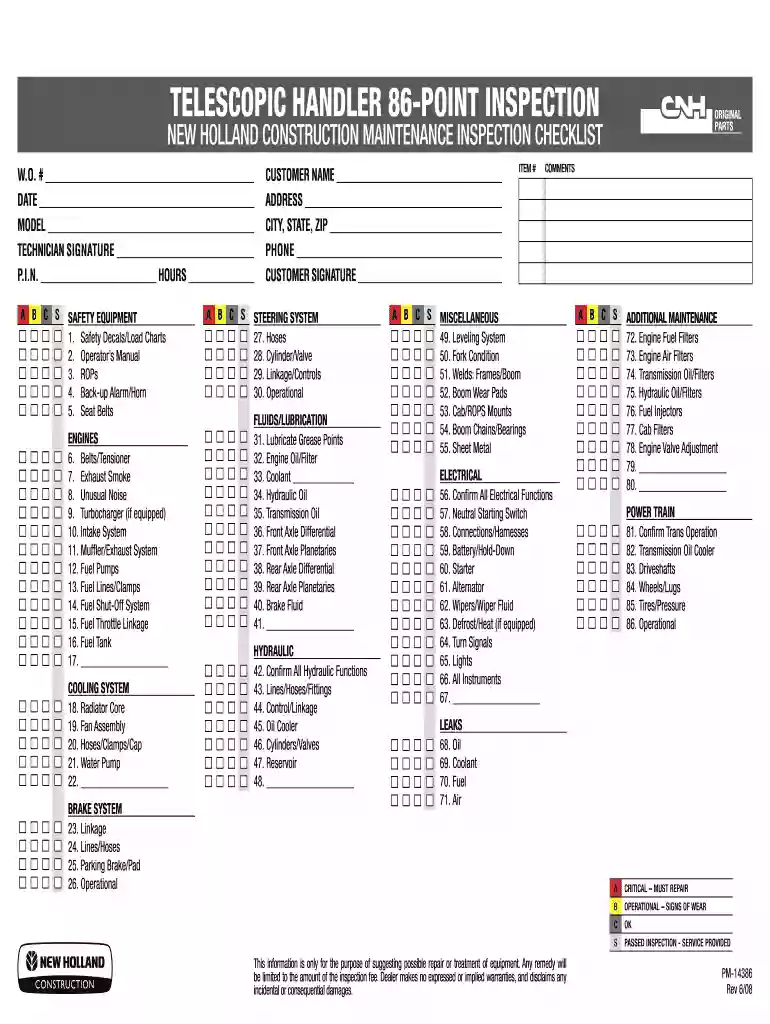
Type text, add images, blackout confidential details, add comments, highlights and more.

Draw your signature, type it, upload its image, or use your mobile device as a signature pad.

Send telehandler annual inspection form via email, link, or fax. You can also download it, export it or print it out.
The telehandler annual inspection form is a detailed document designed to evaluate the safety and operational functionality of telehandlers before they are put into use. This inspection helps ensure compliance with safety regulations and maintenance standards, thereby minimizing accidents and extending the equipment's lifecycle.
A telehandler inspection form typically includes multiple sections dedicated to specific equipment features and operational conditions. Key areas include:
Safety Equipment Checks: This section evaluates all safety mechanisms, such as seat belts, lights, and alarms, ensuring that they are operational and compliant with safety regulations.
Engine Performance: Assessing the engine includes checking oil levels, fluid leaks, and belt conditions. Proper engine maintenance is vital for efficient operation.
Hydraulic System Inspection: Hydraulic fluid levels, hoses, and connections are analyzed for leaks or damage. Functionality tests help confirm that the lifting and tilting mechanisms work effectively.
Completing a telehandler inspection form requires methodical steps to ensure thorough evaluation:
Preparation: Gather necessary tools and maintenance manuals.
Visual Inspection: Conduct a complete visual examination of the telehandler, checking for any visible signs of damage or wear.
Operational Testing: Operate the telehandler to assess functionality. Test all controls to confirm they are responsive and functioning as intended.
Documentation: Fill out the inspection form meticulously, noting any issues found and recommending necessary repairs.
Sign-off: The inspection should be signed by a qualified technician to validate the process completed.
Adherence to regulations is non-negotiable in the inspection process. Operators must familiarize themselves with local and federal guidelines regarding telehandler operation. Best practices include:
Routine Inspections: Conduct inspections regularly, typically annually or more frequently based on usage intensity.
Training and Certification: Ensure that operators are properly trained and certified to understand inspection requirements.
Record Keeping: Maintain records of all completed inspections, including dates, findings, and actions taken. This documentation is essential for audits and regulatory inspections.
During inspections, common issues may arise that require immediate attention:
Fluid Leaks: Identify and remedy leaks promptly to prevent equipment failure and safety hazards.
Brake Functionality: Regularly check brake pads and hydraulic systems to ensure stopping power is adequate.
Tire Conditions: Inspect tire wear and pressure. Proper tires are crucial for stability and traction.
The telehandler annual inspection form serves as a practical tool for maintaining equipment safety and compliance. Users can adopt various formats, such as digital or printed versions, and it can be tailored to meet specific operational needs.
Fillable Digital Forms: Platforms like DocHub enable efficient management of telehandler inspections. Users can create fillable forms that streamline the process of data collection and reporting.
Printable Checklists: For traditional workflows, printable telehandler inspection checklists allow for hands-on evaluations while ensuring that no critical points are overlooked.
The telehandler annual inspection form is a crucial part of machinery safety and performance assurance. By effectively utilizing the form and adhering to established inspection procedures and best practices, organizations can enhance safety and operational efficiency across their equipment fleet.
We've got more versions of the jlg telehandler annual inspection form form. Select the right jlg telehandler annual inspection form version from the list and start editing it straight away!
| Versions | Form popularity | Fillable & printable |
|---|---|---|
| 2008 | 4.8 Satisfied (165 Votes) |
With DocHub, you can quickly sign your jlg telehandler inspection form or any other paperwork on iOS, even without installing additional applications. You can access your DocHub account from any internet-connected browser and fill out and sign your document in any preferred method with just a few clicks.
You can get and modify your forklift annual inspection form online by using DocHub. Its straightforward yet feature-rich design enables you to begin effective work right after you register your account. Create your profile and add your file, and then our user interface will guide you through our stress-free form completion experience.
At DocHub, your data security is our priority. We follow HIPAA, SOC2, GDPR, and other standards, so you can work on your documents with confidence.
Below are some sample checklists for various types of trucks, as well as a generic list that can be modified to suit your workplace needs.Read more
Telehandler Forklift Pre-use Inspection Checklist. Operator: Make Model: Company: Hour Meter Reading: Location: Date: MM/DD/YYYY. Unit No.: POWER OFF CHECKS.Read more


