






Definition & Meaning
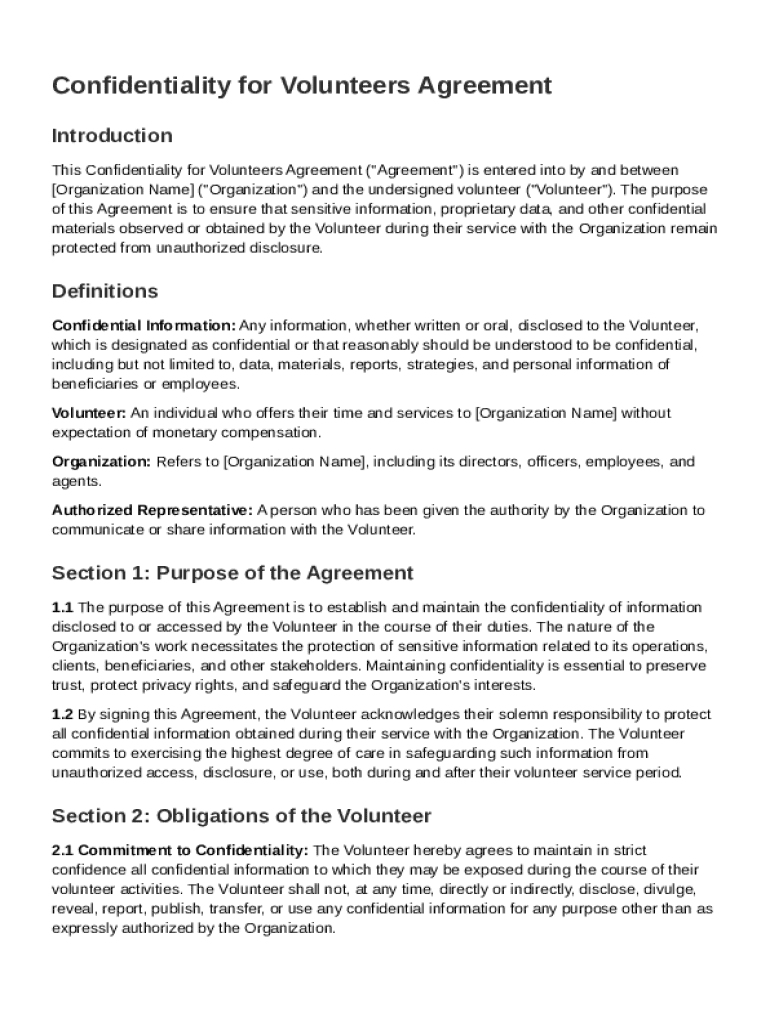
The Confidentiality for Volunteers Agreement Template is a legal document that outlines the responsibilities of volunteers to protect sensitive and proprietary information acquired during their service within an organization. This agreement defines crucial terms such as "confidential information" and "proprietary data," establishing the expectations that volunteers must uphold regarding privacy and discretion. Its primary aim is to maintain trust between volunteers and the organization by ensuring that all parties are aware of their obligations to safeguard sensitive materials. The agreement serves as a preventive measure against unauthorized information disclosure, thereby protecting the organization’s interests and maintaining its operational integrity.
Key Elements of the Confidentiality for Volunteers Agreement Template
The agreement template includes several essential components designed to uphold confidentiality. These elements are meticulously detailed to prevent any misunderstandings about the expectations placed on volunteers:
- Definition of Confidential Information: Outlines what constitutes confidential information, ensuring volunteers understand what data must be protected.
- Obligations of Volunteers: Specifies the duties of volunteers concerning the handling, sharing, and protection of sensitive information.
- Duration of Confidentiality: States how long the confidentiality obligations last, which may extend beyond the period of volunteering.
- Exceptions to Confidentiality: Details legitimate scenarios where information may be disclosed legally, such as compliance with judicial orders.
- Consequences for Breach: Explains the potential legal and financial repercussions of failing to comply with the confidentiality terms.
Steps to Complete the Confidentiality for Volunteers Agreement Template
Completing the Confidentiality for Volunteers Agreement requires careful attention to detail to ensure that all necessary sections are appropriately filled out. Here’s a step-by-step guide:
- Read the Entire Document: Volunteers should thoroughly read the agreement to fully understand their responsibilities.
- Fill in Personal Details: Enter the volunteer’s name and contact information, as well as the organization’s relevant details.
- Review Definition of Confidential Information: Ensure both parties agree on what constitutes confidential data.
- Specify Duration: Clearly define the time frame for which confidentiality must be maintained.
- Outline Exceptions and Breaches: Agree on instances where confidentiality may be legally breached and potential penalties.
- Final Review with Legal Counsel: Both the organization and volunteer should consider consulting legal counsel to avoid misunderstandings.
- Sign and Date: Both parties must sign and date the agreement to make it legally binding.
Important Terms Related to the Confidentiality for Volunteers Agreement Template
Understanding the terminology within the Confidentiality for Volunteers Agreement is crucial. Here are some key terms:
- Confidential Information: Includes proprietary data, business practices, client lists, and non-public financial details considered sensitive.
- Proprietary Information: Any data owned by the organization that is not publicly accessible.
- Non-Disclosure Agreement (NDA): Often used interchangeably with confidentiality agreements, focusing on restricting information sharing.
- Breach of Confidentiality: Any unauthorized disclosure or misuse of protected information.
Why Should You Use the Confidentiality for Volunteers Agreement Template
Organizations benefit from using this template to:
- Protect Sensitive Data: Safeguard critical business information from accidental or intentional disclosure.
- Establish Clear Expectations: Ensure all parties understand their roles and responsibilities regarding confidentiality.
- Legally Safeguard Interests: Provide a contractual basis for legal recourse in case of confidentiality breaches.
- Build Trust: Foster an environment of trust where volunteers feel confident that they are acting within safe and legal parameters.
Examples of Using the Confidentiality for Volunteers Agreement Template
Several scenarios demonstrate the efficacy of employing a Confidentiality for Volunteers Agreement:
- Non-Profit Organizations: When engaging volunteers for events, organizations ensure volunteers do not share sensitive donor and recipient information.
- Research Institutions: Volunteers working alongside researchers are often required to maintain confidentiality on proprietary research data.
- Corporate Training: Companies may have volunteers assist in training sessions and need to protect proprietary training materials and internal practices.
Legal Use of the Confidentiality for Volunteers Agreement Template
For the agreement to be legally binding, it must adhere to certain legal standards:
- Clarity and Specificity: Language must be unambiguous, with precise definitions of what constitutes confidential information.
- Mutual Agreement: Both parties must voluntarily consent to the terms outlined in the agreement with their signatures.
- Consideration: The agreement must involve an exchange of value, such as the volunteer’s services in exchange for trust privileges.
- Conformity with State Laws: Ensure the agreement complies with state-specific confidentiality and employment laws to avoid legal challenges.
Who Typically Uses the Confidentiality for Volunteers Agreement Template
This template is commonly adopted by:
- Non-Profit Organizations: Protects sensitive donor or beneficiary information.
- Educational Institutions: Safeguards proprietary information when volunteers are involved in research or project-based work.
- Healthcare Providers: Ensures patient information remains confidential when employing volunteers in clinics or health drives.