Definition and Meaning of a Representation Agreement Template
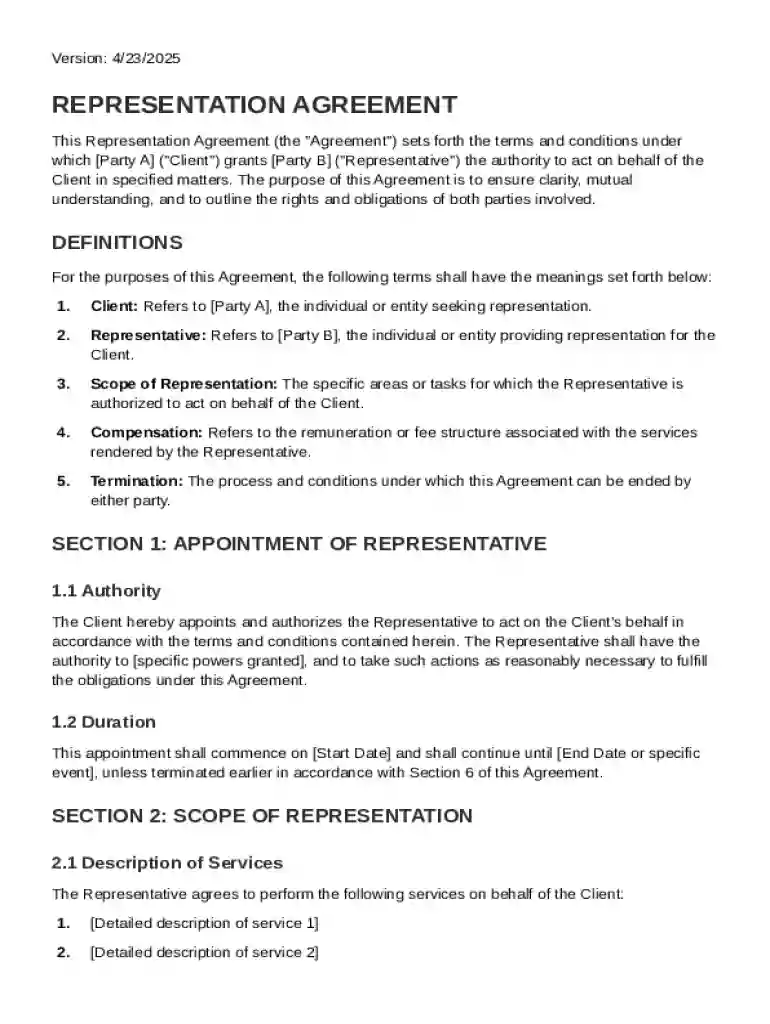
A Representation Agreement Template is a pre-drafted document that serves as a foundational framework for legally binding agreements between a client and a representative. These agreements authorize a representative to act on behalf of a client, outlining specific duties and conditions under which the representation is to occur. This type of agreement is prevalent in various industries, including legal, financial, and real estate sectors, where individuals or entities require professional representation. Through clearly defined terms, such templates help mitigate misunderstandings and legal disputes, ensuring clarity and mutual agreement on both parties’ responsibilities and expectations.
Key Elements of the Representation Agreement Template
Understanding the fundamental components of a Representation Agreement Template is essential for crafting an effective and legally compliant agreement. Key elements typically include:
- Parties Involved: Clearly identify the client and the representative, detailing their respective roles and contact information.
- Scope of Representation: Define the specific actions and responsibilities the representative is authorized to perform on behalf of the client.
- Compensation Structure: Outline the financial arrangements, including fees, payment schedules, and any additional compensation-related terms.
- Duration and Termination Conditions: Specify the agreement's time frame and the conditions under which either party can terminate the agreement.
- Confidentiality Requirements: Include clauses to protect sensitive information shared between the parties during the term of the agreement.
- Governing Law: Identify the jurisdiction's legal framework that will govern disputes or interpretations of the agreement.
Steps to Complete the Representation Agreement Template
Completing a Representation Agreement Template involves several crucial steps to ensure accuracy and completeness:
- Gather Information: Collect all necessary details about the parties involved, including names, addresses, and contact information.
- Define Scope: Collaborate with the representative to clearly outline the tasks and boundaries of their authority.
- Determine Compensation: Agree on a fair compensation structure that aligns with industry standards and reflects the level of service provided.
- Draft Terms and Conditions: Include specific language for confidentiality, dispute resolution, and governing law to safeguard interests.
- Review and Revise: Both parties should review the draft meticulously to ensure all terms are agreeable and legally sound.
- Finalize and Sign: Once both parties are satisfied, finalize the template and execute the agreement with signatures.
Importance of Using a Representation Agreement Template
Using a Representation Agreement Template is critical for several reasons:
- Ensures Legal Compliance: Templates are structured to meet legal standards, providing a foundational basis that can be customized to meet specific needs.
- Facilitates Clarity and Understanding: By outlining roles, responsibilities, and expectations, the template minimizes the risk of disputes.
- Saves Time and Resources: Pre-drafted templates reduce the time required to create agreements from scratch, allowing parties to focus on substantive issues.
- Promotes Professionalism: Utilizing a formal agreement enhances the professional relationships by setting a clear tone of mutual respect and understanding.
Who Typically Uses a Representation Agreement Template
A diverse range of professionals and entities typically utilize Representation Agreement Templates, including:
- Legal Professionals: Attorneys and legal consultants who represent clients in legal matters.
- Financial Advisors: Individuals who manage client assets or provide investment guidance.
- Real Estate Agents: Professionals authorized to represent buyers or sellers in real estate transactions.
- Talent Managers: Representatives for artists, athletes, or performers negotiating contracts or engagements.
Legal Use of the Representation Agreement Template
Ensuring the legal use of a Representation Agreement Template involves understanding applicable laws and regulations. Considerations include:
- Compliance with State Laws: Agreements must adhere to specific state regulations, which may require additional clauses or disclosures.
- Adherence to Industry Standards: Align agreements with ethical and professional standards of the industry.
- Legally Binding Terms: Ensure all clauses, especially those involving performance and confidentiality, are enforceable under law.
Examples of Using the Representation Agreement Template
Practical examples of using a Representation Agreement Template demonstrate its versatility:
- In Real Estate: An agent uses a template to formalize their role in selling a client’s property, specifying commission rates and marketing strategies.
- In Talent Management: A talent manager represents an artist, using the template to outline terms for contract negotiations and public appearances.
- In Financial Advisory: An advisor agrees to manage a client's portfolio, detailing fees and investment strategies through an agreement template.
State-Specific Rules for the Representation Agreement Template
State-specific rules can significantly influence the terms and enforceability of a Representation Agreement Template. Key aspects include:
- Differences in Governing Law: Variances in state law can dictate different requirements for validity and execution of agreements.
- Mandatory Disclosures: Certain states may require additional disclosures, particularly concerning payments and fiduciary responsibilities.
- Regulations on Termination: States can impose specific conditions for how and when an agreement may be lawfully terminated by either party.