






Understanding the Tax Deduction Worksheet for Realtors
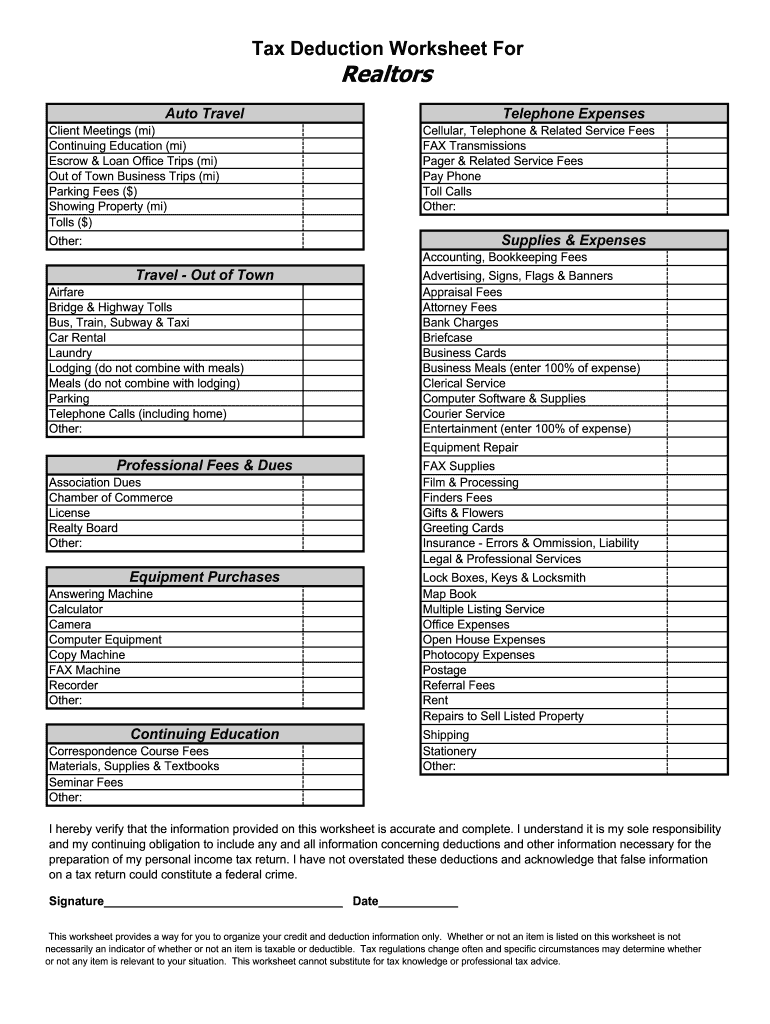
The tax deduction worksheet for realtors is a specialized tool that helps real estate professionals organize their deductible expenses related to their business activities. Accurate documentation is vital for maximizing tax benefits and ensuring compliance with IRS regulations.
Key Categories of Deductions for Realtors
Real estate agents incur various expenses that can be deductible. Understanding and categorizing these expenses is essential for effective tax reporting.
- Vehicle Expenses: Costs associated with using your vehicle for business purposes, which can include mileage, gas, maintenance, and insurance. Documentation is crucial, including a mileage log to substantiate the business use of your vehicle.
- Home Office Deduction: If you operate your real estate business from home, you might qualify for home office deductions. This could cover a portion of your utilities, homeowners' insurance, and mortgage interest based on the space dedicated to your work.
- Marketing and Advertising: Expenses for promoting your real estate services, including costs for brochures, business cards, website hosting, and digital marketing services. Keeping a record of all promotional materials purchased will support these deductions.
- Professional Services: Fees paid to accountants, legal advisors, or business consultants are also deductible. Maintaining invoices and contracts related to these services is necessary for substantiation.
- Training and Education: Costs associated with continuing education and professional development are particularly significant. This includes classes, certifications, and conferences aimed at enhancing your skills and knowledge in the real estate industry.
How to Effectively Use the Tax Deduction Worksheet
The tax deduction worksheet for realtors allows users to systematically collect and categorize their deductible expenses throughout the year, making tax season less stressful. Here’s how to utilize this worksheet effectively:
- Organize Receipts: Regularly collect and store receipts related to business expenses. A digital system can simplify this by allowing you to scan and save receipts for easy reference.
- Categorize Expenses: As receipts are collected, classify them into the outlined categories within the worksheet. This helps in tracking which expenses have been incurred.
- Calculate Totals: Periodically sum the expenses in each category. This will provide insight into where funds are allocated and ensure no deductions are overlooked before finalizing your tax return.
- Consult with Professionals: While the worksheet is a valuable tool, consulting a tax professional can help to understand nuances and ensure compliance with current IRS guidelines.
- Keep Updated Records: The IRS may change regulations regarding deductions. Regularly reviewing guidelines or updates could enhance your understanding of what qualifies as a deduction.
Documenting Deductions: Best Practices
Good documentation practices can safeguard against audits and ensure that all deductions are justified:
- Maintain Logs: Create and keep a detailed log for vehicle mileage, home office space, and other relevant metrics to substantiate your claims.
- Store Documents Securely: Use cloud services or filing systems to securely store your documentation, ensuring easy access when needed.
- Track Deadlines: Make note of filing deadlines and important dates related to tax submissions to avoid penalties for late filings.
Importance of Staying Compliant with IRS Guidelines
Realtors must adhere to IRS guidelines regarding deductibles. This is crucial to avoid penalties and ensure that legitimate expenses are claimed:
- Understand the IRS Regulations: Familiarity with IRS Publication 535, which discusses business expenses, can provide insight into what qualifies for deduction.
- Defend Your Deductions: Be prepared to substantiate each deduction in case of an audit, requiring you to provide documentation proving the expense’s validity.
- Utilize Available Resources: The IRS provides various resources and tools to assist taxpayers in understanding their deductions. Make use of these to enhance accuracy.
Benefits of Using an Organized Tax Deduction Worksheet
An organized tax deduction worksheet for realtors provides several benefits that can streamline your tax preparation process:
- Time-Saving: With all relevant expenses documented and categorized, less time is needed during tax season for last-minute compilations.
- Maximized Deductions: A comprehensive worksheet encourages thorough expense tracking, leading to greater accuracy in claiming eligible deductions.
- Stress Reduction: With clear organization of financial records, real estate professionals can face tax season with confidence rather than anxiety.
Utilizing a tax deduction worksheet for realtors not only serves as a crucial tool for organizing expenses but also enhances awareness of potential deductions and ensures compliance with tax regulations. By staying organized, documenting thoroughly, and consulting with professionals, real estate agents can effectively navigate their tax obligations and maximize their financial returns.