01. Edit your form online
Type text, add images, blackout confidential details, add comments, highlights and more.

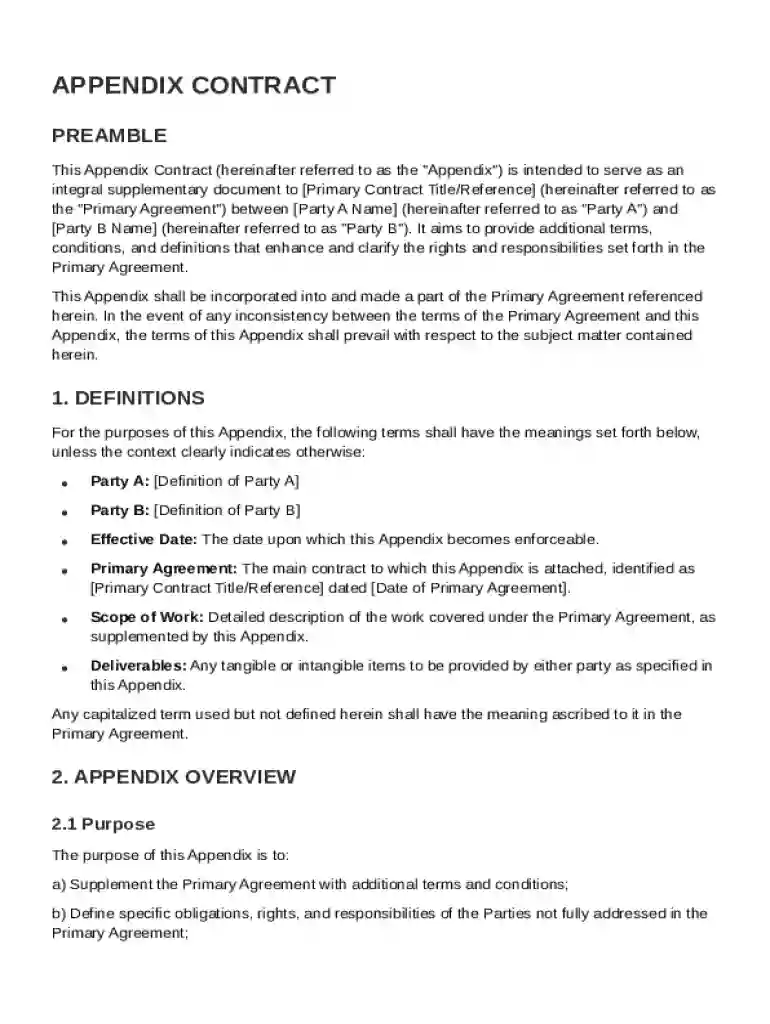
Type text, add images, blackout confidential details, add comments, highlights and more.

Draw your signature, type it, upload its image, or use your mobile device as a signature pad.

Send it via email, link, or fax. You can also download it, export it or print it out.
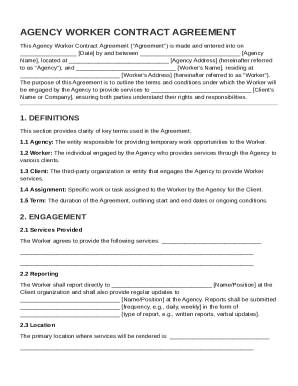
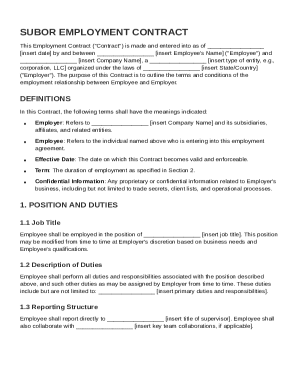
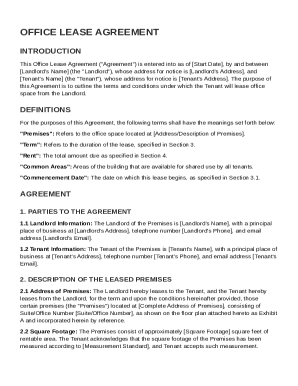
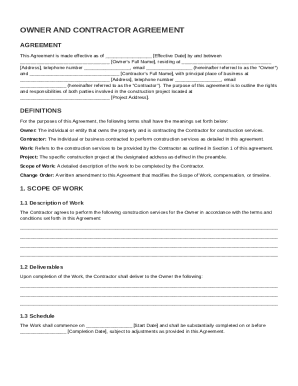
An Appendix Contract Template is essential in formalizing additional terms and clarifications supplementary to a Primary Agreement between two parties. These templates serve to clearly articulate elements that might not be covered within the main contract, such as specific performance metrics, detailed definitions, or unique conditions that need a separate layer of documentation. Appendices play a critical role in ensuring transparent and consistent communication by specifying the expectations and roles connected to the primary contract. They can include varied elements from confidentiality agreements to specialized payment terms, enhancing the comprehensiveness of the Primary Agreement.
Using an Appendix Contract Template involves integrating it alongside a Primary Agreement to document details that need clarification or extension beyond the initial contract. Parties involved must carefully reference the section or clauses in the Primary Agreement to which the appendix directly relates. This ensures any reader can quickly cross-reference and understand the added information or obligations.
Practical scenarios often entail defining key performance indicators (KPIs) for service delivery or outlining specific compliance obligations necessary for particular jurisdictions. Clear, outlined use of the template supports legal enforcement and mitigates risk by binding all parties to agreed-upon terms.
From a practical standpoint, obtaining an Appendix Contract Template involves a few straightforward steps. Many legal document services, such as DocHub, provide downloadable templates. Ensure to customize the template to reflect the specific requirements of the Primary Agreement accurately. Alternatively, consulting with legal professionals to draft unique appendices tailored to complex agreements is often beneficial—especially for intricate or high-value contracts.
Identify the Primary Agreement: Begin by clearly identifying the primary contract to which the appendix will relate. This ensures all supplementary details align seamlessly with existing terms.
List Specific Additions: Clearly outline the additional terms that will be covered in the appendix. Each item should reference relevant sections of the Primary Agreement to maintain clarity.
Define Terms Clearly: Any new definitions or terms used in the appendix should be itemized and explained to avoid ambiguities or future legal issues.
Finalize with Signatures: Conclude the appendix with signatures from relevant parties, signifying agreement to the appended terms. This step is crucial for legal validation.
The Appendix Contract Template is predominantly utilized by businesses and professionals engaged in complex agreements requiring supplementary documentation. Industries heavily dependent on detailed service delivery agreements, such as technology service providers, pharmaceuticals, and construction, often employ these templates. Legal counsel, contract managers, and procurement officers are key users who benefit from these templates' ability to articulate additional requirements or conditions.
Several key terms frequently arise in Appendix Contracts:
Every appendix should be tailored to address these elements appropriately, depending on the context and industry needs.
Legally, an Appendix Contract acts as a binding document once properly incorporated into the Primary Agreement. It must adhere to the same legal standards as the main contract, which involves clear articulation, enforceability under applicable laws, and mutual consent by the involved parties. Non-compliance with appended terms can subject entities to legal disputes or penalties, depending on the severity of potential breaches.
The essential components of an Appendix Contract Template typically include:
These components ensure clarity, enforceability, and alignment with the intended enhancements or clarifications to the Primary Agreement.
At DocHub, your data security is our priority. We follow HIPAA, SOC2, GDPR, and other standards, so you can work on your documents with confidence.