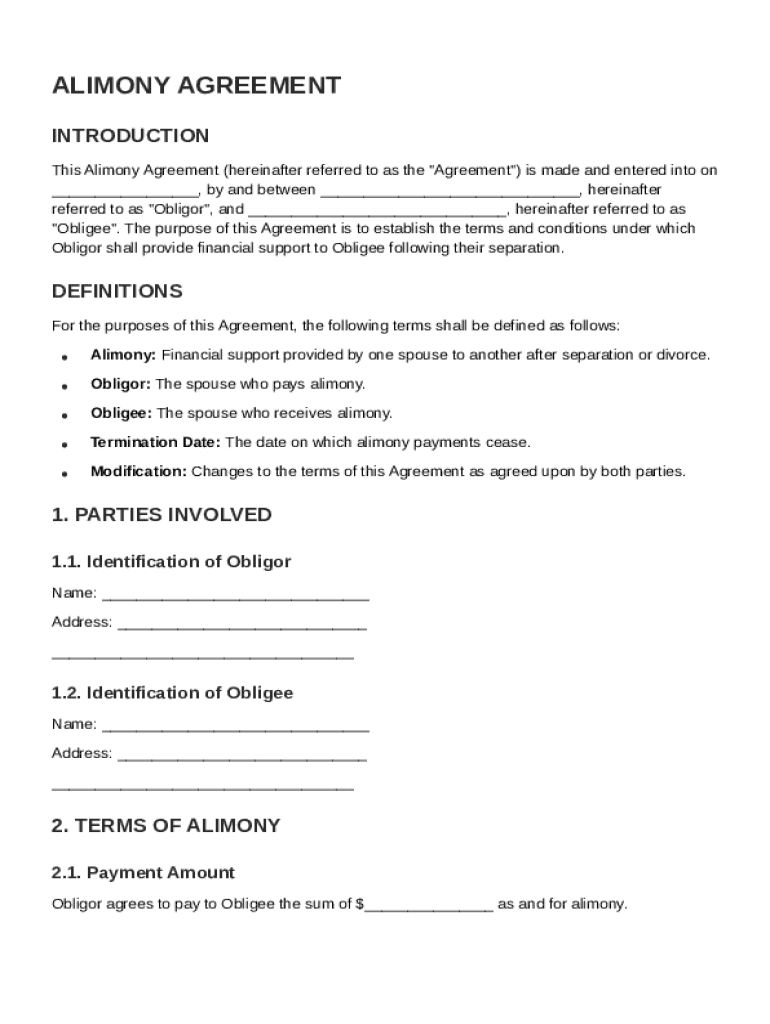







Definition & Meaning
An Alimony Contract Template is a legal document designed to lay out the terms and conditions under which one spouse, typically identified as the Obligor, provides financial support to the other spouse, known as the Obligee, following a separation or divorce. This document details crucial elements, including the payment amount, frequency, duration, and methodology. The agreement serves as a binding contract that requires signatures from both involved parties, ensuring that both the payer and the recipient agree to the stipulated terms.
In practical terms, this template offers a structured framework for establishing an alimony agreement. It can serve as a starting point to customize terms that reflect individual circumstances, helping to mitigate disputes by creating a clear understanding of everyone's rights and responsibilities. Given the legally binding nature of this contract, it is imperative to understand all its components and how they protect the interests of both parties post-separation.
Key Elements of the Alimony Contract Template
The Alimony Contract Template is comprehensive and must include several key elements to be effective and legally binding. These elements ensure that both parties have a clear understanding of their obligations and rights. Important components typically found in the template include:
- Definitions: Clearly outlining terms like "Obligor" and "Obligee" helps avoid ambiguity.
- Payment Details: Specifies amounts, frequency (e.g., monthly), and duration of alimony payments.
- Modification Conditions: Conditions under which the agreement can be changed, including adjustments for financial hardship or changes in employment status.
- Termination Criteria: Defines events, like remarriage of the Obligee, that would end the alimony obligation.
- Dispute Resolution: Offers a framework for resolving conflicts, often involving mediation or arbitration.
- Miscellaneous Provisions: Includes clauses such as confidentiality and jurisdiction that support the contract's enforceability.
Each of these sections is essential to protect the interests of the involved parties, ensuring clarity and reducing the potential for future disputes.
Steps to Complete the Alimony Contract Template
Filling out the Alimony Contract Template requires careful attention to detail and should align with specific individual circumstances. The following steps guide you through its completion:
-
Gather Personal Information: Collect accurate details about both parties, including names, addresses, and contact information.
-
Determine Alimony Details: Agree on payment amounts, frequency, and duration. Clearly document these in the template.
-
Discuss and Note Conditions: Talk through and specify conditions that might require a change in the agreement, such as job loss or significant income changes.
-
Outline Dispute Resolution Steps: Agree on a method for resolving any disputes that may arise, typically mediation or the involvement of a neutral third party.
-
Finalize and Review: Both parties should review the document carefully, ideally with a legal advisor, to ensure mutual understanding and agreement.
-
Signatures: Once all terms are finalized, both parties must sign the document to make it legally enforceable.
The process of completing this template underscores the importance of collaboration and clear communication between parties to avoid misunderstandings.
State-Specific Rules for the Alimony Contract Template
Different states may impose specific rules and guidelines that affect the terms of an alimony agreement. It's crucial to tailor the template to comply with local laws:
- State Statutes: Each state has statutes that define alimony, which could influence the duration and calculation of payments.
- Court Precedents: Previous court rulings might affect how alimony terms are enforced or interpreted in specific jurisdictions.
- Tax Implications: Alimony tax treatment can differ between states, impacting how payments are reported for state tax purposes.
To ensure compliance, consulting with a family law attorney experienced in the relevant state's legal environment is advisable.
Who Typically Uses the Alimony Contract Template
The Alimony Contract Template is a vital tool for:
- Divorcing Couples: Provides a structured means to agree on post-separation finances.
- Legal Professionals: Attorneys often use templates to draft base agreements customized for their clients.
- Mediators and Counselors: Used during mediation to facilitate amicable resolutions.
- Individuals Seeking Legal Advice: Those approaching legal separation might begin with this template to understand potential obligations.
Using a structured template ensures that all relevant aspects are considered, helping prevent overlooked elements that could lead to disputes.


Legal Use of the Alimony Contract Template
Using the Alimony Contract Template implies legal responsibilities and its enforceability demands:
- Compliance with Local Laws: Must align with state statutes and any specific legal requirements.
- Legal Review: Advisable to have agreements reviewed by a legal professional, ensuring all terms are fair and lawful.
- Clear Language: Utilize straightforward language to ensure comprehension by both parties.
Failing to adhere to legal guidelines could result in disputes or the contract being rendered void, emphasizing the importance of consulting with a legal expert in the drafting phase.
Examples of Using the Alimony Contract Template
Understanding real-world applications of the Alimony Contract Template sheds light on its practical utility:
- Divorce Scenario: A couple with differing levels of income drafts an agreement where one provides monthly support to the other, finalizing terms with a lawyer’s assistance.
- Post-Separation Adjustments: An existing agreement is modified when the Obligor's income decreases, using provisions outlined in the original contract for modifications.
- Mediation Use: Couples undergoing mediation may use the template to facilitate negotiations, aiding mediators in structuring acceptable terms for both parties.
These scenarios highlight the template’s flexibility and its role in facilitating cooperative resolutions between separated partners.
Important Terms Related to the Alimony Contract Template
Grasping key terms related to alimony contracts is crucial for understanding and effectively using the template:
- Obligor: The individual responsible for making alimony payments.
- Obligee: The recipient of the alimony payments.
- Modification: Changes made to the terms of the alimony agreement post-implementation.
- Termination: Conditions under which alimony payments cease.
- Dispute Resolution: Processes used to resolve disagreements regarding the agreement’s terms.
Familiarity with these terms enables better understanding and negotiation during the creation and execution of an alimony contract.