



Definition and Meaning
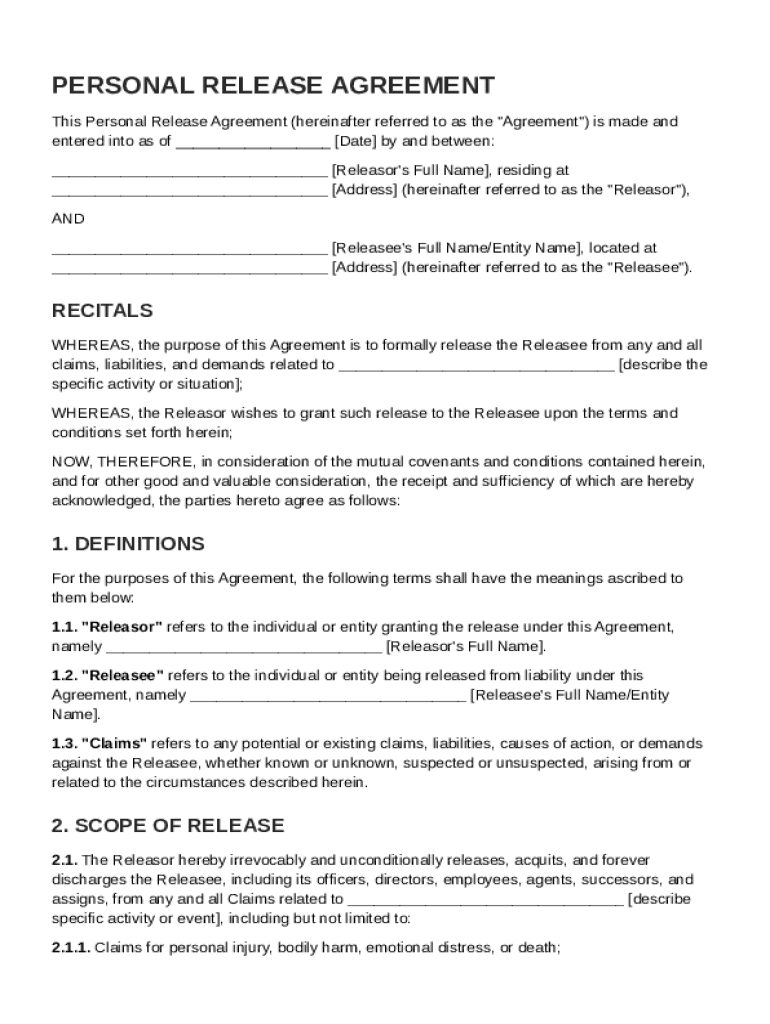
The Personal Release Agreement Template is a legal framework designed to facilitate an agreement between two parties: a Releasor and a Releasee. The core purpose of this document is to ensure that the Releasor agrees to release the Releasee from any potential claims or liabilities stemming from a particular activity or circumstance. By outlining clear definitions and stipulations, this template helps to mitigate misunderstandings and legal disputes. The document typically includes sections on the scope of the release, representations, warranties, and considerations exchanged. Such agreements are crucial in environments where activities may result in disputes, offering a structured method to prevent or settle these issues legally.
How to Use the Personal Release Agreement Template
Using a Personal Release Agreement Template involves several key steps to ensure it meets the specific needs of the parties involved. First, identify the intent and scope of the release; this involves understanding the exact claims or liabilities being waived. Populate the template with accurate information about the Releasor and Releasee, ensuring all personal details are correct. Next, tailor the terms to reflect the unique circumstances surrounding the activity in question, including specific indemnification clauses and considerations. Once the terms are agreed upon, both parties must review the entire document to ensure understanding and compliance. Finalize the document by having both parties sign in the presence of a witness or notary, if legally required, to enhance its enforceability.
Steps to Complete the Personal Release Agreement Template
To effectively complete a Personal Release Agreement Template, follow these sequential steps:
- Gather Information: Collect all necessary details about the parties involved and the context of the release.
- Fill in the Template: Start by inputting the names, addresses, and contact information of the Releasor and Releasee.
- Define the Activity: Clearly describe the activity, event, or situation that the release pertains to, detailing any relevant dates or locations.
- Customize Terms: Modify the template's standard terms to address any specific needs or considerations pertinent to the agreement.
- Review for Clarity: Ensure that both parties fully understand all terms and their implications, making any needed revisions for clarity.
- Sign the Document: Arrange for both parties to sign the agreement, ideally in the presence of a witness or notary to validate its legality.
- Record Keeping: Retain a copy of the signed document for personal records and future reference.
Key Elements of the Personal Release Agreement Template
A comprehensive Personal Release Agreement Template includes several critical components to ensure its effectiveness:
- Definitions and Parties Involved: Clearly identify the Releasor and Releasee, along with any definitions of key terms used within the agreement.
- Scope of Release: Specify the claims, liabilities, or disputes being released, including any implicit or explicit details relevant to the agreement.
- Representations and Warranties: Include assurances provided by both parties about the state of affairs or facts related to the agreement.
- Consideration: Outline the consideration or exchange of value that justifies the release, ensuring it meets legal standards for enforceability.
- Indemnification Clauses: Provide clauses that indemnify the Releasor or Releasee, detailing conditions under which indemnification applies.
- Severability: A provision ensuring the remainder of the agreement remains enforceable if any part is found invalid or unenforceable.
- Governing Law: State the laws and jurisdiction governing the agreement, which usually aligns with the Releasor’s or Releasee’s location.
Legal Use of the Personal Release Agreement Template
The legal effectiveness of a Personal Release Agreement Template depends on its compliance with relevant laws and regulations. This agreement must be used with informed consent, where both parties fully understand and voluntarily enter into the contract. It should be free from coercion or deception. The agreement must contain valid consideration, as a promise without value may be unenforceable. Additionally, to remain legally valid, the template should be regularly reviewed and updated in accordance with changing legal standards, especially if used across different jurisdictions. This ensures that the agreement remains robust against potential legal challenges.
Who Typically Uses the Personal Release Agreement Template
The Personal Release Agreement Template is widely used across various professions and industries. Common users include:
- Photographers and Videographers: Who seek consent from subjects to use images or footage for commercial purposes.
- Event Organizers: Who require participants to waive liability for injuries or damages occurring during an event.
- Employers: Who aim to settle disputes with employees or former employees without court intervention.
- Contractors: Who use releases when delivering services that might lead to incidental damages.
These agreements are invaluable where activities expose parties to potential legal claims, offering a preemptive mechanism to manage liabilities.

Important Terms Related to Personal Release Agreement Template
Understanding certain terms is crucial when working with a Personal Release Agreement Template:
- Releasor: The party waiving their rights to bring claims against the Releasee.
- Releasee: The party being released from potential claims or liabilities.
- Indemnification: A clause specifying how one party will compensate the other for any loss arising out of the agreement.
- Consideration: A benefit or value exchanged as part of the agreement.
- Governing Law: Specifies which jurisdiction’s legal framework will be used to interpret the agreement.
- Severability: Ensures the rest of the agreement remains effective even if a specific section is invalidated.
Familiarity with these concepts allows for clearer communication and understanding during the agreement drafting process.
State-Specific Rules for the Personal Release Agreement Template
When utilizing a Personal Release Agreement Template, it's important to consider state-specific variances that may influence the document's enforceability. Legal requirements for these agreements can differ based on local statutes and case laws:
- Statute of Limitations: Different states may vary the timeframe within which a claim must be brought despite a release.
- Consideration Requirements: Some states have specific rules regarding the validation of considerations within agreements.
- Witness or Notarization: Certain states might require notarization or the presence of a witness for the agreement to be binding.
- Public Policy: Releases that conflict with public policy or particular state regulations can be deemed unenforceable.
Navigating these state-specific differences ensures the document’s legal reliability and alignment with local requirements.