







Understanding Maryland Form 502B
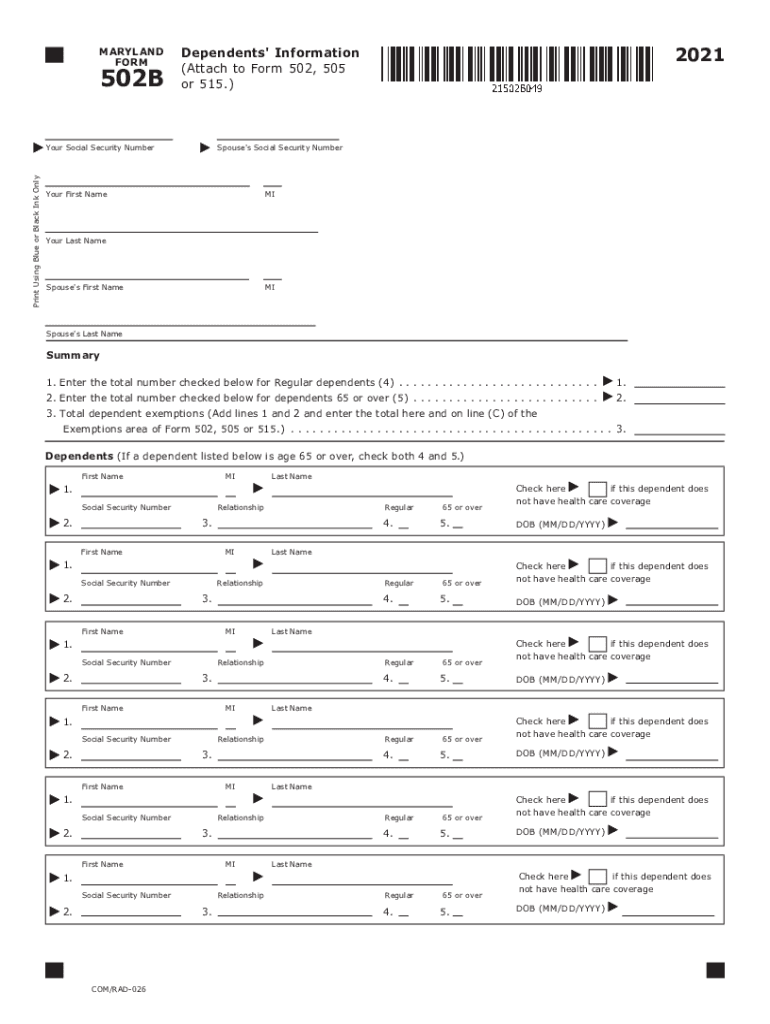
Maryland Form 502B is a crucial document used for reporting dependents' information for state tax purposes, specifically for the year 2021. This form plays an integral role in calculating the exemptions applicable to a taxpayer, based on the number and type of dependents listed. Understanding the structure and purpose of this form ensures accurate filing and maximized tax benefits.
How to Prepare and Use the 502B
Preparing the Maryland Form 502B involves gathering comprehensive information about your dependents. This data includes Social Security numbers, full names, and their relationships to you. It's essential to categorize dependents appropriately, especially those aged sixty-five or older, as age-related exemptions could apply. Ensure all sections are completed accurately to avoid discrepancies during tax calculations.
Steps to Complete Maryland Form 502B
- Gather Information: Collect Social Security numbers, birth dates, and other personal details for each dependent.
- Enter Personal Info: Provide your personal identification details on the form.
- List Dependents: Fill out each dependent's name, relationship, and any applicable age-related exemptions.
- Calculate Totals: Add the number of regular dependents and those qualifying for age exemptions.
- Verify Accuracy: Double-check all inputs for accuracy to ensure compliance and correctness.
- Submission: Include 502B with your state tax return for processing.
Eligibility Criteria for Completing the 502B
To accurately utilize Maryland Form 502B, the taxpayer must have qualifying dependents. These are usually minor children, elderly relatives, or other dependents who rely on the taxpayer for financial support. Verification of this support, usually through documented evidence, may be required in certain scenarios.

Examples of Using the 502B
For instance, a married couple living in Maryland with three children under eighteen and an elderly parent above sixty-five would need to use the 502B. By listing all individuals accurately, the taxpayers can maximize available deductions and lower their state tax obligations. In scenarios where a dependent's status changes (e.g., aging out), adjustments must be documented in the next tax filing.
Important Terms Related to Maryland Form 502B
- Dependent: Refers to individuals who rely on the taxpayer for financial support and meet specific criteria set by the state.
- Exemption: A deduction allowed by law for each eligible dependent, which reduces taxable income.
- Age-Related Exemption: Additional benefits applicable to qualifying dependents over the age of sixty-five.
Filing Deadlines and Important Dates for the 502B
Ensuring timely submission of Form 502B is crucial, as it aligns with the Maryland state tax filing deadlines, typically by April 15. Late submissions can lead to penalties or missed opportunities for tax relief. It is essential to stay informed about any extensions or changes in deadlines due to unforeseen circumstances, such as public holidays or state-mandated updates.
Digital vs. Paper Version of the Maryland 502B
Taxpayers have the option to submit Form 502B either digitally or physically. Electronic filing is often quicker, allowing for prompt feedback on submission acceptance and reducing the risk of errors. Paper submissions are traditional and might require more time for processing and verification. Both methods demand timely completion to ensure no lapses in compliance.
Key Elements of the Maryland Form 502B
Several key components make up the Maryland Form 502B, each requiring careful attention:
- Dependent Listings: Accurate entry of all dependent data.
- Exemption Totals: Calculating the correct exemption figures.
- Verification Documents: Inclusion of supporting documents if needed.
Each block of the form is designed to capture and process specific data that influences the taxpayer's exemption status, impacting overall tax liability.
By understanding these in-depth elements of the Maryland Form 502B, taxpayers can navigate their state tax filing more efficiently, ensuring compliance and maximizing their potential exemptions. It is advisable to consult with a tax professional if uncertainties arise during the completion of the form.




