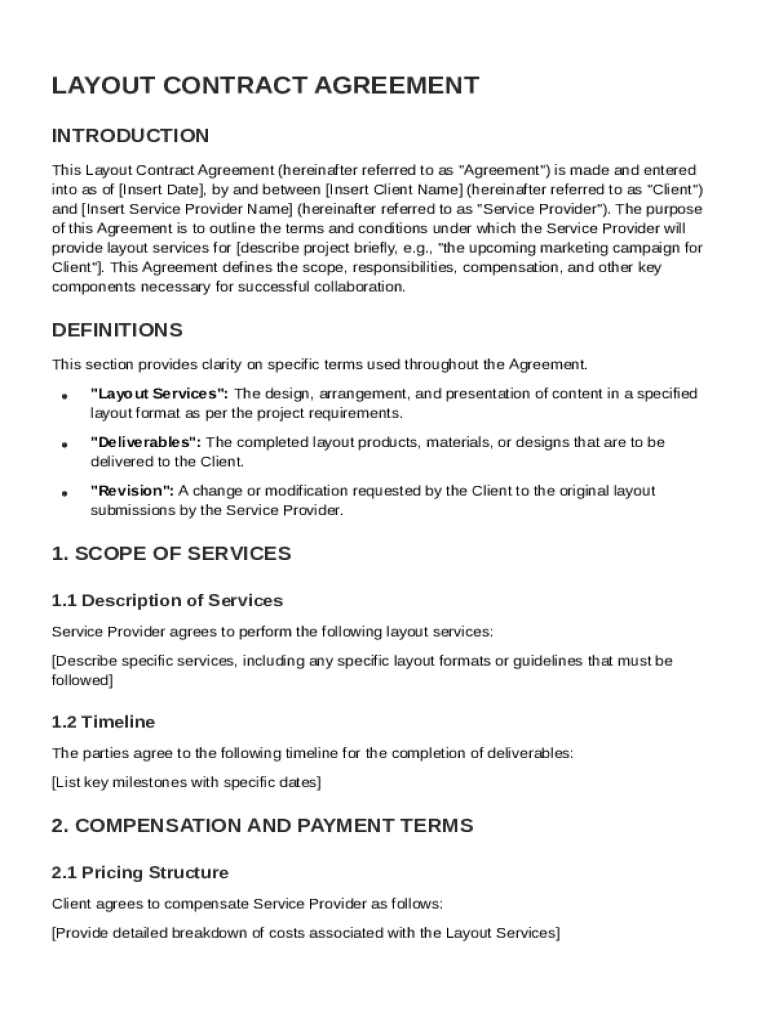







Definition and Meaning of Layout Contract Template
A Layout Contract Template is a predefined document designed to formalize the terms between a client and a service provider regarding layout services for a specific project. This ensures that both parties have a clear understanding of their responsibilities and expectations. The template typically outlines essential elements such as the scope of services, compensation details, and revision processes. Ownership rights, confidentiality clauses, and termination conditions are also included to protect both parties' interests and ensure a smooth collaboration. Understanding this document's purpose helps in setting a strong foundation for project success.
How to Use the Layout Contract Template
Using a Layout Contract Template can streamline the process of finalizing agreements with service providers. To begin, download the template and review each section carefully. Make necessary adjustments to the scope of services and compensation structure to match your project's requirements. It is important to ensure that all terms are clear and reflect the parties' understanding. After finalizing the template, both parties should review it thoroughly and provide signatures to signify agreement. Tools like DocHub allow you to add electronic signatures easily.
Practical Steps
- Review the Template: Start by carefully reading through each section.
- Customize Sections: Adjust terms related to services, compensation, and deadlines.
- Ensure Accuracy: Double-check all information for correctness.
- Discuss with Stakeholders: Ensure all parties understand and agree on the terms.
- Sign and Share: Use digital tools to sign and distribute the final document electronically.
Important Terms Related to Layout Contract Template
Understanding key terms within the Layout Contract Template provides clarity and precision in agreements. Some essential terms include:
- Scope of Services: Describes the project's breadth, covering all deliverables and work involved.
- Compensation Structure: Outlines payment methods, schedule, and amounts due.
- Revision Processes: Details the process of requesting changes to completed work.
- Ownership Rights: Specifies who retains rights to the work produced.
- Termination Conditions: Explains the circumstances and procedures for terminating the agreement.
Detailed Overview
- Scope of Services: Should be clear and comprehensive, covering all expected tasks.
- Compensation: Payment terms must be precise, stating whether payments are milestone-based or upon completion.
- Revisions: Limits and guidelines for changes help manage expectations on both sides.
- Ownership: Defines intellectual property rights, particularly important for creative works.
Key Elements of the Layout Contract Template
The Layout Contract Template comprises several key elements that guide both creation and execution of the agreement:
- Client Information: Defines the client party involved in the contract.
- Service Provider Information: Identifies the service provider responsible for rendering services.
- Detailed Scope: Provides a breakdown of the tasks and deliverables involved.
- Payment Details: Includes all terms regarding compensation.
- Timeline & Deadlines: Outlines project deadlines and important milestones.
- Revisions and Change Management: Details the process for handling client requests for changes.
- Confidentiality Agreements: Ensures both parties agree to keep shared information private.
Legal Use of the Layout Contract Template
The Layout Contract Template should adhere to relevant legal standards to ensure enforceability. In the U.S., it must comply with both federal and state regulations. It’s advisable to tailor terms to meet state-specific laws that may impact agreement conditions, like breach and indemnity clauses. The template serves as a legally binding document once duly signed by both parties.
Examples of Using the Layout Contract Template
The Layout Contract Template can be found in various contexts. For instance, in a marketing agency working with designers on promotional materials, this template would delineate responsibilities, deadlines, and compensation. Similarly, in publishing, it ensures clarity between a book publisher and a typographer over final layouts and revision processes.
Example Scenarios
- Agencies: Managing multiple client projects with clear terms and schedules.
- Freelancers: Ensuring they receive payment upon meeting specific deliverables.
- Publishers: Clarifying responsibilities, especially where creative rights are concerned.
Steps to Complete the Layout Contract Template
Completing a Layout Contract Template necessitates careful attention to each section to ensure comprehensive coverage:
- Enter Basic Information: Both parties should fill in names, addresses, and contact details.
- Outline Project Scope: Clearly define the work to be done, including specific tasks and deadlines.
- Specify Payment Terms: Detail how and when payments will be made.
- Add Revision Terms: Define the number of revisions allowed and the process to request changes.
- Include Ownership Rights: Determine who retains rights to designs or works produced.
- Finalize and Sign: Once all terms are agreed upon, the contract should be signed using digital tools for efficiency.
Who Typically Uses the Layout Contract Template
Various entities benefit from employing a Layout Contract Template to ensure clear terms:
- Design Agencies: To formalize projects with multiple stakeholders.
- Freelance Designers: Providing clear expectations with client agreements.
- Companies: Requiring consistent and professional layouts for internal and external communications.


Common Users
- Marketing Teams: Often involved when contracting design work to external parties.
- Freelancers and Consultants: To protect their work and outline deliverables clearly.
- Publishing Houses: For layout work on books, magazines, and other materials.
Using this framework ensures that you have a robust, all-encompassing overview of the essential aspects of a Layout Contract Template.