Definition & Meaning
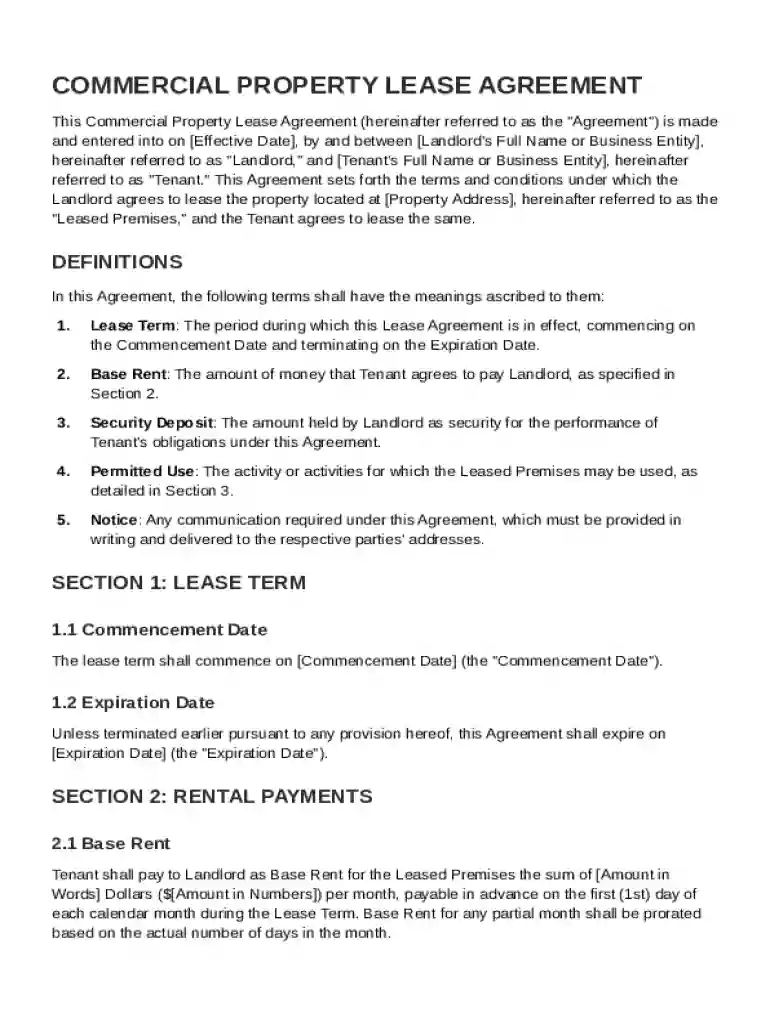
A Commercial Property Lease Agreement Template is a legal document that formalizes the terms and conditions between a landlord and a tenant for the rental of commercial property. This template serves as a guideline for outlining essential information such as lease duration, rent amount, and both parties' rights and obligations. It is designed to ensure clarity and prevent disputes by providing a written record of the rental agreement terms agreed upon by both parties.
Purpose of the Template
- Facilitate Agreement: Provides a standardized format for landlords and tenants to follow, reducing ambiguity.
- Legal Framework: Sets out the legal obligations and rights of all parties involved in the leasing process.
- Time-Saving: Offers a prestructured format that eliminates the need to draft a fresh document from scratch.
- Consistency: Ensures that all necessary elements of a lease are covered, providing a comprehensive approach to rental agreements.
Key Elements of the Commercial Property Lease Agreement Template
Essential Components
- Parties Involved: Clearly identifies the landlord and tenant, including business names and legal entities, if applicable.
- Property Description: Provides a detailed description of the leased premises, including address and specific details about the property.
- Lease Duration: Specifies the length of the lease term, including start and end dates, and any options for renewal.
- Rent Details: Outlines the amount of rent, payment due dates, and acceptable payment methods.
- Security Deposit: Details the amount of security deposit required and conditions for its return.
- Permitted Use: Defines the allowed uses of the premises, ensuring the tenant uses it within legal and agreed-upon purposes.
- Maintenance Responsibilities: Allocates maintenance and repair duties between the landlord and tenant.
- Insurance Requirements: Specifies insurance coverages that each party must maintain throughout the lease term.
- Termination Clauses: Lays out the conditions under which the lease may be terminated, including default provisions and notice requirements.
How to Use the Commercial Property Lease Agreement Template
Step-by-Step Instructions
- Review the Template: Carefully read through the entire template to familiarize yourself with its structure and content.
- Complete Basic Information: Enter the landlord's and tenant's names and addresses, and provide the property's legal description.
- Define Lease Terms: Specify the lease duration, rent amount, and any special conditions applicable to the lease.
- Customize for Specific Needs: Make necessary adjustments to accommodate specific agreements tailored to the unique needs of the landlord and tenant.
- Seek Legal Review: Due to the binding nature of lease agreements, it is advisable to have the document reviewed by a legal professional.
- Finalize and Sign: Both parties should review the finalized document, sign, and exchange copies to ensure mutual understanding and agreement.
Important Terms Related to Commercial Property Lease Agreement Template
Key Terminology
- Leasehold Improvements: Modifications or upgrades made to the premises by the tenant, often subject to approval by the landlord.
- Gross Lease: A lease where the tenant pays a fixed amount, and the landlord covers property expenses such as maintenance and taxes.
- Net Lease: A lease structure where the tenant pays for rent plus some or all property expenses separately.
- Default and Remedies: The conditions under which either party could be in breach of contract and the accompanying legal actions.
- Escalation Clause: A provision that allows for rent adjustments over the lease term, often based on inflation or property taxes.
State-Specific Rules for the Commercial Property Lease Agreement Template
Variations by Jurisdiction
- Disclosure Requirements: Different states may have specific disclosure obligations, such as environmental risks or historical property details.
- Rent Control Laws: Certain areas have rent control laws that limit how much rent can increase, affecting lease agreements.
- Eviction Regulations: Tenant eviction procedures can vary significantly, requiring state-specific handling within lease terms.
- Security Deposit Limitations: States may impose limits on the amount a landlord can charge for a security deposit and conditions for its return.
Legal Use of the Commercial Property Lease Agreement Template
Compliance and Validity
- Ensure Legality: Verify that the template complies with all relevant federal and state laws applicable to commercial leases.
- E-Signature Laws: For those executing leases electronically, ensure compliance with the Electronic Signatures in Global and National Commerce Act (ESIGN).
- Record Keeping: Maintain copies of executed agreements as they may be required for legal disputes or reference in the future.
Examples of Using the Commercial Property Lease Agreement Template
Real-World Applications
- Retail Space Leasing: A tenant uses the template for securing a storefront in a shopping center, specifying use conditions unique to retail.
- Office Rentals: A tech startup leases office space using the template, detailing technical infrastructure needs and alterations.
- Industrial Warehouses: A logistics company rents warehouse space, outlining terms that accommodate large freight and unique storage requirements.
Steps to Complete the Commercial Property Lease Agreement Template
Detailed Process Explanation
- Gather Necessary Information: Collect all relevant details about the property, lease terms, and both parties.
- Fill in Template Sections: Carefully input details into each section, respecting headings and requirements.
- Verify Contact Information: Confirm all parties' contact information is current and accurate.
- Review and Revise: Conduct a thorough review for any inconsistencies or legal gaps in the lease agreement.
- Execute the Agreement: Ensure both parties sign the lease, acknowledging acceptance of all terms and conditions.
- Distribute Copies: Provide each party with a signed copy for their records, ensuring all have a complete understanding of the lease agreement.