






Definition and Purpose of the Storage Rental Agreement Template
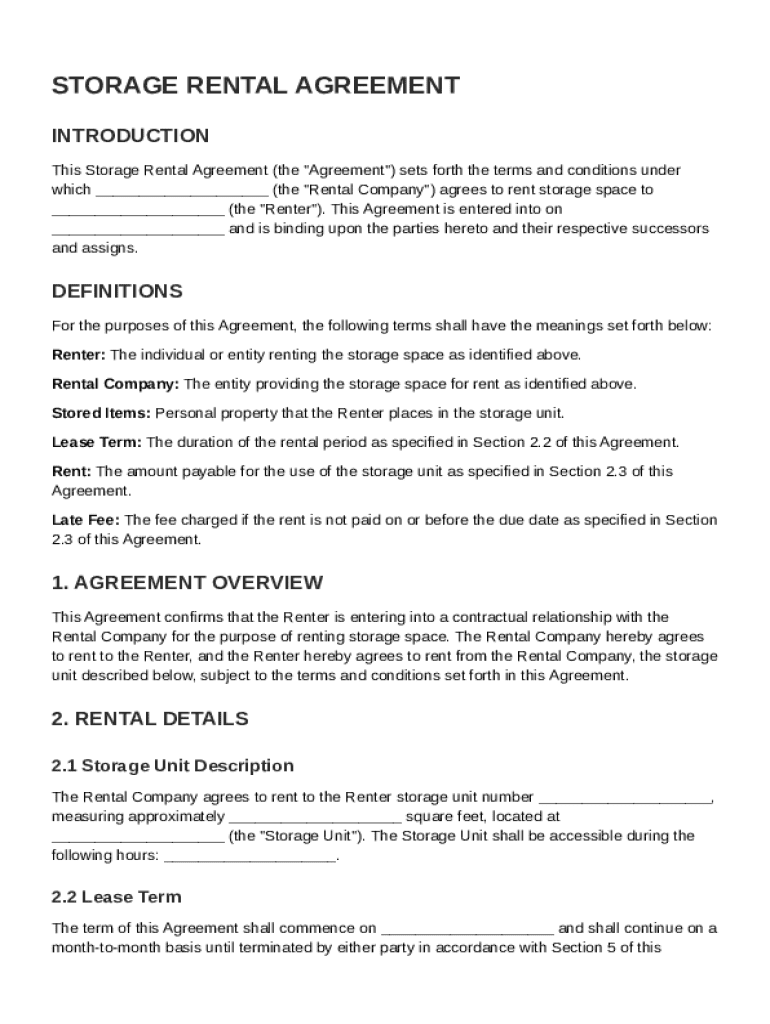
A storage rental agreement template is a pre-designed document outlining the contractual terms between a storage facility owner and a renter. This template serves as a compressive framework that covers the essential aspects of renting a storage unit, providing clarity and structure to the rental relationship. It typically includes details such as the rental unit's specifications, the agreed payment terms, responsibilities of each party, termination procedures, liability limitations, and governing law. The document ensures that the renter uses the storage space solely for personal property, maintains it in good condition, and secures appropriate insurance for the items stored. This agreement not only protects the interests of both parties but also minimizes the potential for disputes.
How to Obtain the Storage Rental Agreement Template
Acquiring a storage rental agreement template is a straightforward process that can be achieved through various methods. Individuals or businesses can download ready-made templates from online platforms that specialize in legal documents, such as DocHub. These templates are often available for a fee or free of charge, depending on the source. Furthermore, many storage facility providers offer these agreement templates to their clients as a part of their service. Customization options allow the user to tailor the agreement to fit specific needs, ensuring that all relevant terms are accurately captured. Once obtained, the document can be printed for physical signing or used digitally with platforms like DocHub for electronic signatures, enhancing convenience and ensuring legal compliance.
Key Elements of the Storage Rental Agreement Template
The storage rental agreement template encompasses several critical components that ensure a comprehensive understanding of the terms and conditions involved. These key elements typically include:
- Identification Details: Information about the rental company and the renter, including names, addresses, and contact information.
- Rental Unit Description: Specifications of the storage unit, such as size, location, and any unique features.
- Payment Terms: Clear outline of the rental fee, payment schedule, late payment penalties, and accepted payment methods.
- Responsibilities and Liabilities: Duties of both parties, including maintenance requirements, liability limitations, and insurance obligations.
- Access and Security: Rules regarding access to the facility, security measures in place, and renter's responsibilities for securing their unit.
- Termination Conditions: Procedures for ending the agreement, including notice periods and conditions under which the contract can be terminated early.
- Governing Law: The jurisdiction that governs the terms of the agreement, ensuring legal compliance.
These elements collectively provide a comprehensive framework that facilitates a clear understanding between the rental company and the renter.
Important Terms Related to the Storage Rental Agreement Template
Understanding the terminology used in a storage rental agreement template is crucial for both parties to fully grasp their rights and responsibilities. Some of the important terms often found in these agreements include:
- Lessee/Renter: The individual or entity that rents the storage space.
- Lessor/Owner: The individual or entity that owns the storage facility and provides the space for lease.
- Premises: The location and description of the storage facility.
- Default: The failure to fulfill the contractual obligations as outlined in the agreement.
- Indemnity: A provision that protects one party from liability or loss.
- Sublet: Allowing another person to use the storage space under the original renter's lease.
- Breach: An act of violating the terms of the agreement.
By familiarizing themselves with these terms, both parties can better navigate the intricacies of the agreement and avoid potential misunderstandings.
Legal Use of the Storage Rental Agreement Template
A storage rental agreement template is a legally binding document when executed correctly. It adheres to state and federal laws governing contract formation and enforcement. To ensure its legal validity, the agreement must be signed by both parties, and any alterations must be mutually agreed upon and documented. The terms regarding notices, indemnity, liability, and compliance with laws pertaining to storage leasing are particularly crucial. This template often includes a section on the governing law, specifying the jurisdiction's legal framework under which the agreement will be interpreted and disputes resolved. Additionally, implementing electronic signatures via platforms like DocHub ensures compliance with the ESIGN Act, making the document enforceable in an electronic format.
Steps to Complete the Storage Rental Agreement Template
Completing a storage rental agreement template involves a series of methodical steps to ensure that all relevant information is accurately captured:
- Input Identification Information: Fill in the contact details of both the lessor and lessee.
- Describe the Storage Unit: Specify the unit size, location, and any additional features or limitations.
- Outline Payment Terms: Detail the rental fee, payment method specifics, and schedule, including any penalties for late payments.
- Responsibilities and Regulations: Clearly state maintenance roles, allowable items for storage, and security obligations.
- Termination Clause: Define the conditions and procedures for terminating the agreement.
- Review and Revise: Both parties should thoroughly review the document for accuracy and completeness.
- Sign and Secure: Make the agreement legally binding by signing the document. Leveraging electronic signature capabilities through a platform like DocHub can streamline this process.
By following these steps, both parties can create a legally sound and mutually agreeable document.
Examples of Using the Storage Rental Agreement Template
The storage rental agreement template is versatile and can be tailored to meet an array of storage needs across different real-world scenarios. For instance:
- Personal Storage: Individuals needing extra space for personal belongings, seasonal items, or transitional storage between moves.
- Business Use: Companies requiring storage for inventory overflow, equipment, or archived records.
- Event-Based Needs: Temporary storage solutions for event organizers who need to store equipment, props, and supplies in proximity to their event venue.
- Military Personnel: Providing a reliable option for service members to store personal items while deployed or relocated.
These use cases demonstrate the template's adaptability and effectiveness in various contexts, accommodating diverse storage requirements efficiently.
State-Specific Rules for the Storage Rental Agreement Template
While the storage rental agreement template provides a broad framework applicable in many jurisdictions, state-specific rules and regulations may dictate certain terms and conditions. These include:
- Maximum Deposits: Some states have regulations on the amount that can be charged as a security deposit.
- Notice Requirements: The amount of notice required for terminating an agreement can vary by state.
- Inspection Rights: States may differ in the extent to which facility owners can inspect rental units.
- Eviction Procedures: The process for dealing with default or non-compliance may be subject to state laws.
Understanding these state-specific nuances is crucial to ensure that the agreement adheres to local legal standards and remains enforceable. It is advisable for both parties to consult legal experts familiar with state laws to verify that their agreement complies with all applicable regulations.