
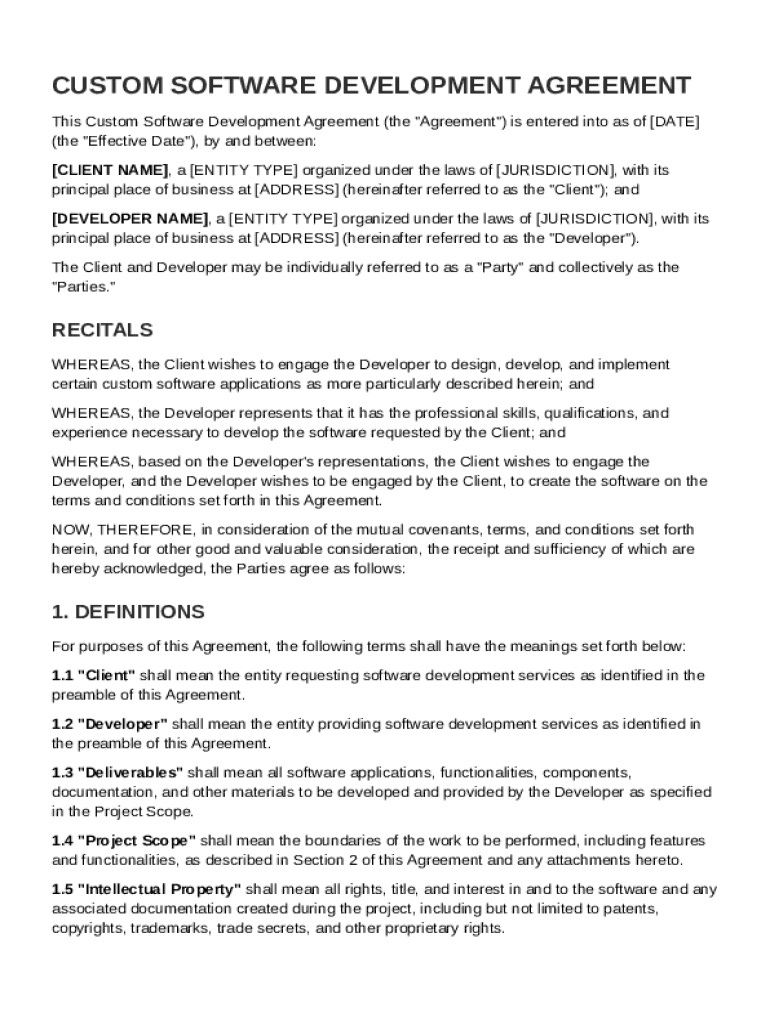







Definition and Purpose of a Custom Software Development Agreement
A Custom Software Development Agreement is a legally binding document that delineates the terms and conditions between a client and a developer for the creation of custom software. This agreement ensures clarity and mutual understanding by defining the project scope, deliverables, timelines, and payment structures. It also outlines the ownership of intellectual property rights, which is crucial in determining who holds the proprietary rights to the developed software. Additionally, the agreement includes confidentiality obligations to protect proprietary and sensitive information exchanged during the project. By clearly stating each party's responsibilities and rights, the agreement helps prevent misunderstandings and disputes.
Key Elements of the Agreement
- Project Scope: Defines the specific tasks and outcomes expected from the development process.
- Deliverables and Timeline: Details the expected outputs and when they will be delivered.
- Payment Terms: Specifies how and when the developer will be compensated.
- Intellectual Property: Clarifies ownership rights of the software and any related code or assets.
- Confidentiality: Ensures that sensitive information remains protected.
Using the Custom Software Development Agreement Template
The template simplifies the creation of a comprehensive agreement by providing a structured format that can be customized to suit specific project needs. Users can start by filling in the details of the involved parties, project specifications, and any unique terms that apply to their arrangement. It's designed to be adaptable, allowing for the addition of custom clauses relevant to individual projects. Utilizing this template helps parties formalize their expectations and obligations, minimizing the risk of conflict.
Steps to Utilize the Template
- Initial Information: Enter the names and contact details of the client and developer.
- Project Outline: Fill in the project scope and objectives.
- Financial Arrangements: Input payment schedules and amounts.
- Legal Clauses: Customize intellectual property and confidentiality clauses to align with project specifics.
Obtaining the Custom Software Development Agreement Template
The template can be obtained from reputable document platforms like DocHub, where it is readily available for download or online editing. Users can access it directly from their devices or import it from cloud storage solutions. Obtaining this template online ensures users have the most current version, which adheres to modern legal standards and best practices.
Ways to Access the Template
- Online Platforms: Access through websites offering legal document services.
- Cloud Services: Import from linked cloud storage accounts like Google Drive.
- Direct Download: Available for download and offline customization.
Completing the Custom Software Development Agreement Template
Completing the template involves a systematic approach where users follow a sequence of sections, each requiring specific information. It begins with identifying details and progresses through project specifics to legal obligations. Each section is crucial and should be completed with precision to ensure the agreement is legally sound and covers all necessary aspects of the relationship.
Step-by-Step Completion Guide
- Identify the Parties: Clearly state both the client's and developer's information.
- Define the Scope: Outline the objectives and expected outcomes of the software project.
- State Deliverables: Detail what will be delivered, including interim versions if applicable.
- Set Payment Terms: Specify the payment schedule, methods, and amounts.
- Address Legalities: Insert clauses on intellectual property and confidentiality.
Reasons for Utilizing a Custom Software Development Agreement
Using this agreement is critical in establishing a formal and transparent relationship between a client and developer. It not only provides legal protection but also fosters a professional environment where both parties know what to expect. This agreement serves as a reference in case of disputes and is essential for safeguarding interests.
Advantages of Having an Agreement
- Legal Protection: Provides a framework for legal recourse in cases of breach or dispute.
- Clear Expectations: Outlines what each party expects from the project.
- Risk Mitigation: Reduces the likelihood of misunderstandings and conflicts.
Who Typically Uses a Custom Software Development Agreement Template
This template is mainly used by businesses and freelancers engaged in the creation of custom software. Clients who commission software development projects and developers who provide these services benefit from having a detailed agreement in place. It's particularly useful for companies of all sizes that want to codify their working relationships and ensure all legal bases are covered.
Typical Users
- Businesses: Companies seeking custom software solutions.
- Freelance Developers: Individuals offering software development services.
- Development Firms: Agencies that undertake large-scale software projects.
Legal Validity and Compliance of the Agreement
The agreement must comply with local, state, and federal laws to be enforceable. It should reflect the legal standards and practices relevant to software development and business agreements. The Custom Software Development Agreement Template is designed to align with U.S. legal contexts, ensuring compliance with regulations such as the ESIGN Act for electronic signatures.
Legal Considerations
- Federal Regulations: Must adhere to U.S. standards for software and business contracts.
- State Laws: Consider state-specific regulations that might affect contract terms.
- Electronic Signatures: Ensure signatures meet the requirements of the ESIGN Act.
Critical Terms in the Custom Software Development Agreement
Understanding the key terms within the agreement is vital for both parties. These terms cover the nature of the partnership, the scope of work, and any specific conditions that affect how the project is completed. Knowledge of these terms helps clarify the responsibilities and rights, mitigating risk for all involved.
Important Terminologies
- Scope of Work: Defines the work to be performed and the expected results.
- Confidentiality Agreement: Ensures private information isn't disclosed.
- Warranties and Liabilities: Specifies what guarantees are provided and the liabilities involved.
Each block of content provides detailed information and practical scenarios relevant to the Custom Software Development Agreement Template. Following these guidelines will help ensure the agreement is comprehensive and tailored to the needs of the specific software project.




