






Definition and Purpose of the Creative Agreement Template
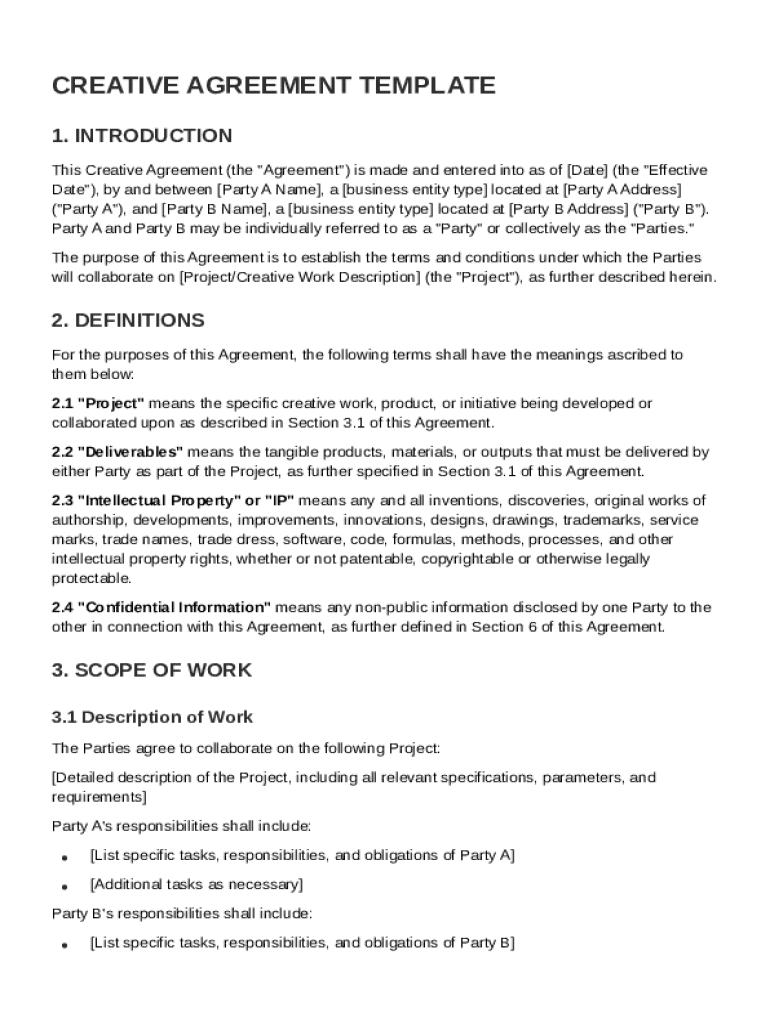
A Creative Agreement Template is a structured document designed to formalize collaboration terms between two parties on a specific creative project. This agreement aims to outline the roles, responsibilities, compensation, intellectual property ownership, confidentiality obligations, and more, providing a clear framework for the project's execution. By defining these elements, the template helps manage expectations and reduce misunderstandings.
Key Components
- Definitions: Clarifies key terms used throughout the agreement to ensure both parties have a mutual understanding.
- Scope of Work: Details the specific tasks, services, or deliverables required for the project.
- Compensation: Outlines payment terms, including amount, method, and schedule.
- Ownership of Intellectual Property: Specifies who retains rights to creative works produced under the agreement.
- Confidentiality: Sets out terms to protect sensitive information shared during the project.
How to Complete the Creative Agreement Template
Completing a Creative Agreement Template involves several key steps, each contributing to the document's completeness and effectiveness in guiding the creative project. Accuracy and detail in each section will facilitate smoother collaboration and conflict resolution.
Steps to Completion
- Identify Parties: Clearly state the legal names and contact details of the individuals or entities involved.
- Define Scope: Specify the nature of the project, including timelines, deadlines, and deliverables.
- Set Compensation Terms: Record the agreed payment structure, distinguishing between upfront fees, milestones, and final payments.
- Establish Ownership Rights: Decide who will own the work produced and describe these rights in detail.
- Draft Confidentiality Clauses: If necessary, include non-disclosure agreements to protect proprietary information.
Key Elements of the Creative Agreement Template
A thorough understanding of the key elements within a Creative Agreement Template is crucial for drafting and finalizing an agreement that serves the project's interests effectively.
Critical Elements
- Revisions and Approvals: Define the process for reviewing and accepting deliverables, including allowed revisions.
- Termination Rights: Outline conditions under which either party may terminate the agreement and the repercussions of such actions.
- Dispute Resolution: Establish methods for resolving conflicts, choosing between negotiation, mediation, or arbitration.
- Miscellaneous Provisions: Include any additional clauses pertinent to the project's unique needs, such as jurisdiction and governing law.
Legal Use Cases for the Creative Agreement Template
The Creative Agreement Template must be used legally to serve its purpose and protect the interests of both parties involved in a creative collaboration. Ensuring legal compliance minimizes risks and supports fair collaboration.
Common Legal Scenarios
- Freelancers and Clients: Freelancers use this template to formalize project terms with clients.
- Agencies and Subcontractors: Agencies may draft agreements with subcontractors to clarify roles and responsibilities.
- Joint Ventures: Two creative firms collaborating on a project can use this agreement to outline joint responsibilities and profit-sharing.
Who Typically Uses the Creative Agreement Template
Understanding the diverse range of professionals who rely on a Creative Agreement Template highlights its utility across different creative industries.


Typical Users
- Graphic Designers: Use agreements to specify project goals, client expectations, and revision limits.
- Writers and Editors: Employ templates to delineate writing assignments, delivery timelines, and payment schedules.
- Marketing Agencies: Utilize agreements to formalize campaign strategies, client approvals, and budget allocations.
Important Terms Related to the Creative Agreement Template
Familiarity with key terms in a Creative Agreement Template enhances understanding and execution of the document.
Significant Terms
- "Deliverable": A tangible or intangible product delivered to the client as per the agreement's terms.
- "Royalty": Payment made to rights holders for each instance of the agreed use or sale of their creative work.
- "Milestone": Intermediate goals set to gauge progress and trigger partial payments.
State-Specific Rules for the Creative Agreement Template
The legal environment for using a Creative Agreement Template can vary widely depending on the jurisdiction. Understanding state-specific rules ensures compliance.
Examples of Variations
- Intellectual Property Laws: States may vary in how they adjudicate intellectual property disputes, affecting template clauses.
- Professional Licensing: Certain professions might require state-specific licensing to engage in creative contracts legally.
Tools Needed to Use the Creative Agreement Template
To execute and manage a Creative Agreement Template efficiently, certain tools and resources are essential.
Necessary Tools
- Document Editors: Platforms like DocHub facilitate editing, sharing, and signing agreements online.
- Cloud Storage Services: Google Drive or OneDrive can store and share documents securely.
- Email Clients: Sufficient for sending drafts and finalized agreements for review and signature.
By focusing on these blocks, you can effectively utilize a Creative Agreement Template to structure and secure creative collaborations, reducing misunderstandings and enhancing project outcomes.