
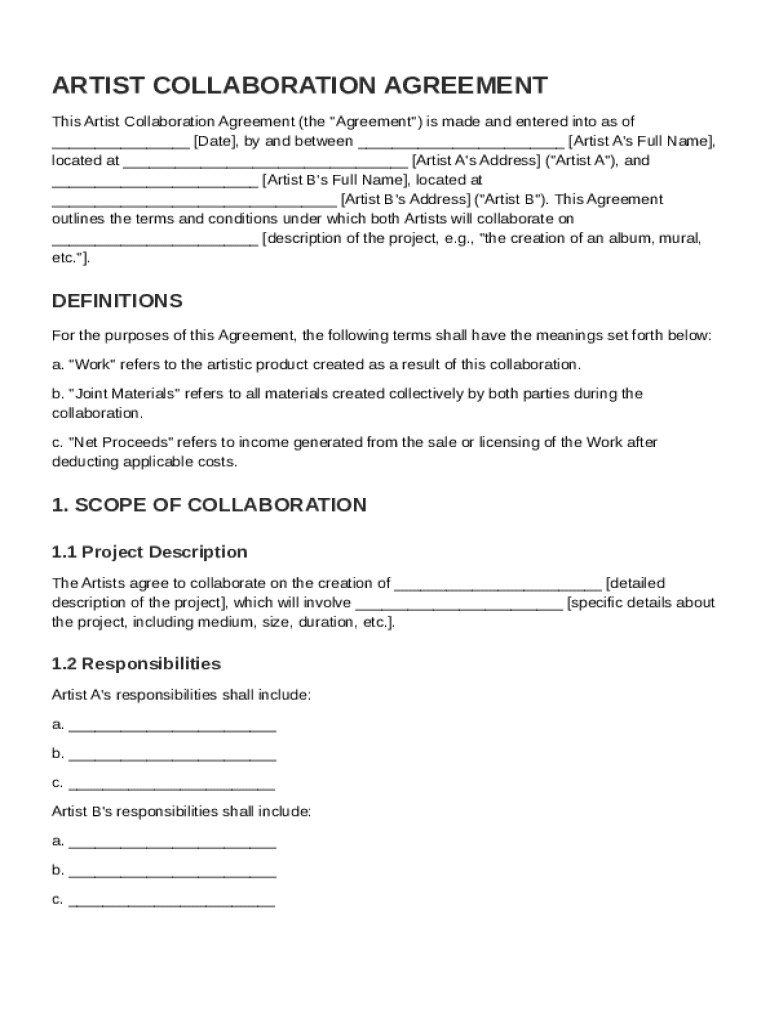







Definition & Meaning
The Artist Collaboration Agreement is a legally binding document that delineates the terms and conditions when two or more artists collaborate on a project. Critical components of this agreement include responsibilities of each participant, allocation of intellectual property rights, financial aspects like compensation and revenue sharing, and procedures for resolving disputes. This document is essential as it establishes a clear framework for joint artistic efforts, ensuring all parties understand their rights and obligations, thereby reducing potential conflicts.
Key Elements of the Artist Collaboration Agreement Template
A comprehensive Artist Collaboration Agreement Template will typically consist of several critical elements. These elements ensure that all aspects of the collaborative work are addressed:
- Project Description: An outline of the project, including goals, timelines, and expected outcomes.
- Roles and Responsibilities: Detailed allocation of tasks to each party, ensuring clarity on who is responsible for what.
- Intellectual Property: Terms concerning the ownership and use of any intellectual property created during the collaboration.
- Compensation: Description of payment terms, including any advance fees, royalties, or profit-sharing arrangements.
- Confidentiality: Obligations regarding the protection of sensitive information shared during the collaboration.
- Dispute Resolution: Procedures for resolving disagreements, including mediation or arbitration processes.
- Termination Conditions: Grounds under which the agreement can be terminated, and the consequences of such termination.
Using the Artist Collaboration Agreement Template
To effectively use an Artist Collaboration Agreement Template, one must follow these steps:
- Review the Template: Thoroughly examine the template to understand its structure and content.
- Customize the Terms: Adjust and specify terms to fit the particular needs of your project and collaboration.
- Discuss with All Parties: Ensure all collaborators understand and agree to the terms.
- Legal Consultation: Consider consulting with a legal professional to ensure the template complies with applicable laws and adequately protects your interests.
- Finalization and Signing: Once reviewed and agreed upon, all parties should sign the agreement to make it legally binding.
Steps to Complete the Artist Collaboration Agreement Template
Completing the Artist Collaboration Agreement Template involves several careful steps:
- Identify Participants: Clearly list the names and contact details of all collaborating parties.
- Define Scope: Clearly outline the project's goals, deliverables, and timelines.
- Detail Contributions: Specify each party's contributions and any resources they bring to the project.
- Specify Ownership Rights: Outline how the intellectual property created will be owned and used.
- Outline Financial Arrangements: Detail compensation, such as payment schedules or revenue sharing.
- Set Confidentiality Obligations: Establish what information must remain confidential.
- Provide for Dispute Resolution: Choose mechanisms for resolving conflicts.
- Include Signatures: Ensure all parties sign the document to confirm agreement.
Who Typically Uses the Artist Collaboration Agreement Template
The Artist Collaboration Agreement Template is commonly used by musicians, visual artists, designers, and digital content creators involved in joint projects. These templates are particularly useful for anyone entering a collaboration where the creation and distribution of intellectual property are involved. Nonprofit arts organizations, educational institutions involved in cooperative art projects, and even independent filmmakers may also utilize these agreements.

Legal Use of the Artist Collaboration Agreement Template
The legal use of an Artist Collaboration Agreement Template ensures that the agreement is enforceable under U.S. law. Key considerations include:
- Compliance with Laws: Ensure the agreement complies with federal and state laws governing contracts and intellectual property.
- Clear Language: Use precise and understandable language to avoid ambiguities in interpretation.
- Authenticity: Verify that the agreement reflects the genuine intentions of all parties involved.
- Execution Formalities: Follow proper signing protocols, such as having witnesses or notaries if required by the state law.
State-Specific Rules for the Artist Collaboration Agreement Template
While the general framework of an Artist Collaboration Agreement remains consistent, state-specific laws can influence certain provisions:
- Intellectual Property Definitions: Some states have unique definitions of what constitutes intellectual property.
- Contract Execution: States may have specific rules regarding how contracts must be signed (e.g., electronic versus physical signatures).
- Dispute Resolution: The availability and preference for particular dispute resolution forums can vary state by state.
Examples of Using the Artist Collaboration Agreement Template
Practical examples of using an Artist Collaboration Agreement include:
- Music Collaborations: Two musicians creating a joint album may use the template to divide royalties and assign performance rights.
- Art Exhibitions: Visual artists collaborating for joint exhibitions can use the agreement to stipulate display responsibilities and sales proceeds.
- Film Projects: Independent filmmakers can outline contributions, screenplay rights, and profit splits in such an agreement.
These scenarios highlight the versatility and necessity of an Artist Collaboration Agreement Template in ensuring harmonious and organized artistic partnerships.




