






Definition & Meaning
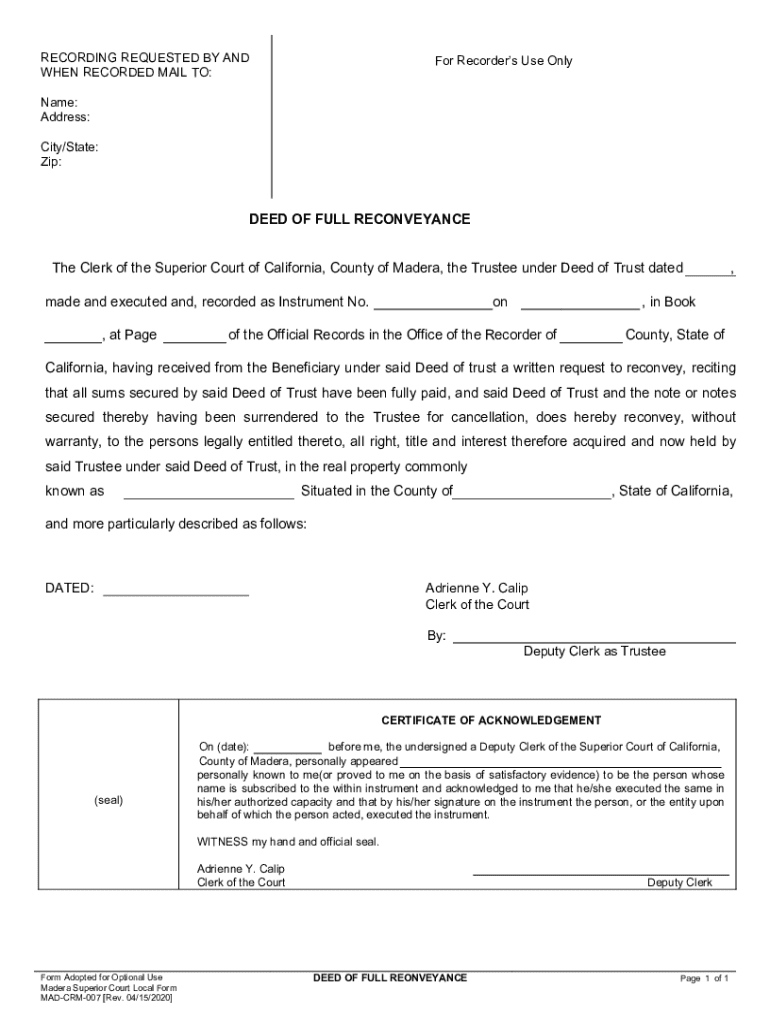
A Deed of Full Reconveyance is a legal document issued to confirm that a Deed of Trust has been fully satisfied. This document serves as proof that the borrower has repaid the debt secured by the collateral, which is usually real property. Upon issuance, the deed cancels obligations associated with the original Deed of Trust and reconveys all rights of ownership back to the property owner. This process is commonly utilized in jurisdictions following the trust deed system, particularly in several U.S. states including California.
Key Elements of the Deed of Full Reconveyance
- Identifying Information: Includes the borrower's and lender's names, the property's legal description, and the original loan amount.
- Recording Information: Details the date and location of the original Deed of Trust.
- Confirmation of Satisfaction: States that the debt secured by the trust deed has been paid in full.
- Signature Requirements: Requires the signature of the trustee, often a third party authorized to reconvey the property title.
- Notarization: Must be notarized to validate the signatures and ensure the document is recorded in public records.
How to Use the Deed of Full Reconveyance
The Deed of Full Reconveyance is used to clear the title of a property once the mortgage or loan obligation is satisfied. Homeowners should verify that the lender has forwarded this document to the County Recorder’s Office to have the mortgage lien officially removed from the property records. This step is crucial in proving clear ownership, especially when selling or refinancing the property.
Steps to Complete the Process
- Verify Loan Repayment: Ensure all payment obligations have been met.
- Request Documentation: Contact the lender for the deed to be created and executed.
- Signatures and Notarization: Ensure the trustee signs the document and has it notarized.
- File with Recorder’s Office: Submit the document to the appropriate county office for recording to officially reconvey the property title.
How to Obtain the Deed of Full Reconveyance
Acquiring this document involves a few methodical steps to ensure the lien is removed properly.
- Contact the Lender: As the lender or their representative must initiate the process, communicate directly with them after making the final loan payment.
- Review the Deed of Trust: Examine the original Deed of Trust for specific instructions on obtaining the reconveyance document.
- Check Delivery Method: Confirm whether the lender will mail the document or if you need to collect it in person.
Who Typically Uses the Deed of Full Reconveyance
This document is commonly used by homeowners and property investors who have financed their real estate purchase with a mortgage tied to a Deed of Trust. It is essential for:
- Homeowners: Seeking to remove a mortgage lien after full repayment.
- Real Estate Investors: Clearing property titles to facilitate future sales or refinancing.
- Estate Planners: Ensuring clear property titles in estate settlement matters.


Legal Use of the Deed of Full Reconveyance
This legal tool is rooted in property law, serving a vital role in clearing real estate titles. It ensures:
- Lien Elimination: The document confirms the termination of the lender's interest in the property.
- Property Title Clearance: It is legally necessary for the title to reflect sole ownership by the borrower once debts are paid.
- Protection Against Future Claims: Helps shield property from future claims of interest from the former lender.
Important Terms Related to Deed of Full Reconveyance
Understanding essential terminology aids in accurately handling the Deed of Full Reconveyance.
- Trustee: A neutral third party holding the deed during the loan period.
- Beneficiary: Refers to the lender who benefits from the loan repayment.
- Grantor: The property owner or borrower who finances the property.
- Reconveyance: Process of transferring the legal title back to the borrower upon loan fulfillment.
State-Specific Rules for the Deed of Full Reconveyance
While the base purpose remains consistent, regulations can vary by state. Key differences include:
- Processing Times: Some states have specific deadlines for recording the document post-repayment.
- Notice Requirements: Certain jurisdictions require formal notifications to be sent to governmental bodies.
- Filing Fees: Vary by state and are necessary to record the document officially.
Understanding these nuances is crucial for ensuring compliance with local laws and successful title clearing.
Examples of Using the Deed of Full Reconveyance
Practical applications of this form highlight its importance in real estate transactions.
- Home Purchase: After a mortgage is fully paid, the reconveyance deed clears the way for unencumbered ownership.
- Property Sale: Ensures that sellers can present a clear title to buyers, facilitating smoother transactions.
- Estate Planning: Guarantees that heirs receive property free of claims by lenders, simplifying inheritance proceedings.