






Definition and Meaning of an Art License Agreement Template
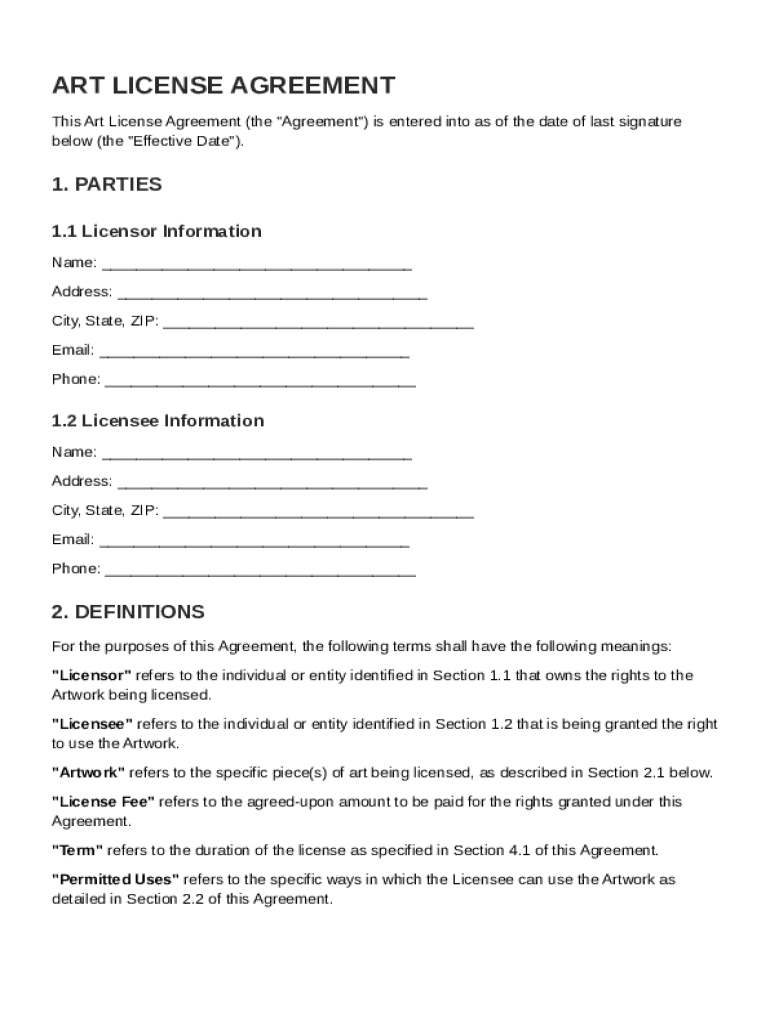
An Art License Agreement Template is a structured document that delineates the terms under which a Licensor, typically an artist or a creative entity, grants a Licensee the rights to use specific artwork. This template outlines several critical components, including the scope and limitations of the license, compensation details, and duration. It also covers elements such as ownership rights, warranties, indemnification, and termination conditions. These are fundamental to ensuring that the interests of both parties are adequately protected.
Key Components Included in the Agreement
- Licensor and Licensee Details: Identifies the parties involved in the agreement, specifying their roles and contact information.
- Definitions: Establishes key terms and phrases to ensure mutual understanding.
- Scope of License: Details what rights are being transferred, such as the type of use, geographical limitations, and exclusivity.
- Compensation: Describes the financial terms, including royalties, lump sum payments, or other monetary considerations.
- Duration: Specifies how long the license will be valid and any renewal terms.
- Ownership and Intellectual Property Rights: Clarifies who retains ownership of the artwork and how rights are transferred.
- Warranties and Indemnification: Details obligations of both parties, providing protection against potential legal disputes.
- Governing Law and Jurisdiction: Identifies which legal system will oversee the agreement.
- Amendments and Termination: Explains how the agreement can be altered or terminated.
How to Use the Art License Agreement Template
Utilizing an Art License Agreement Template involves several steps to ensure it accurately reflects the intentions of both parties. Here’s a streamlined process for its effective use:
-
Identify the Parties: Clearly state who the Licensor and Licensee are. This section should include the full names, addresses, and contact details.
-
Define the Artwork: Specify the particular artwork that is to be licensed. Include titles, descriptions, or serial numbers when applicable.
-
Set the Terms: Determine the duration, scope, and limitations of the license. Discuss whether the license is exclusive or non-exclusive.
-
Outline Compensation: Agree on the payments terms. Will there be a flat fee or ongoing royalties based on usage?
-
Detail Rights and Obligations: Define what rights the Licensee has to modify or reproduce the artwork. Specify any conditions that must be met.
-
Review Legal Provisions: Ensure the template includes sections on warranties, indemnification, and dispute resolution.
-
Sign and Execute: Both parties should sign the document to make it legally binding. It may also need to be notarized or witnessed.
Key Elements of the Art License Agreement Template
Understanding the core elements of the Art License Agreement Template is crucial for crafting a comprehensive document. Here are the main sections typically included:
Administrative and Identifying Information
- Licensor and Licensee Details: Accurate identification of both parties involved.
- Description of Artwork: A detailed description of the artwork being licensed, including any relevant specifics.
Licensing Terms
- Scope and Limitations: Clearly define what the Licensee is permitted or restricted from doing with the artwork.
- Royalties and Fees: Outline any financial exchanges, which could include upfront payments or percentage royalties.
Legal Concerns
- Warranties: Both parties' assurances regarding the legitimacy and originality of the artwork.
- Indemnification: Addresses how liability will be managed if legal issues arise.
Final Provisions
- Governing Law: Specifies the jurisdiction under which the agreement falls.
- Termination: Conditions under which the contract can be ended.
Legal Use of the Art License Agreement Template
Ensuring the legal validity of an Art License Agreement Template is paramount. Here are some legal considerations when using this document:
-
Ensure Compliance with Intellectual Property Laws: Respecting copyright laws is critical. The template should include clauses that respect existing legal boundaries.
-
Customize for Jurisdictional Needs: Laws may vary significantly by state or country. Tailor the agreement to fit local legislative requirements.
-
Use of Legal Counsel: Engaging legal professionals to review the agreement can provide an additional layer of security and legality.
Steps to Complete the Art License Agreement Template
Finalizing the agreement involves a series of meticulous steps to ensure completeness and correctness:
-
Fill Out Basic Information: Input the names and addresses of the Licensor and Licensee.
-
Detail the Artwork: Include clear identifiers such as names, images, or descriptors of the artwork.
-
Agree on Financial Terms: Clearly spell out how and when payments will occur.
-
Specify the Duration and Scope: Ensure clarity on how long and where the license applies.
-
Add Clauses for Indemnification: Address potential legal disputes proactively.
-
Review Contract Thoroughly: Before signing, both parties should independently verify all terms are correctly detailed.
Examples of Using the Art License Agreement Template
Different scenarios showcase how this template can be utilized effectively:
- Commercial Licensing: An artist licenses their digital art to a marketing firm for use in a national campaign.
- Merchandising: A photographer licenses images to a business for use on products like calendars or posters.
- Exhibitions: A gallery obtains the rights to showcase a sculptor's work as part of a themed exhibit.
Software Compatibility for Art License Agreement Template
DocHub ensures ease in managing document-related tasks, including handling Art License Agreement Templates. It offers robust support for various software tools:
-
Integration with Google Workspace: Direct import/export functionality with Google Drive and Gmail promotes seamless document handling.
-
Document Editing Flexibility: Supports a variety of formats including DOC and PDF, offering flexibility in how documents are managed and edited.
-
Mobile and Desktop Accessibility: Ensures users can access and modify agreements on the go, without the need for dedicated software installation.
Important Terms Related to Art License Agreement Template
Understanding the terminology used in Art License Agreements can ease navigation and interpretation:
- Licensor: The original creator or rights holder of the artwork.
- Licensee: The party granted permission to use the artwork under specified conditions.
- Exclusive License: Grants usage rights solely to the Licensee, preventing the Licensor from offering the same rights to others.
- Indemnification: A legal promise by one party to cover potential losses or damages incurred by another.
These terms are integral to comprehending and properly utilizing an Art License Agreement Template, ensuring clear communication and adherence to legal standards.