






Definition and Meaning
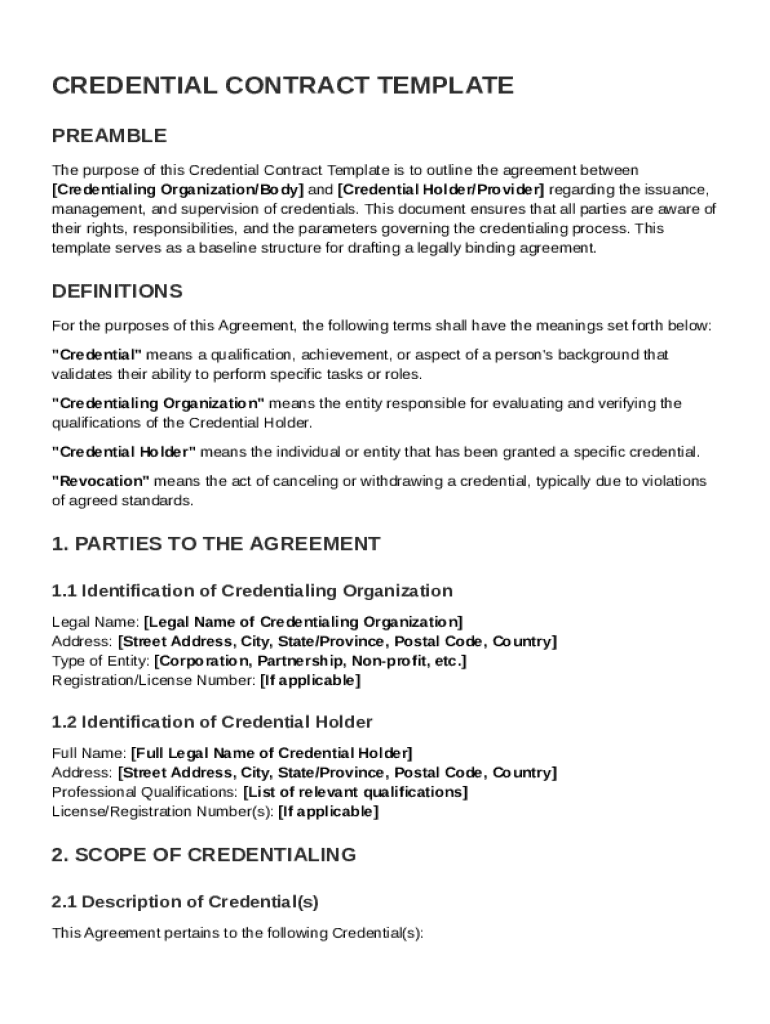
A Credential Contract Template serves as a structured framework for agreements between credentialing organizations and credential holders. This document is pivotal in outlining the conditions under which credentials are issued and maintained, establishing a mutual understanding between both parties. It typically includes terms related to compliance, continuing education, and procedures for revocation or suspension. Furthermore, it addresses confidentiality, indemnification, liability limitations, and provisions for amendments, making it an essential tool for creating a legally binding credentialing agreement.
Key Elements of the Credential Contract Template
The Credential Contract Template includes several critical components that ensure clarity and enforceability of the agreement. Key elements are:
- Parties Involved: Clearly defines the credentialing organization and the credential holder, detailing their roles and responsibilities.
- Credential Terms: Outlines the specific credentials being issued, their validity period, and any conditions for renewal.
- Compliance Requirements: Details the standards and regulations the credential holder must adhere to, including continuing education and professional conduct.
- Revocation and Suspension: Specifies the conditions under which credentials may be revoked or suspended, including misconduct or non-compliance.
- Confidentiality and Indemnification: Addresses the obligations of both parties to maintain privacy and protect sensitive information, as well as indemnification terms to shield parties from legal liabilities.
Importance of the Credential Contract Template
The Credential Contract Template is crucial for ensuring that the relationship between credentialing organizations and holders is well-defined and legally secure. By clearly delineating the responsibilities and expectations of each party, the template helps in preventing disputes and misunderstandings. It also provides a foundation for legal recourse should either party fail to meet their contractual obligations. This template is not only a safeguard for credential holders, ensuring they understand what is expected of them, but also for organizations, maintaining the integrity of their credentialing process.
Steps to Complete the Credential Contract Template
- Identify Parties: Begin by listing all participating parties, including contact details and defining their roles.
- Specify Credential Details: Clearly outline the credentials being issued and the terms of issuance, including any initial or renewal requirements.
- Define Compliance Criteria: Detail the standards and continuing education obligations the credential holder must fulfill.
- Outline Dispute Resolution Procedures: Clearly articulate the processes for handling disputes, including any mediation or arbitration steps.
- Set Confidentiality Clauses: Establish terms regarding data privacy and the protection of sensitive information.
- Review and Approve: Once all terms are documented, ensure that both parties review the template for accuracy and agree by signing.
Who Typically Uses the Credential Contract Template
The Credential Contract Template is predominantly used by professional associations, certification bodies, and regulatory agencies tasked with issuing credentials in various fields. Credential holders, including professionals such as medical practitioners, engineers, and educators, also use this form to formalize the terms of their certification. In industries where maintaining specific standards and qualifications is imperative, this form is an integral component of operational processes.


Legal Use of the Credential Contract Template
This template is legally binding and crafted to comply with applicable laws in the United States, ensuring enforceability in court if necessary. Legal use includes ensuring that the credentialing agreement meets all statutory requirements for contracts, such as mutual consent and lawful purpose. Additionally, this document serves as a legal safeguard by clearly defining the terms of credential issuance and management, which can mitigate the risk of litigation and strengthen organizational policies.
Software Compatibility with Credential Contract Template
DocHub provides remarkable compatibility with various software used for document editing and storage. The Credential Contract Template can be seamlessly integrated into DocHub's platform, facilitating effortless editing and collaboration. Users can import and export templates from cloud storage systems like Google Drive, Dropbox, and OneDrive. This compatibility allows for real-time updates and editing, so teams can maintain version control and streamline credentialing processes efficiently.
Practical Examples of Using the Credential Contract Template
Consider a certification body responsible for credentialing in healthcare. By using the Credential Contract Template, the organization can effectively outline the educational and regulatory requirements practitioners need to comply with to maintain their license. Another example could be in the field of IT certification, where the template helps in delineating the scope of professional responsibilities and the necessary compliance with evolving technology standards. In both scenarios, using a well-structured template ensures ongoing credentialing aligns with industry standards, safeguarding both the issuing organization's reputation and the credential holder's qualifications.