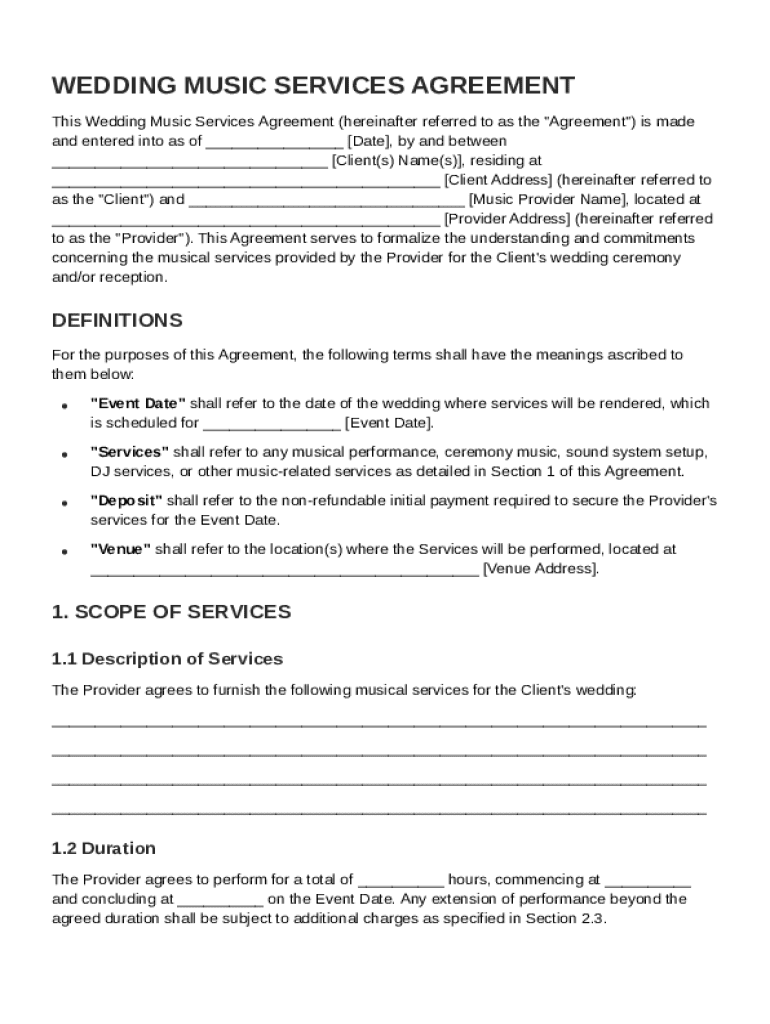







Definition and Purpose of a Wedding Music Contract Template
A Wedding Music Contract Template is a structured document used to formalize the agreement between a client and a music provider for services at a wedding event. This template ensures mutual understanding regarding the scope of services, compensation, and other important aspects related to the musical performance. Utilizing a contract template like this helps prevent misunderstandings by outlining each party's responsibilities, event timelines, and terms for cancellation or modification of the agreement.
Benefits of Using the Template:
- Clarification of Responsibilities: Clearly outlines what is expected from both the client and the music provider.
- Legal Protection: Serves as a legal document in case of disputes, providing evidence of agreed terms.
- Professionalism and Trust: Demonstrates professionalism, which can enhance trust between the parties involved.
How to Use the Wedding Music Contract Template
This section offers step-by-step guidance on effectively utilizing the Wedding Music Contract Template to ensure all necessary details are covered.
Steps to Follow:
- Download the Template: Obtain the template from a reliable source, ensuring it suits your specific requirements.
- Customize the Details: Input specifics such as names, event date, venue, and the agreed scope of services.
- Define Compensation: Clearly state the agreed fees, payment schedules, and any deposit requirements.
- Review and Edit: Ensure all details are accurate, and revise any section that does not align with the agreed terms.
- Final Approval: Both parties should review the document completely before signing.
- Signature Collection: Utilize electronic signature tools within platforms like DocHub to sign securely.
Tips for Effective Usage:
- Involve All Parties: Ensure both the client and music provider are involved in customizing the template.
- Include Contingency Plans: Address potential issues such as technical failures or force majeure.
- Seek Legal Advice: If necessary, consult a legal professional to validate the contract's enforceability.
Key Elements of the Wedding Music Contract Template
Understanding the core components within the Wedding Music Contract Template can help in constructing a comprehensive agreement.
Main Components:
- Scope of Services: Details on performance length, song repertoire, and any special requests from the client.
- Compensation and Payment Terms: The fee structure, deposit requirements, and any penalties for late payments.
- Cancellation and Rescheduling Policy: Terms for what happens if either party needs to cancel or reschedule the event.
- Responsibilities and Obligations: Duty of the music provider to deliver services as agreed and of the client to provide support for performance logistics.
- Liability and Insurance: Provisions concerning liability for damages and insurance coverage where applicable.
Practical Examples:
- Performance Duration Clause: Specifies that the music provider is required to play for a set number of hours, with breaks as legally mandated.
- Airport or Travel Expenses: If the event is outside the provider's local area, additional clauses can cover travel expenses.
Important Terms Related to the Wedding Music Contract Template
It is essential to familiarize yourself with specific contractual terminology when using the Wedding Music Contract Template.
Common Terms:
- Force Majeure: A clause protecting parties from obligations under extraordinary events beyond their control.
- Indemnification: Language that defines the responsibility for damages or legal liabilities.
- Non-Disparagement: Provisions that prevent parties from speaking negatively about each other after the conclusion of the contract.
Importance of Each Term:
- Force Majeure and Planning: Helps in assessing and planning for unforeseen circumstances affecting performance.
- Indemnification in Practice: Ensures both parties are aware of how liabilities will be managed.
Legal Use of the Wedding Music Contract Template
The legalities associated with using a Wedding Music Contract Template are vital to ensuring compliance and protection.
Legal Compliance:
- Electronic Signatures: Confirm that electronic signatures used via platforms like DocHub comply with the ESIGN Act.
- Contract Customization: Tailoring the contract to adhere to state laws and regulations concerning service contracts.
- Governing Law: Define which state’s laws will govern the contract, usually where the wedding is held.
Scenarios of Legal Enforceability:
- Dispute Resolution: The contract provides a legal framework to resolve disagreements through mediation or legal channels.
- Termination Clauses: Legally allows the contract to be ended under specified conditions.
Who Typically Uses the Wedding Music Contract Template
Identifying the primary users of the Wedding Music Contract Template can contextualize its significance and utility.


Key Users:
- Clients: Engaged couples or families hosting wedding events.
- Music Providers: Bands, DJs, and solo musicians specializing in wedding services.
- Event Planners: Professionals managing wedding logistics who ensure all service contracts are appropriately managed.
Benefits for Each User:
- Clients’ Perspective: Provides peace of mind by ensuring all logistical elements are formally agreed upon.
- Music Providers’ View: Offers security and clarity regarding payment and performance expectations.
State-Specific Rules for the Wedding Music Contract Template
State laws can significantly impact the enforceability and structure of wedding contracts. It is crucial to consider jurisdiction-specific implications.
Variations Across States:
- Licensing Requirements: Some states may require specific licenses for live performances at events.
- Regulations on Conduct: Noise restrictions or curfews that can affect performance arrangements.
Examples of State-Specific Considerations:
- California's Noise Laws: Require specific arrangements in contract clauses to mitigate potential legal issues regarding sound levels.
- New York Licensing: Certain venues necessitate specific licenses for hosting live music, which should be included in the contract.
Digital vs. Paper Version of the Wedding Music Contract Template
The preference between digital and paper formats can influence operational efficiency and environmental impact.
Digital Version Benefits:
- Efficiency: Easily editable and shareable, enhancing collaboration efficiency between parties.
- Security: With platforms like DocHub, security features like password protection can safeguard sensitive information.
Paper Version Considerations:
- Tangible Record: Some parties may prefer physical copies for more traditional settings where digital access is limited.
- Potential Drawbacks: Less environmentally friendly and more prone to being misplaced or damaged.
Choosing the Right Format:
- Event Size and Scale: Large and elaborate weddings may benefit more from digital contracts for seamless updates and management.
- Client and Provider Preferences: Catering to individual preferences while balancing practicality and accessibility.