
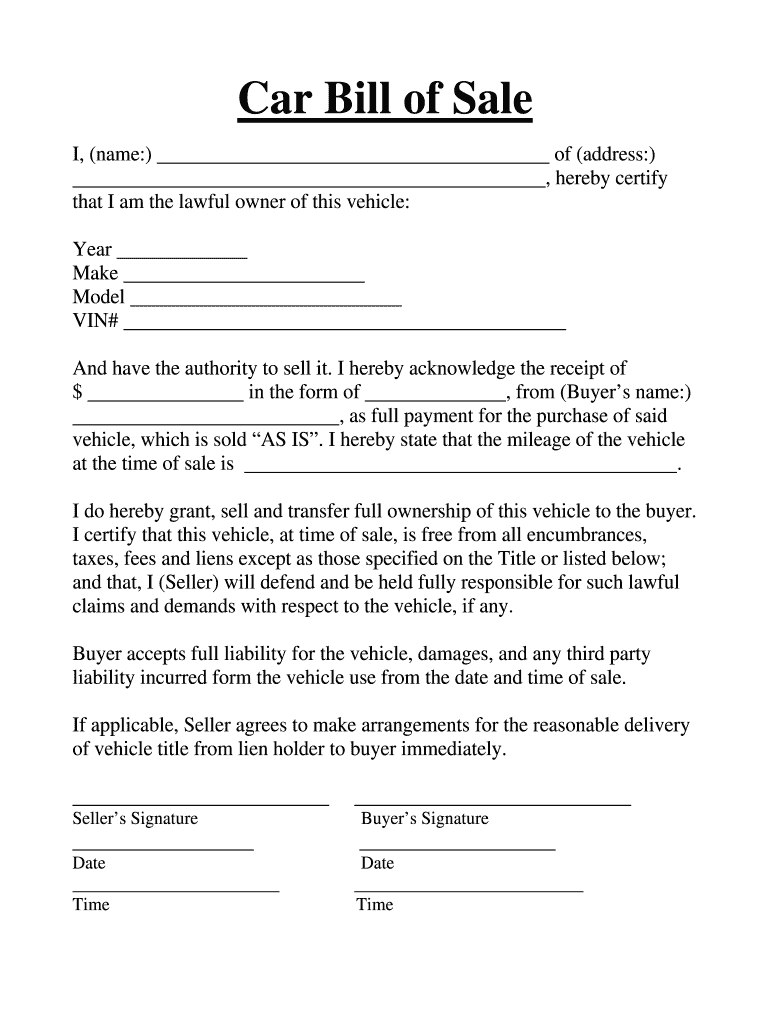







Definition & Meaning
A Car Bill of Sale is a legally binding document that records the sale of a vehicle between a seller and a buyer. This crucial form certifies the transfer of ownership and specifies key details such as the vehicle's make, model, year, and identification number (VIN). It often includes the sale price, date of transaction, and a declaration that the vehicle is sold "as is," barring any warranties. This document serves as proof of purchase for the buyer and liability release for the seller, ensuring that both parties are clear about the terms of the sale.
How to Use the Car Bill of Sale
To use a Car Bill of Sale, both the seller and buyer must complete and sign the document at the time of vehicle transfer. It ensures that the buyer has legal proof of ownership, which is essential for registration and insurance purposes. After completing the necessary fields, the seller keeps a copy for their records to avoid future liability, and the buyer uses their copy to register the car in their name. If any discrepancies arise, having this document can help resolve issues related to taxes, licensing, or title disputes.
Steps to Complete the Car Bill of Sale
-
Fill in Seller Information:
- Enter the full legal name and address of the seller.
-
Fill in Buyer Information:
- Enter the buyer's full name and address clearly.
-
Describe the Vehicle:
- Include the make, model, year, and VIN. Check that these match the vehicle's title and registration.
-
Record Sale Price:
- State the agreed-upon sale price in numeric and word formats.
-
Specify Sale Terms:
- Note any conditions, such as payment methods or installment agreements.
-
Sign and Date:
- Both parties must sign and date the document to validate it legally.
-
Notarization (if applicable):
- Some states require notarization to authenticate the document.
Key Elements of the Car Bill of Sale
The Car Bill of Sale comprises several critical sections. The seller and buyer must ensure all personal information is accurate and clearly stated. Detailed vehicle information, including the odometer reading at the time of sale, is crucial. Sale terms define the payment method and outline any warranties (or lack thereof). Both parties' signatures signify agreement to the terms specified. Additionally, a clear declaration that the vehicle is sold "as is" protects the seller from future liability unless otherwise stated.
State-Specific Rules for the Car Bill of Sale
Different states have varying requirements for the contents and execution of a Car Bill of Sale. Some states demand notarization, while others may require specific disclosures related to emissions or safety inspections. For instance, California mandates a smog certification, whereas Florida requires a bill of sale for private sales to accompany the transfer of title. Buyers and sellers are advised to review their local DMV guidelines to ensure compliance with their state's legal requirements.
Legal Use of the Car Bill of Sale
The Car Bill of Sale functions as an official record of the transaction between buyer and seller, acknowledged by both parties. It provides a paper trail in the event of a dispute regarding ownership or the specifics of the vehicle's condition at the time of sale. Moreover, if the vehicle was previously pledged as collateral, this document assists in clarifying ownership issues. The bill of sale is pivotal during law enforcement checks and when addressing situations related to traffic violations or accidents.
Examples of Using the Car Bill of Sale
- Private Sale Transactions: When an individual sells their car to another party without dealership involvement, the bill serves as binding documentation of the sale.
- Gifts: If transferring a vehicle as a gift, specifying this on the document helps in fulfilling legal requisites for tax exemption in some states.
- Trade-Ins: Some transactions might involve trading vehicles, where each party requires a bill of sale to verify the exchange of ownership.
Who Typically Uses the Car Bill of Sale
Common users include private vehicle sellers, buyers in private transactions, and legal representatives handling vehicle transfers due to inheritance. Businesses specializing in auto sales also regularly utilize bills of sale to process sales professionally. Individuals gifting vehicles to family or friends may also need the document to finalize the transfer legally and handle taxation appropriately.


Required Documents
Both parties should have respective forms of identification, like a driver's license or ID card, to verify personal details. The vehicle's title document must be in possession of the seller, as it confirms legal ownership and authority to sell. Additionally, any release of lien documents, if applicable, are necessary to prove that any previous debts associated with the vehicle are settled before the sale. Documents related to warranties or service records might also accompany the bill of sale, providing the buyer with useful vehicle history.




