Definition & Meaning
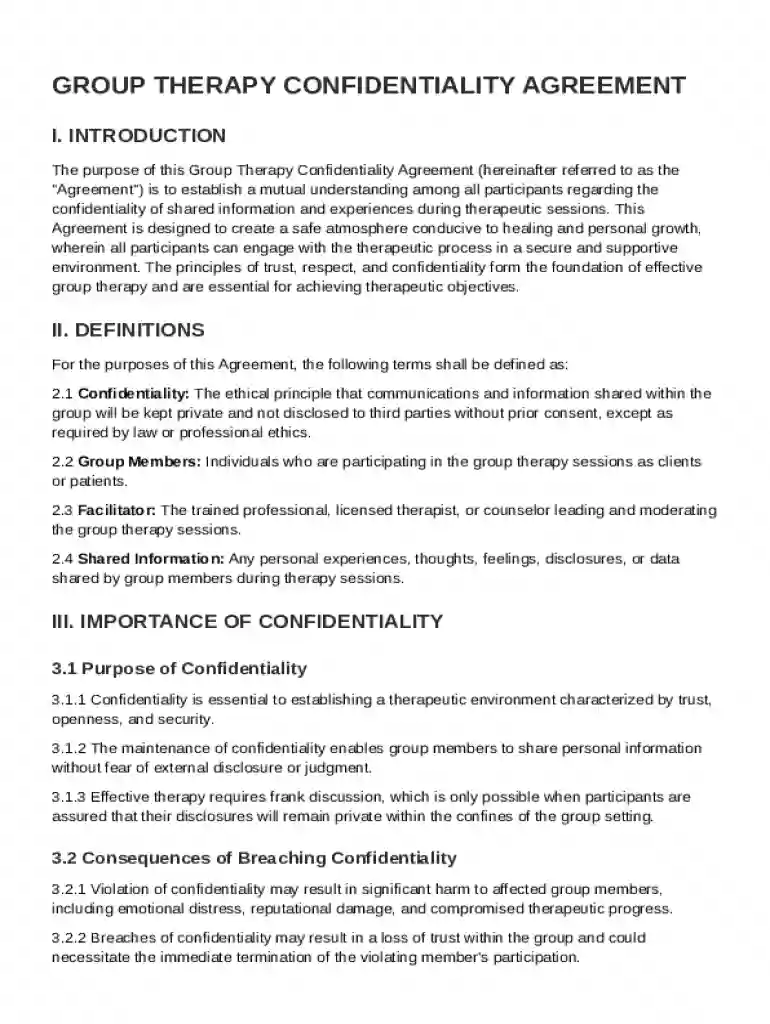
A Group Therapy Confidentiality Agreement is a legal contract designed to protect the privacy of participants in group therapy sessions. This agreement outlines the responsibility of all members to maintain the confidentiality of shared information, ensuring that the therapeutic environment remains a safe space for open communication. The document articulates the importance of confidentiality for building trust and describes the legal and ethical standards that guide the behavior of participants and facilitators.
Importance of Confidentiality in Group Therapy
- Trust Building: Confidentiality is pivotal in establishing a safe environment where participants feel comfortable sharing personal information.
- Ethical Standards: Adheres to professional counseling and psychological codes of ethics which mandate the protection of client information.
- Legal Requirements: Aids compliance with federal and state laws governing privacy, such as HIPAA, where applicable.
Key Elements of the Group Therapy Confidentiality Agreement Template
Essential Components
- Participant Obligations: Clearly outlines participant responsibilities to keep information private.
- Facilitator Responsibilities: Details the facilitator's role in maintaining confidentiality and guiding group dynamics.
- Legal Exceptions: Specifies situations like mandatory reporting and subpoenas where confidentiality may be legally breached.
- Consequences for Breaches: Describes potential repercussions for violating the confidentiality agreement.
Detailed Breakdown
- Defining Confidential Information: Clarifies what constitutes confidential information within the context of group therapy.
- Duration of Obligation: Explains how confidentiality extends beyond the end of the therapy sessions.
Steps to Complete the Group Therapy Confidentiality Agreement Template
Step-by-Step Process
- Read the Agreement Thoroughly: Participants should review the agreement to understand their responsibilities and rights.
- Fill Out Participant Information: Include personal details as required for identification within the group.
- Discuss with Facilitator: Engage in a discussion to address any points of concern or confusion.
- Sign and Date: Complete the form by signing and dating it to acknowledge understanding and agreement to the terms.
Important Considerations
- Legal Counsel: Participants may consult legal professionals to better understand the implications of signing.
- Facilitator's Role: Facilitators should ensure that all participants comprehend the agreement before signing.
Broader Utilization
- Educational Institutions: Counseling services in universities and schools may utilize these agreements.
- Corporate Environments: Organizations offering employee assistance programs with group therapy sessions.
Legal Use of the Group Therapy Confidentiality Agreement Template
Compliance and Legal Standards
- HIPAA Compliance: Ensures that the agreement aligns with Health Insurance Portability and Accountability Act requirements for privacy protection.
- State-Level Regulations: Addresses any specific legal requirements unique to individual states regarding confidentiality in therapy.
Enforcement
- Enforceable Terms: Describes how terms are legally enforceable and the appropriate actions in the event of a breach.
- Documentation: Importance of securely storing signed agreements to verify participants' compliance.
How to Use the Group Therapy Confidentiality Agreement Template
Practical Application
- Customizing the Template: Facilitators can tailor sections to meet specific group needs or institutional policies.
- Integration into Therapy Sessions: Use as an initial step in onboarding new participants to establish boundaries and expectations.
Real-World Scenarios
- First Session Protocols: Deploy as part of introductory sessions with new members to set the foundation for a cohesive group dynamic.
Important Terms Related to Group Therapy Confidentiality Agreement Template
Key Definitions
- Confidentiality: The duty to restrict the disclosure of information shared within the therapy group.
- Informed Consent: Understanding and agreement to the terms set out in the confidentiality agreement.
- Mandatory Reporting: Situations where the law obliges reporting of certain information, overriding confidentiality.
Clarification of Terminology
- Practical Contexts: Offers examples of how these terms apply within therapeutic settings.
Examples of Using the Group Therapy Confidentiality Agreement Template
Case Studies
- Therapist-Led Groups: Describes hypothetical scenarios where therapists successfully implement the agreement to manage sensitive information.
- Participant Experiences: Depicts stories of participants benefiting from the clarity and security that confidentiality agreements provide.
Situational Benefits
- Conflict Resolution: How agreements can pre-emptively resolve potential disputes over privacy breaches.
- Enhanced Communication: Encourages open dialogue through the assurance of discretion among group members.
Obligations Under the Agreement
- Participant Disclosures: Specifies what information, if any, can be shared with third parties.
- Facilitator's Disclosures: Details the professional obligations to disclose information under certain circumstances, like potential harm to self or others.
Practical Examples
- Breach Transparency: How facilitators handle breaches in confidentiality with the group and individual participants.
- Legal Protections: Ensuring all mandatory disclosures are carried out in a manner that respects legal obligations and minimizes impact on group cohesion.