



Definition & Meaning
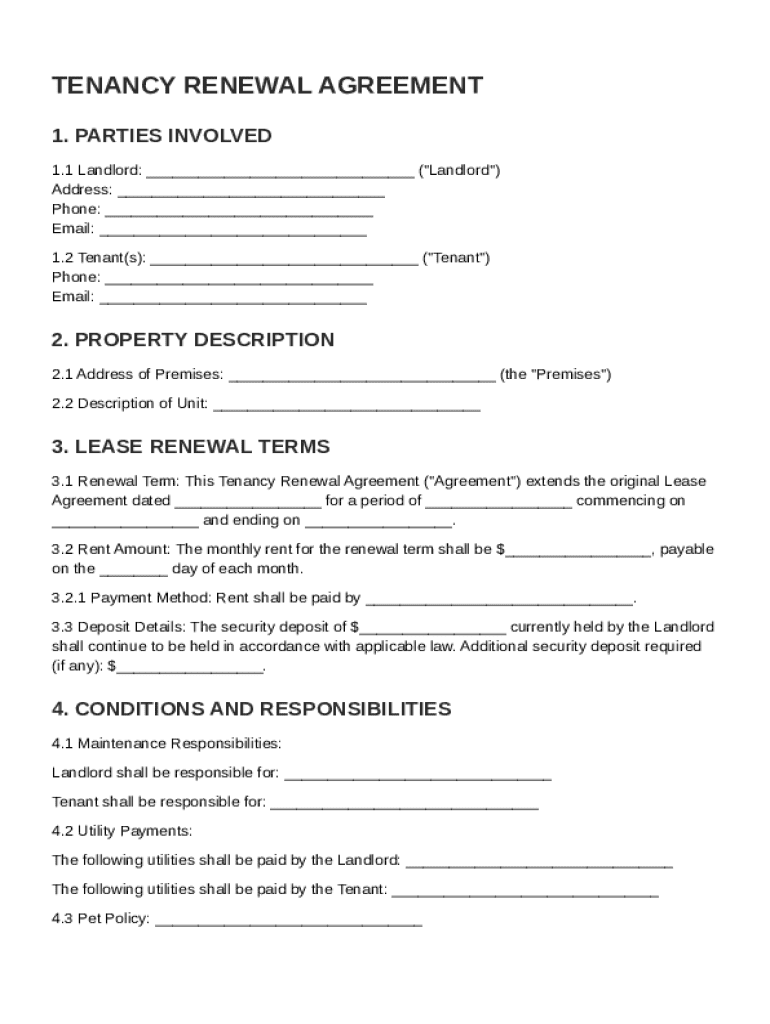
A Tenancy Renewal Agreement Template is a structured document used to extend the lease or rental agreement between existing parties – typically a landlord and tenant – for a property. This document ensures both parties understand the continuation of their relationship, maintaining the same conditions as the original lease or modifying specific terms to accommodate any changes. Utilizing a standard template helps incorporate all required details in a consistent format, minimizing misunderstandings and legal complications that could arise from informal agreements.
Key Elements of the Tenancy Renewal Agreement Template
Several critical components define the Tenancy Renewal Agreement Template, tailored to ensure clarity and legal compliance:
- Parties Involved: Clearly identify the landlord and tenant, including their names, addresses, and contact details.
- Property Description: Detail the property being rented, including its address and any specific aspects of the premises.
- Renewal Terms: Define the extended duration, start date, and end date of the lease term.
- Rent and Payment Methods: Specify the rent amount, due dates, and acceptable payment methods.
- Maintenance Responsibilities: Outline who is liable for maintenance tasks, repairs, and upkeep.
- Utility Payments: Clarify responsibilities for utility bills, including water, electricity, and gas.
- Pet Policy: Address whether pets are allowed, including any deposit or fee associated.
- Legal Compliance: Ensure the agreement aligns with local housing laws and regulations.
- Dispute Resolution: Provide a procedure for handling disputes between the parties.
- Termination Notice Requirements: Specify how much notice must be given to terminate the agreement.
How to Use the Tenancy Renewal Agreement Template
Effectively using the Tenancy Renewal Agreement Template involves several strategic steps to ensure a smooth lease extension process:
- Review Current Lease: Begin by examining the existing lease to identify terms that will remain unchanged and those that require modification.
- Customize the Template: Adapt the template to reflect current or negotiated changes, including updates to rent, maintenance, or other conditions.
- Gather Required Information: Collect comprehensive details about both parties and the property to populate the template accurately.
- Discuss Changes with Tenant: Communicate any potential amendments with the tenant to ensure clear mutual understanding.
- Finalize the Document: Ensure all fields are correctly filled and that the document is legally binding, requiring signatures from both landlord and tenant.
Steps to Complete the Tenancy Renewal Agreement Template
Completing the Tenancy Renewal Agreement Template involves a systematic approach:
- Enter the Parties' Information: Write down the full legal names and contact details of the landlord and tenant.
- Detail the Property: Precisely describe the rental property covered by the agreement.
- Define the New Lease Term: Specify the renewing period, including start and end dates.
- Set Financial Terms: Include the agreed rental payment details, due dates, and accepted forms of payment.
- Clarify Responsibilities: Determine each party's responsibility for property maintenance, repairs, and utilities.
- Include Additional Provisions: Add any specific clauses like pet policies, non-disturbance agreements, or subletting rules.
- Legalize the Document: Obtain signatures from all parties involved to make the agreement enforceable.
Legal Use of the Tenancy Renewal Agreement Template
The Tenancy Renewal Agreement Template serves as a legally binding tool essential for formally extending lease agreements. It ensures that both parties are protected under the terms outlined, reducing the risk of disputes or misunderstandings. Legal use necessitates compliance with housing and tenancy laws, varying by state or municipality. Consequently, both landlords and tenants should verify that all aspects of their renewal agreement align with local legal standards.
Who Typically Uses the Tenancy Renewal Agreement Template
This template is commonly utilized by landlords, property managers, and tenants seeking a structured method to renew existing leases. Landlords benefit from having a clear and consistent document format that simplifies communication with tenants regarding the continuation of tenancy periods. Tenants, on the other hand, use it to understand their obligations and rights upon extending their lease.


State-Specific Rules for the Tenancy Renewal Agreement Template
State laws significantly impact the structure and enforceability of a tenancy renewal agreement in the United States. Each state may dictate specific provisions, notice periods for non-renewal, or allowable rent changes. It's essential for both landlords and tenants to consult local regulations or legal counsel to ensure their template evaluates and incorporates any state-specific requirements. For instance, California has stringent tenant protection laws that might affect renewal terms more than in other states like Texas.
Software Compatibility and Integration
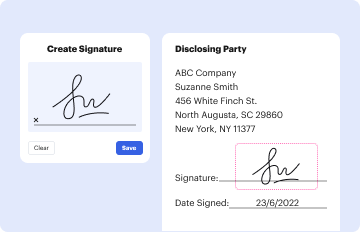
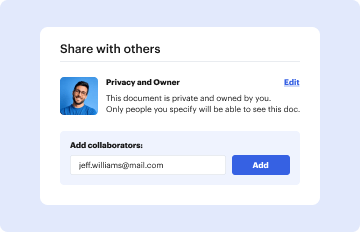
The Tenancy Renewal Agreement Template, when integrated with platforms such as DocHub, offers significant enhancements through digital document management. This compatibility allows seamless editing, signing, and collaboration on tenancy agreements. Platforms like DocHub support multiple file formats, making it feasible to import, manage, and export tenancy documents with ease, enhancing efficiency in real estate administration. This compatibility ensures that documents retain their formatting and legibility, whether accessed on a desktop or mobile device.