Definition & Meaning
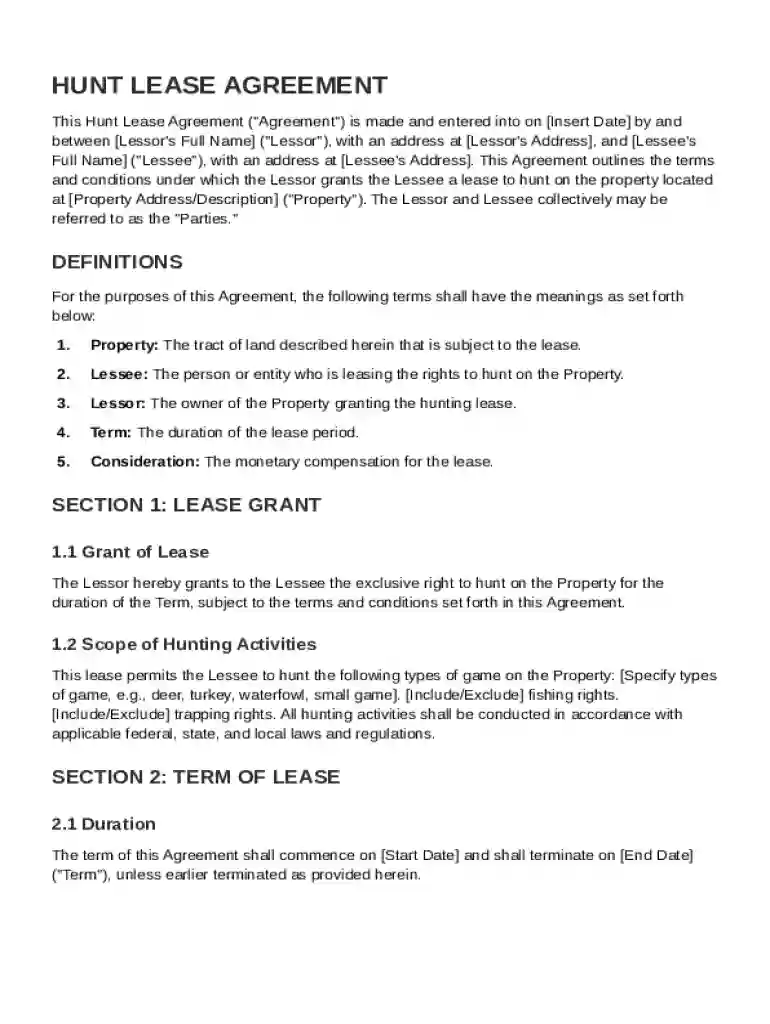
A Hunt Lease Contract Template is a legally binding document used to formalize the terms of hunting rights on a specified property between a landowner (lessor) and an individual or group (lessee). This agreement outlines the permitted hunting activities, lease duration, financial obligations, and responsibilities. It serves to protect both parties by ensuring clarity and compliance with relevant laws and regulations. By defining the scope of the lease, it helps prevent disputes and ensures that the landowner’s and tenants' interests are safeguarded.
Key Elements of the Hunt Lease Contract Template
The template includes several crucial components that ensure comprehensive coverage of the lease agreement:
- Parties Involved: Identification of the lessor and lessee, including names and contact information.
- Property Description: A detailed description of the land area, often accompanied by maps or geographical boundaries.
- Lease Duration: Start and end dates of the lease, along with any options for renewal.
- Financial Terms: Details regarding payment amounts, schedules, and methods.
- Hunting Activities: Specific types of hunting allowed, such as game species, hunting methods, and seasonal restrictions.
How to Use the Hunt Lease Contract Template
To effectively utilize the Hunt Lease Contract Template, follow these steps:
- Review: Carefully examine each section to ensure all necessary details are considered.
- Customize: Modify the general terms to reflect the specific needs and conditions of the lease agreement.
- Consult Legal Advice: Engage with a legal professional to ensure the document complies with local regulations and accurately reflects the wishes of both parties.
- Agree and Sign: Both parties should review the final version before signing to confirm mutual understanding and agreement on all terms.
Important Terms Related to Hunt Lease Contract Template
Several terms are fundamental to understanding and using the Hunt Lease Contract Template:
- Lessor: The landowner granting hunting rights.
- Lessee: The individual or group receiving hunting rights.
- Indemnification: A clause that limits the landowner’s liability for accidents or injuries on the property.
- Termination Clause: Conditions under which either party can end the lease early.
- Sublicensing: Whether the lessee is allowed to transfer rights to another party.
State-Specific Rules for the Hunt Lease Contract Template
Regulations can vary significantly by state, affecting the content and enforcement of a Hunt Lease Contract:
- Wildlife Management Laws: Each state has different hunting seasons and wildlife management practices.
- Insurance Requirements: States may mandate specific liability coverage for lessees.
- Permit Regulations: Obtaining necessary hunting permits varies from state to state, impacting lease terms.
- Land Use Laws: Local land use laws are crucial in determining permitted activities and restrictions.
Steps to Complete the Hunt Lease Contract Template
Completing a Hunt Lease Contract Template involves several detailed steps:
- Gather Information: Collect all necessary property and personal details for both parties.
- Draft the Contract: Use the template to draft an initial contract.
- Review and Revise: Collaboratively review the draft, making necessary adjustments.
- Sign: Once finalized, both parties should sign and date the document.
- Distribute Copies: Ensure that all parties retain a signed copy for their records.
Legal Use of the Hunt Lease Contract Template
Legal use of the Hunt Lease Contract Template ensures both compliance and protection:
- Compliance with Laws: The contract must comply with federal, state, and local hunting and land use laws.
- Enforcement: A properly executed contract can be legally enforced in disputes.
- Documentation: Maintaining a clear, final signed document ensures legal clarity and serves as evidence of the agreement.
Examples of Using the Hunt Lease Contract Template
Practical examples of how the template might be used include:
- Seasonal Leases: Hunters may enter into agreements for specific hunting seasons.
- Club Arrangements: Hunting clubs might lease land for exclusive member access.
- Corporate Retreats: Businesses leasing land for employee recreational use.
Each scenario requires tailoring the template to address unique details, demonstrating the flexibility and importance of clearly defined lease agreements.