







Definition and Meaning
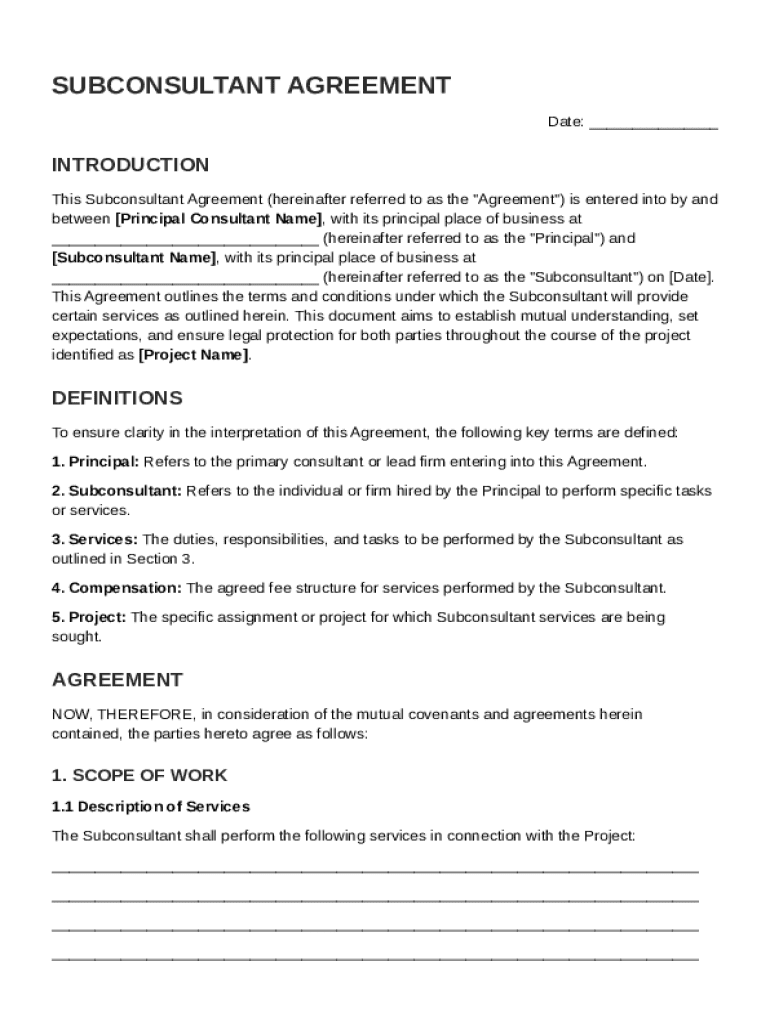
A Subconsultant Agreement Template is a standardized legal document used to establish the terms and conditions between a Principal Consultant and a Subconsultant. This agreement typically involves hiring a subconsultant to perform specific tasks or services related to a larger project. Key elements include the scope of work, responsibilities, compensation, confidentiality clauses, and governing law. The template aims to ensure both parties have a mutual understanding and legal protection throughout the project.
Key Components:
- Scope of Work: Detailed description of the tasks to be performed by the Subconsultant.
- Compensation Structure: Payment terms, including rates, billing cycles, and potential bonuses or penalties.
- Responsibilities: Duties and obligations of both the Principal Consultant and Subconsultant.
- Confidentiality: Measures and obligations for protecting sensitive information shared during the project.
- Termination Clauses: Conditions under which the agreement can be terminated by either party.
How to Use the Subconsultant Agreement Template
Utilizing the Subconsultant Agreement Template involves several critical steps to ensure it aligns with the project's requirements and is legally sound.
- Review the Template: Begin by thoroughly reviewing all sections to understand what modifications might be necessary to fit the specific project context.
- Customize the Template: Input project-specific details, such as the names of the parties involved, the scope of work, and the deadlines.
- Include Necessary Legal Terms: Ensure that legal terms relevant to your industry or state laws are included.
- Seek Legal Advice: Consult with a legal advisor to review the terms for accuracy and compliance with relevant jurisdiction laws.
- Finalize and Share: Once customized, share it with the involved parties for review and signatures.
Practical Tips:
- Keep track of all changes made for reference.
- Use digital signature capabilities for ease and security.
- Assign responsibilities clearly to avoid disputes.
Steps to Complete the Subconsultant Agreement Template
Completing a Subconsultant Agreement Template requires careful attention to detail and several essential steps:
- Gather Relevant Information: Collect all necessary data, including project specifications, timelines, and contact details of all parties.
- Fill in Basic Information: Start by entering the names, addresses, and roles of both the Principal Consultant and Subconsultant.
- Define the Scope of Work: Clearly outline what tasks the Subconsultant is expected to perform.
- Agree on Compensation: Specify payment terms, method, and schedule for the services rendered.
- Set Terms and Conditions: Include clauses for confidentiality, liability, and the procedure for resolving disputes.
- Review and Revise: Double-check each section for accuracy and completeness.
- Final Approval and Signing: After mutually agreeing upon the terms, both parties should sign the document.
Edge Cases:
- Consider alternative dispute resolution methods for more flexibility.
- Manage variations for project amendments with addendum clauses.
Key Elements of the Subconsultant Agreement Template
The Subconsultant Agreement Template contains several critical elements essential for defining the working relationship.
Major Sections:
- Project Details: Description, objectives, and deliverables.
- Payment Information: Detailed payment schedule and penalty clauses.
- Terms and Conditions: Establishes the legal boundaries.
- Confidentiality Clauses: Protects intellectual property and sensitive information.
- Dispute Resolution: Defines processes for settling conflicts outside of court.
Examples:
- Specify milestones for large projects.
- Insert termination clauses for unexpected project cessation.
Important Terms Related to Subconsultant Agreement Template
Understanding the terminology within the Subconsultant Agreement Template is vital for proper utilization.
Common Terms:
- Principal Consultant: The primary contractor who hires the Subconsultant.
- Subconsultant: The secondary contractor engaged to fulfill part of the project.
- Scope of Work: The detailed outline of tasks and services to be provided.
- Indemnification: A provision to compensate for any loss or damage.
- Force Majeure: Circumstances preventing contract fulfillment beyond control.
Variations:
- Definitions may vary based on jurisdiction and industry standards.
- Specific terms may need modification depending on the scope and type of project.
Legal Use of the Subconsultant Agreement Template
The Subconsultant Agreement Template serves various legal purposes, ensuring transparency and compliance.
Legal Considerations:
- Compliance with Laws: Ensure the template meets state and federal legal requirements.
- Contractual Obligations: Clearly define all parties' commitments to avoid legal disputes.
- Enforceability: Ensure clauses are enforceable under local laws.
State-Specific Rules:
- Adjustment may be required to meet different state regulations.
Who Typically Uses the Subconsultant Agreement Template
Various professionals and businesses utilize the Subconsultant Agreement Template to solidify partnerships and work collaborations.


Potential Users:
- Consulting Firms: Subcontracting specialized tasks or roles.
- Freelancers/Contractors: Engaging other professionals for niche assignments.
- Large Corporations: Streamlining services for diversified project needs.
Real-World Applications:
- Engineering projects requiring specialized skills.
- IT firms outsourcing certain tech components.
Why Should You Use the Subconsultant Agreement Template
Incorporating a Subconsultant Agreement Template in business dealings provides several benefits.
Benefits:
- Clarity and Structure: Provides a clear understanding of roles and expectations.
- Risk Management: Reduces the likelihood of misunderstandings and disputes.
- Legal Protection: Establishes a legally binding document that holds up in court.
Practical Scenarios:
- Ensures consultant efforts align with organizational goals.
- Provides a structured approach to manage multi-party collaborations.




