






Definition and Purpose of the Product Development Agreement Template
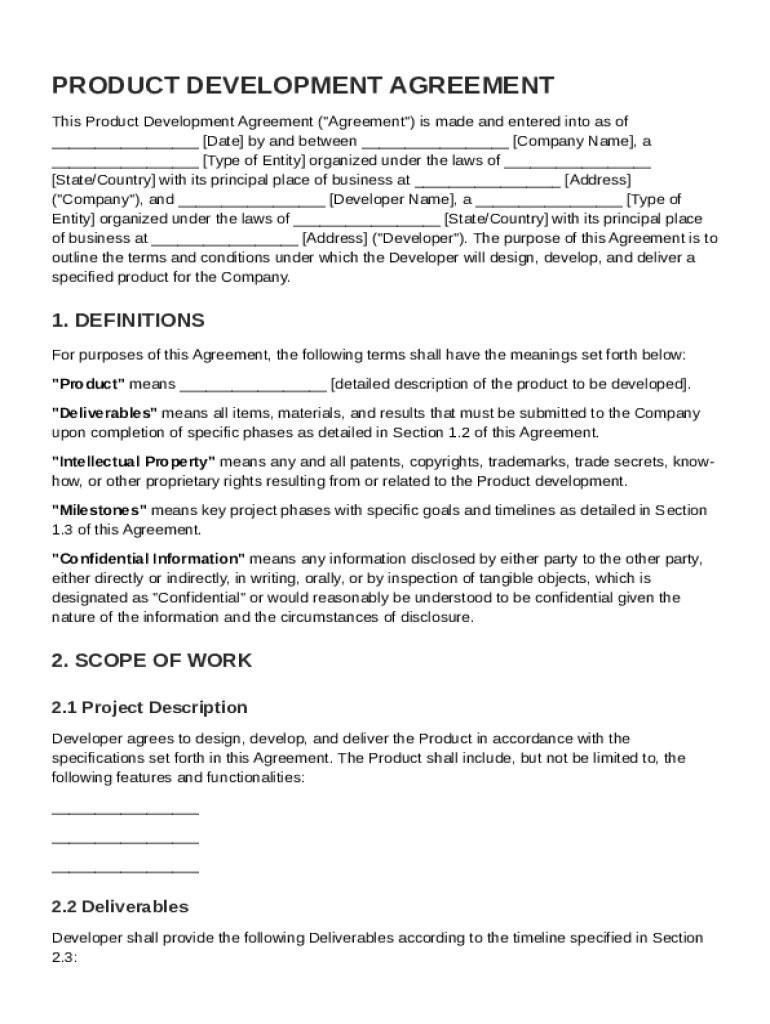
The Product Development Agreement Template is a structured legal document that outlines the terms and conditions between a company and a developer for the design, development, and delivery of a specified product. This template serves as a blueprint to define key aspects such as the scope of work, responsibilities of each party, payment terms, intellectual property rights, confidentiality obligations, warranties, and termination conditions. By establishing these elements, the agreement aims to ensure clarity and mutual understanding throughout the development process, thereby reducing potential disputes and promoting a successful collaboration.
Within the template, specific clauses ensure that both parties have a clear understanding of what is expected regarding deliverables, timelines, and quality standards. This clarity is crucial for aligning both parties' expectations and facilitating smoother interactions throughout the product's development lifecycle. The inclusion of dispute resolution processes provides a predefined approach to managing disagreements, offering a structured method to handle conflicts while minimizing interruptions in the workflow.
How to Use the Product Development Agreement Template
Using the Product Development Agreement Template involves customizing each section to fit the specific needs of the project and parties involved. This process can be broken down into several key steps:
-
Identify the Parties: Clearly define the company and developer, including their legal names and contact information.
-
Outline the Scope of Work: Describe the product to be developed in detail, delineating tasks, deliverables, and specific services required for the project.
-
Set Payment Terms: Establish a mutually agreeable payment schedule and terms, considering milestone payments, hourly rates, or a fixed fee approach.
-
Define Intellectual Property Rights: Clarify ownership of the products and materials developed during the project, addressing licensing rights, if any.
-
Include Confidentiality Clauses: Protect sensitive information by outlining non-disclosure obligations for both parties.
-
Establish Termination Conditions: Describe circumstances under which the agreement can be terminated and the consequences for each party.
-
Review and Finalize: Both parties should review the fully completed agreement to ensure all relevant areas are addressed, followed by signatures to make it legally binding.
Examples of real-world usage involve companies who engage in collaborations with developers on software projects, where the detailed scope of work and intellectual property rights are critical to both parties’ interests and future use of the product.
Key Elements of the Product Development Agreement Template
The template is structured around several core elements that need detailed attention to ensure it serves its purpose effectively:
-
Definitions of Key Terms: Clear definitions for important terms used throughout the agreement to avoid ambiguity.
-
Responsibilities of Both Parties: Specific duties and responsibilities to ensure each party knows what is expected throughout the project duration.
-
Warranties: Outline any guarantees regarding the product’s functionality and performance standards.
-
Miscellaneous Provisions: Include additional terms like amendment procedures, governing laws, and force majeure conditions.
Each element must be tailored to accurately reflect the specifics of the project and the parties’ agreements, allowing for a clear roadmap from development to product delivery.
Legal Use of the Product Development Agreement Template
This agreement template is legally binding once signed by both parties under applicable U.S. law. It is designed to be flexible enough to accommodate varying state laws, with sections that can be adapted according to specific regional requirements.
Considerations for Legal Compliance:
-
State-Specific Rules: Customize agreements to address any variations in state laws affecting development agreements, especially those concerning intellectual property and consumer protection.
-
Adherence to Federal Regulations: Ensure compliance with overarching federal regulations related to software development, if applicable, ensuring that the agreement aligns with laws like the ESIGN Act for electronic signatures.
Legal precedents emphasize the importance of clearly articulated agreements to safeguard both parties’ interests, making this template a critical tool for legal safety and clarity.
Examples of Using the Product Development Agreement Template
The Product Development Agreement Template is applicable in multiple scenarios, such as:
-
Software Development: Companies hiring software developers to create proprietary applications or platforms.
-
Product Design Projects: Manufacturers engaging with designers to develop new product lines.
-
Consultancy Services: Consultants providing specialized development services for specific project needs.
Each scenario involves specific aspects like design prototypes, project iterations, and final delivery criteria, demonstrating the template's versatility in defining expectations and outcomes.
Who Typically Uses the Product Development Agreement Template
This template is crucial for several stakeholders:


Typical Users:
-
Startups: Engaging developers for creating innovative products with clearly defined terms.
-
Corporations: Partnering with external developers for large-scale projects requiring robust agreements.
-
Freelancers and Independent Contractors: Utilizing agreements to clarify roles and responsibilities in client projects.
Understanding the diversity of users underscores the template’s utility in ensuring smooth project execution across different business contexts.
Versions or Alternatives to the Product Development Agreement Template
While the Product Development Agreement Template serves a broad range of needs, there are several versions and alternatives to consider based on the project's nature:
-
Basic vs. Comprehensive Templates: Opt for a more detailed or simplified version depending on the project's complexity.
-
Industry-Specific Agreements: Customize templates to cater to specific sectors like technology, manufacturing, or consulting.
-
Non-Disclosure Agreements (NDAs): Often used in conjunction with development agreements to ensure confidentiality.
Each version addresses specific needs, ensuring users select a template that perfectly aligns with their project's demands and organizational practices.