
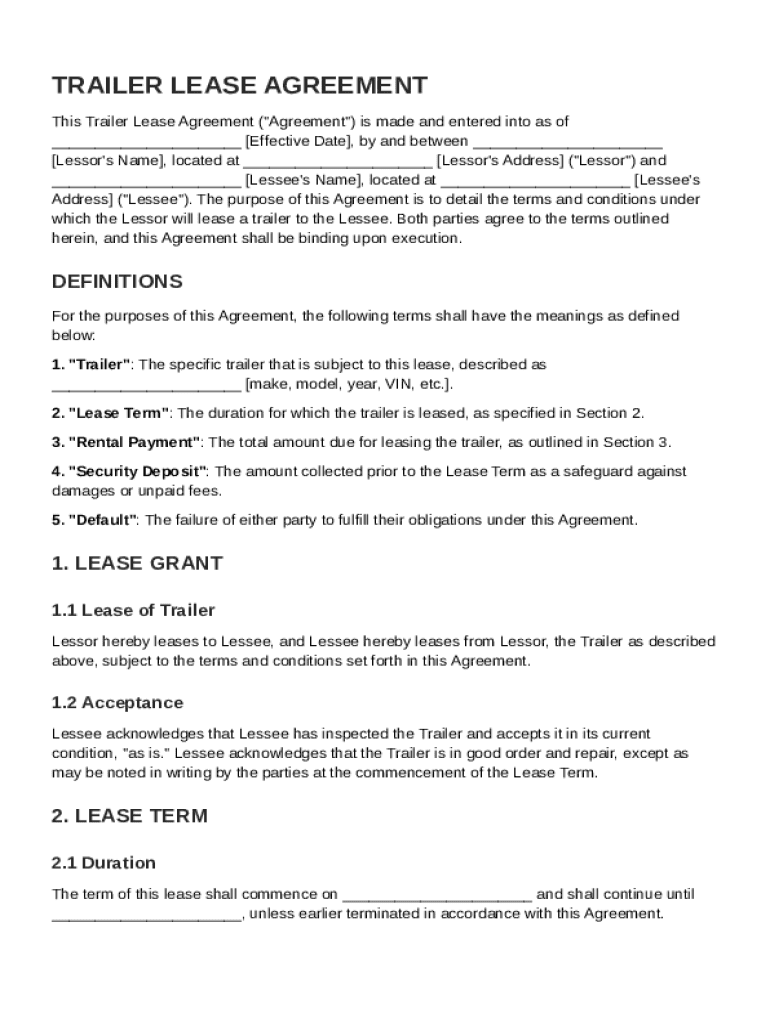







Definition & Meaning
A Trailer Lease Agreement is a legal contract defining the arrangement between a lessor (the owner) and a lessee (the renter) for the use of a trailer. It outlines a series of terms and conditions governing the rental, including key components such as lease duration, payment obligations, and responsibilities of both parties regarding maintenance. The agreement is essential for establishing clear expectations and ensuring that both parties are protected under the law. By detailing both parties' roles, this agreement minimizes potential disputes and facilitates a smooth leasing process.
Key Elements of the Trailer Lease Agreement Template
The Template includes several pivotal sections that guide the lease arrangement. These typically encompass:
- Lease Duration: Specifies the start and end date of the lease period.
- Payment Terms: Details the rental payment amounts, due dates, and procedures for late payments.
- Security Deposit: Outlines the amount required as a security deposit, conditions for its return, and instances where it may be forfeited.
- Maintenance Responsibilities: Clarifies who is responsible for maintaining the trailer, including regular upkeep and emergency repairs.
- Insurance Requirements: Mandates insurance coverage responsibilities, specifying who is liable for damages or accidents.
- Default Procedures: Describes the actions to be taken if either party fails to comply with the terms of the agreement.
- Governing Law: Indicates which jurisdiction’s laws will govern the agreement.
Steps to Complete the Trailer Lease Agreement Template
Completing the Trailer Lease Agreement involves several structured steps to ensure accuracy and legal compliance:
- Gather Necessary Information: Collect pertinent details such as the full names and addresses of both parties, trailer identification, and intended lease period.
- Review and Fill Out the Template: Carefully review the template and fill in the required information, ensuring that each section is completed accurately.
- Consult Legal Counsel: Consider consulting with legal counsel to verify that the agreement is comprehensive and compliant with state-specific laws.
- Mutual Review: Allow both parties to review the filled-out agreement independently and discuss any necessary adjustments or clarifications.
- Sign the Agreement: Both parties should sign and date the document. The use of an electronic signature may be permitted, depending on jurisdiction.
- Distribute Copies: Provide a copy of the signed agreement to all involved parties for their records.
Important Terms Related to the Trailer Lease Agreement Template
Understanding the terminology within the Trailer Lease Agreement is critical for both parties:
- Lessor: The party who owns and leases out the trailer.
- Lessee: The party who rents and uses the trailer.
- Indemnification Clause: Protects one party from liability if the other party's actions cause legal disputes or claims.
- Amendment Clause: Specifies how changes to the agreement must be made, often requiring written consent from both parties.
Legal Use of the Trailer Lease Agreement Template
A Trailer Lease Agreement is a legally-binding document when signed by both parties. It should comply with federal and state laws and may require specific clauses depending on the state. These legal considerations ensure that the agreement can be enforced in court if necessary. Additionally, electronic signatures are legally recognized under the ESIGN Act, making digital completion and storage viable and efficient.
How to Use the Trailer Lease Agreement Template
To effectively utilize the Trailer Lease Agreement Template, follow these practical steps:
- Download and Customize: Use trusted document platforms to download the template and customize it according to specific leasing arrangements.
- Ensure Clear Communication: Engage in open dialogue to ensure both parties understand their rights and obligations.
- Maintain Documentation: Store both a digital and physical copy of the signed agreement in case of future disputes or clarification needs.
- Review Periodically: Reassess the agreement’s terms regularly to ensure ongoing compliance and relevance.
State-Specific Rules for the Trailer Lease Agreement Template
Depending on the state of use, specific rules may affect the Trailer Lease Agreement. Some states have unique requirements regarding maximum security deposits, notice requirements for lease terminations, or disclosures that must accompany the agreement. Familiarity with state laws ensures that the lease agreement is valid and enforceable. Consulting a local attorney can provide insights into unique state requirements that must be incorporated into the agreement.
Examples of Using the Trailer Lease Agreement Template
Consider realistic scenarios where the Trailer Lease Agreement Template proves useful:
- Short-term Business Use: Renting a trailer for seasonal deliveries in a business context.
- Personal Use: Families leasing a trailer for a cross-country trip, necessitating clear terms for duration and insurance.
- Commercial Transport: Logistic companies leasing trailers to expand temporary capacity during peak seasons, requiring detailed maintenance responsibilities.
Understanding these examples highlights the versatility and necessity of a well-structured Trailer Lease Agreement.




