






Definition & Meaning
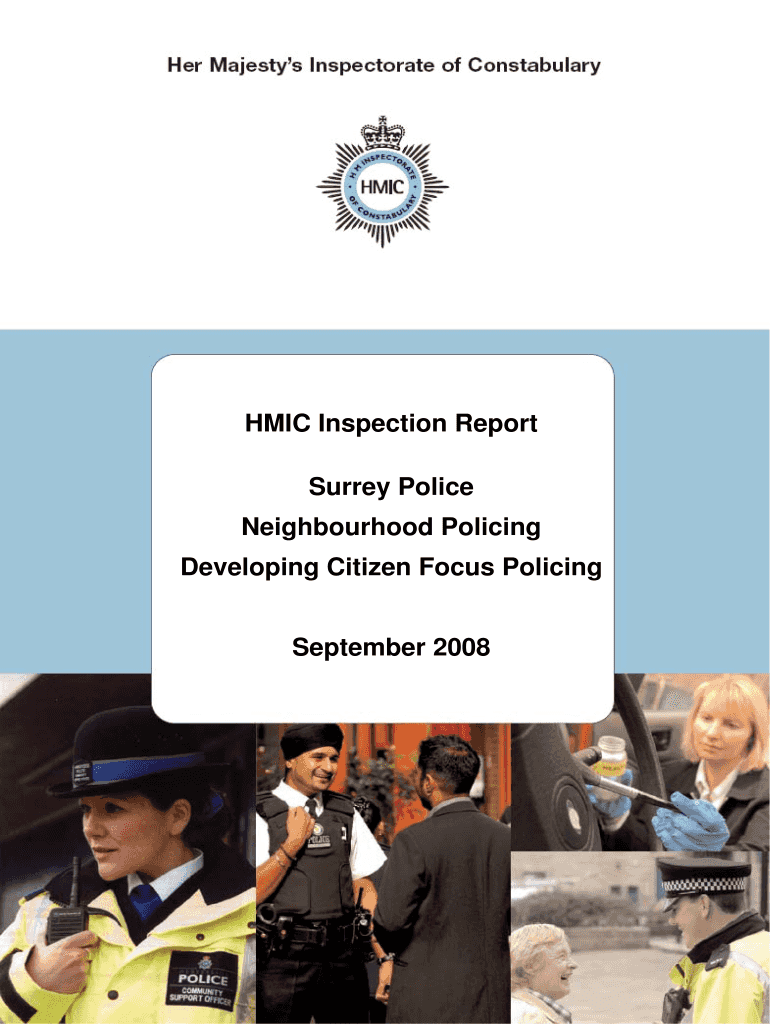
The HMIC Inspection Report: Neighbourhood Policing is an official document produced to evaluate and provide insights into the implementation of Neighbourhood Policing within a specific police department or region. This report typically offers a detailed assessment of how policing strategies are integrating with local communities to enhance security and trust. It emphasizes community engagement, assessing how well the police work alongside citizens and stakeholders to address localized safety concerns. The report serves as a benchmark for police accountability, operational efficiency, and responsiveness to public needs.
Main Objectives
- Evaluate the effectiveness of current neighbourhood policing efforts.
- Identify best practices and areas needing improvement.
- Provide recommendations for enhancing public engagement and trust.
- Enhance accountability through transparency and structured oversight.
How to Use the HMIC Inspection Report: Neighbourhood Policing - hmic gov
This report is a crucial tool for police departments, policymakers, and community leaders. Users should analyze the document to understand the strengths and weaknesses of current policing strategies. By identifying key trends and operational gaps, departments can adjust their approaches to better serve the community.
Key Steps for Utilizing the Report
- Review Executive Summary: Start with a high-level overview of findings and recommendations.
- Examine Key Findings: Delve into detailed evaluations of community interactions and police performance.
- Identify Recommendations: Look for actionable insights aimed at improving neighbourhood relations and strategies.
- Implement Changes: Use the report’s guidance to modify policies or introduce new initiatives.
- Monitor Progress: Continuously track improvements and adjust efforts based on evolving community needs.
Key Elements of the HMIC Inspection Report: Neighbourhood Policing - hmic gov
The report encompasses several critical components that provide comprehensive insights into local policing practices:
- Community Engagement: Analysis of strategies used by police to involve the community in crime prevention and public safety.
- Performance Metrics: Evaluation of key performance indicators that measure the effectiveness of crime reduction and public satisfaction.
- Resource Allocation: Insights on the distribution and use of resources to maximize policing impact.
- Training and Development: Assessment of police training programs aimed at equipping officers with necessary skills and knowledge.
Practical Examples
- A department increases the number of community officers after identifying low visibility as a concern.
- Recommendations may lead to the introduction of specialized community workshops to boost public cooperation in safety initiatives.
Steps to Complete the HMIC Inspection Report: Neighbourhood Policing - hmic gov
While this report is typically produced by an external inspection body, those involved in the process should follow these critical steps to ensure a comprehensive evaluation:
- Data Collection: Gather qualitative and quantitative data from various policing records and community feedback.
- Stakeholder Consultation: Engage with community leaders, citizens, and other stakeholders to get diverse perspectives.
- Assessment of Current Practices: Review existing neighbourhood policing strategies and their outcomes.
- Data Analysis: Analyze data to identify trends, strengths, and areas needing improvement.
- Drafting the Report: Compile findings into a coherent report with clear recommendations.
- Implementation of Findings: Use the findings to influence policy and practice adjustments.
- Feedback and Revision: Collect feedback on the draft report and make necessary adjustments.
Important Terms Related to HMIC Inspection Report
Understanding specific terminology can empower stakeholders to engage deeply with the report:
- Community Cohesion: The level of solidarity and connectedness between community members and the police.
- Policing Framework: A structured approach to how policing activities are planned and executed.
- Citizen Focus Policing: A policing strategy centered on citizen needs and participation.
Who Typically Uses the HMIC Inspection Report
This report is used by a variety of stakeholders, including:
- Police Departments: To refine policing strategies and enhance community relations.
- Community Leaders: To hold police accountable and contribute to policy development.
- Policy Makers: To inform legislative decisions and allocate resources effectively.
- Academics: For research purposes to study the impact of policing strategies on social dynamics.


Legal Use of the HMIC Inspection Report
The HMIC Inspection Report possesses various legal applications, primarily serving as a transparency tool:
- Public Accountability: Provides public accountability, disclosing policing strategies and outcomes transparently.
- Policy Development: Offers a basis upon which new policies and regulations can be developed.
- Compliance Assessment: Ensures that police departments adhere to established policies and procedures.
Examples of Using the HMIC Inspection Report
Real-world scenarios demonstrate how various stakeholders might leverage the report:
- Community Reform: Following a report indicating low public confidence, a city council collaborates with the police to develop new community safety programs.
- Resource Reallocation: A report highlights inefficient resource use, prompting a department to reassess and reallocate resources where needed.
The comprehensive detail and actionable insights provided within the HMIC Inspection Report: Neighbourhood Policing - hmic gov, guide users toward more effective and community-focused policing approaches.