01. Edit your form online
Type text, add images, blackout confidential details, add comments, highlights and more.

Type text, add images, blackout confidential details, add comments, highlights and more.

Draw your signature, type it, upload its image, or use your mobile device as a signature pad.

Send it via email, link, or fax. You can also download it, export it or print it out.
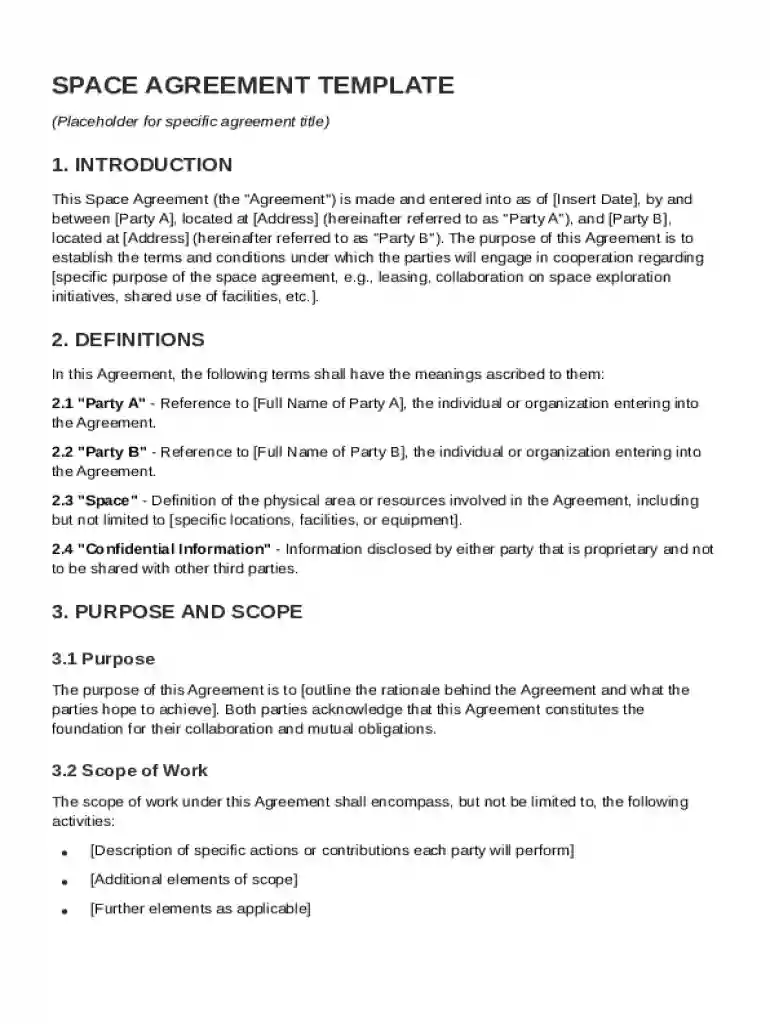
A Space Agreement Template is a formal document that outlines the terms and conditions of cooperation between two parties, referred to as Party A and Party B, in the context of space-related activities. This template serves as a standardized starting point to streamline the creation of such agreements, ensuring all relevant aspects are addressed comprehensively. Typically, the Space Agreement Template includes sections on the purpose and scope of work, roles and responsibilities, financial arrangements, confidentiality obligations, and dispute resolution procedures. By providing a clear framework, the template facilitates a mutual understanding and agreement on the fundamental aspects of the collaboration.
To effectively utilize the Space Agreement Template, parties should first review and customize it to reflect their specific project needs and objectives. Start by filling out the basic details of both parties involved, including names and contact information. Carefully review each section to determine specific roles, responsibilities, and expectations. For instance, the "Purpose and Scope of Work" section should detail the project's objectives and the tasks each party will undertake. Ensure that financial terms are accurate and reflective of any contractual obligations. Finally, after completing the necessary fields and tailoring the template to the agreement's specifics, both parties should thoroughly review the document for accuracy and agree to its terms before signing.
The Space Agreement Template incorporates various critical elements that provide a structured framework for agreements. Key components include:
The Space Agreement Template is commonly used by various entities involved in space-related ventures. These include:
Each user is expected to adapt the template to address their unique objectives and legal requirements, ensuring compliance and minimizing potential disputes.


To ensure the Space Agreement Template is legally binding, users must adhere to specific legal considerations. Parties should ensure the agreement is consistent with applicable laws and regulations, potentially consulting legal experts to verify compliance. It's crucial to include all necessary legal disclaimers and signatures from authorized representatives of both parties to demonstrate mutual consent. Furthermore, users should consider including provisions addressing liability, indemnification, and termination terms, as these factors significantly impact the legal enforceability of the agreement.
Depending on the jurisdiction, the applicability and enforcement of space agreements can differ. Some states may have specific requirements for contracts involving technological or space operations. It is advisable for parties to consult with legal professionals familiar with state-specific laws to incorporate any necessary changes into the template. State regulations may influence various sections of the agreement, including licensing obligations, public disclosure norms, and compliance with national and international laws governing space activities.
Understanding the terminology used within the Space Agreement Template is crucial for clarity and successful negotiation. Important terms to comprehend include:
Defining these and other terms within the template ensures both parties possess a clear understanding and agreement on critical aspects of their relationship.
At DocHub, your data security is our priority. We follow HIPAA, SOC2, GDPR, and other standards, so you can work on your documents with confidence.