




Definition and Purpose of the Builders Contract Template
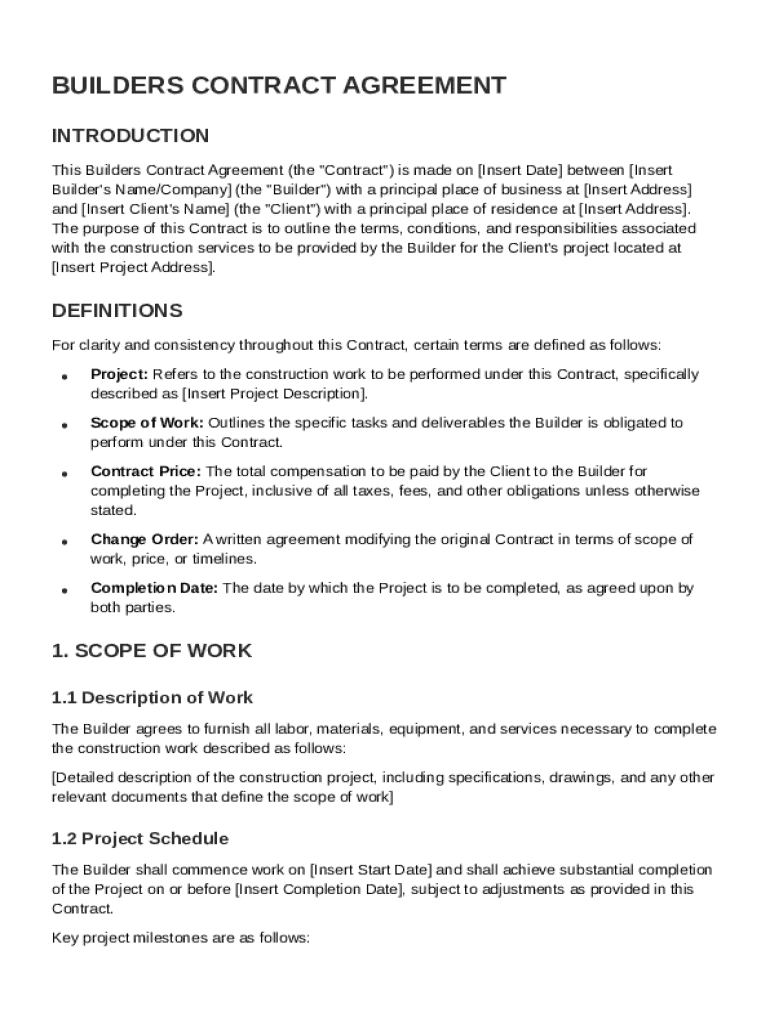
The Builders Contract Template serves as an essential document that defines the relationship between a builder and a client undertaking a construction project. This template establishes a clear agreement, detailing the obligations, expectations, and project specifications agreed upon by both parties. It is tailored to outline specific components such as the scope of work, financial arrangements, and timeline of the project, ensuring transparency and avoiding potential disputes.
Key Elements Defined
-
Scope of Work: This section specifies the detailed description of the tasks and responsibilities that the builder will execute, including construction methods, materials, and any relevant standards that need to be met.
-
Payment Terms: It outlines the financial aspects, including the total project cost, payment schedule, and method of payment. The contract may include provisions for deposits, progress payments, and final payments upon completion.
-
Responsibility of Parties: Clarifies both the client's and builder’s roles and responsibilities to mitigate misunderstandings.
-
Change Orders: Establishes how modifications to the original work outlined will be handled, including any necessary adjustments to project costs and timelines.
Steps to Complete the Builders Contract Template
Completing a Builders Contract Template involves several methodical steps to ensure that all essential information is accurately captured and agreed upon by both parties.
-
Initial Discussion: Begin by thoroughly discussing the project’s needs and components with your client to gather all preliminary data required for drafting the contract.
-
Template Selection: Choose an appropriate Builders Contract Template that aligns with the project’s scale and complexity.
-
Detail Completion: Populate the template with detailed information on the scope of work, payment terms, project timeline, and any specific conditions.
-
Review and Revise: Both parties should independently review the draft for any discrepancies or unclear terms, allowing for revisions to be made collaboratively.
-
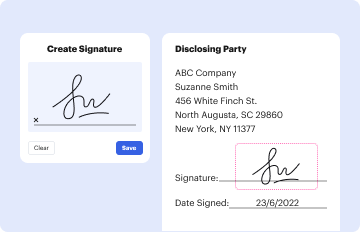
Finalize the Document: Once all details have been agreed upon, finalize the document with the appropriate signatures from both the builder and client.
Legal Use and Compliance
The Builders Contract Template needs to comply with legal stipulations applicable within the United States. It should adhere to local and federal construction laws, ensuring that all terms are enforceable and legally binding. The contractual agreement must:
-
Include Governing Law: Specify the jurisdiction under which any legal actions will be adjudicated.
-
Cover Dispute Resolution Methods: Detail the processes for resolving any disagreements, whether through arbitration, mediation, or litigation.
-
Provide for Termination Clauses: Outline conditions under which either party can terminate the contract prior to completion.
Important Terms in the Builders Contract Template
Understanding the critical terminologies used within the Builders Contract Template is essential for clarity and effective communication. Below are some pivotal terms:
-
Warranties: Guarantees provided by the builder regarding the quality of work and materials for a specified period post-completion.
-
Insurance Requirements: Details mandatory insurance that either party must maintain to cover potential damages or liabilities.
-
Indemnification: A clause whereby one party agrees to shield the other from any legal responsibilities arising from the construction work.
State-Specific Regulations
Builders Contract Templates must consider state-specific regulations which can significantly influence the contract's conditions. Each state in the U.S. has distinct building codes, licensing requirements, and consumer protection laws affecting:
-
License Requirements: Ensure builders are licensed within the state the project is located.
-
Local Building Codes: Adherence to state and local building codes, which govern acceptable building practices.
-
Environment Compliance: Consideration of state-specific environmental laws that may impact construction practices and materials.
Examples of Using the Builders Contract Template
To understand how a Builders Contract Template might be utilized, consider the following examples:
-
Residential Building Projects: A homeowner hiring a builder for a new construction project would establish a detailed plan for structure and interior designs using the template to note all design and functional requirements.
-
Commercial Construction: A business enlisting a contractor to build a new office facility would require clear deadlines and performance metrics, captured under the project's scope to ensure minimal disruption to business operations.
Each project scenario demands a customized approach to the Builders Contract Template, tailored to satisfy the project's unique complexities and parties' expectations.
Variations and Alternatives
Different projects demand varied contract templates, some of which may differ slightly in structure and clauses. Alternatives or variations may include:
-
Cost-Plus Contracts: Where the client agrees to cover the project costs plus a predetermined percentage of profit for the builder.
-
Fixed-Price Contracts: The client pays a set amount regardless of the actual costs incurred during the project.
-
Time and Materials Contract: Payments are made based on time spent on the project plus any material costs incurred.
Selecting the appropriate type factors in project size, budget clarity, and scope adjustment needs to ensure optimal outcomes.
Software Compatibility and Digital Usage
When implementing a Builders Contract Template, ensuring software compatibility is crucial for an efficient workflow. Common digital tools used in managing and editing these contracts include:
-
Document Editors: Such as Microsoft Word and Google Docs, for easy template modification and storage.
-
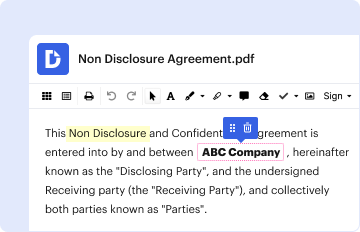
Online Platforms: Solutions like DocHub offer functionality for editing, sharing, and signing contracts electronically, facilitating seamless interaction.
These digital tools streamline the contract management process and offer invaluable flexibility for real-time updates and collaboration.
Key Elements of the Builders Contract Template
Every Builders Contract Template should encapsulate essential elements that collectively provide comprehensive coverage for the client and builder relationship.
-
Project Description: Detailed definition of the construction project, including location and scope.
-
Completion Schedule: An estimated timeline for various phases of the project’s completion.
-
Penalties for Non-Compliance: Defined repercussions for any lapse in compliance with terms, schedules, or quality.
These elements ensure that all parties are clearly briefed and committed to the project's successful execution.